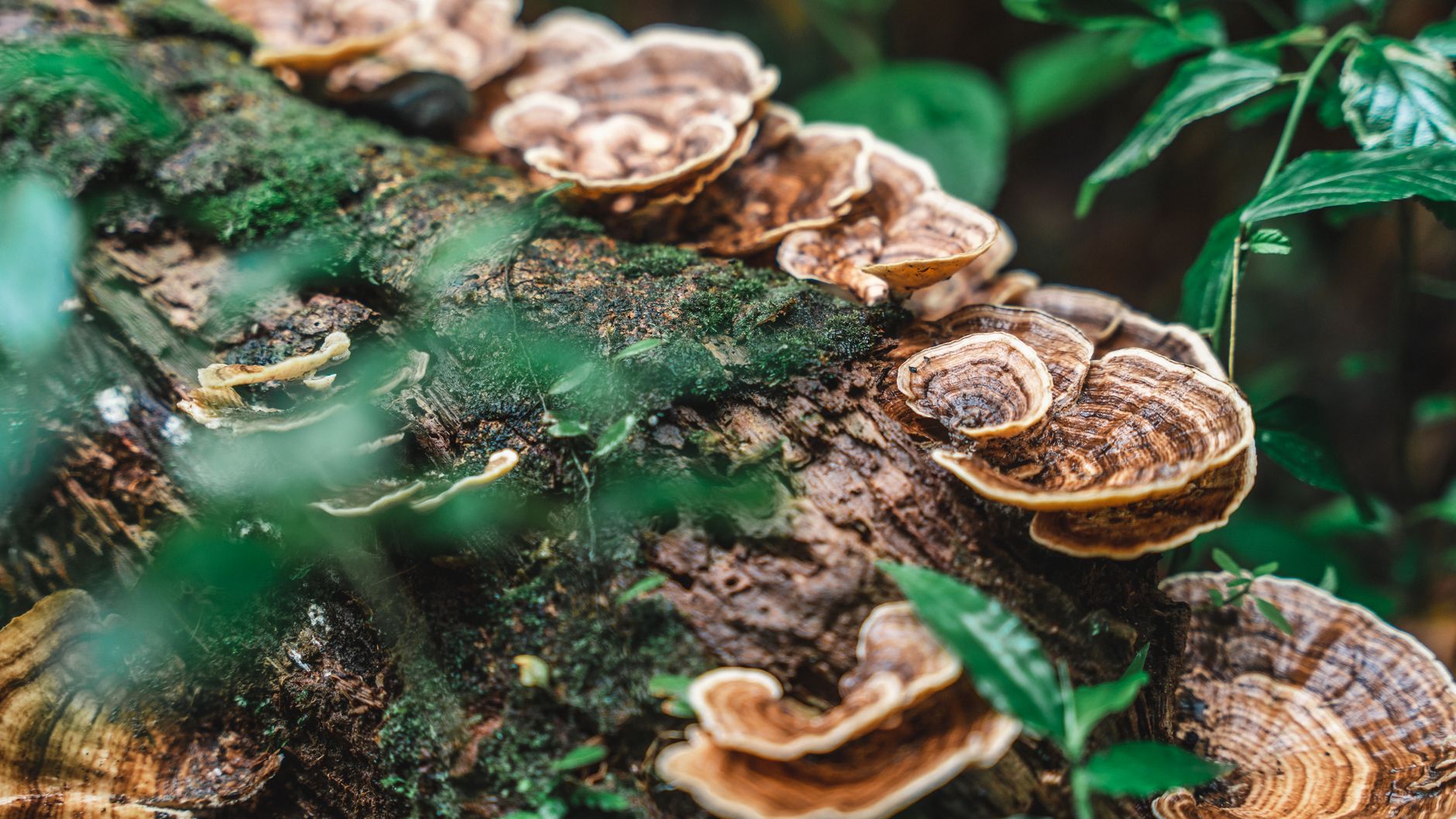
Turkey tail mushroom (Trametes versicolor, also known as Coriolus versicolor) has attracted serious scientific attention over the past three decades. Unlike many wellness trends that arrive ahead of the evidence, turkey tail comes with a body of peer-reviewed research that makes it one of the most studied functional mushrooms in the world. This article reviews what that research actually shows, where the evidence is strong, and where questions remain.
What Makes Turkey Tail Biologically Active?
The primary bioactive compounds in turkey tail are two polysaccharides: polysaccharide-K (PSK, also called krestin) and polysaccharide peptide (PSP). Both are derived from the mushroom’s mycelium and fruiting body, though their exact structures differ. PSK has been extensively studied in Japan, where it is an approved pharmaceutical adjuvant for cancer treatment. PSP has been researched primarily in China and more recently in Western institutions.
These polysaccharides are classified as biological response modifiers. Rather than attacking tumor cells directly in the way conventional chemotherapy does, they appear to modulate the immune system in ways that support the body’s own cancer-fighting mechanisms. Understanding this distinction is essential for interpreting the research correctly.
PSK and Conventional Cancer Treatment
Some of the most compelling research involves PSK as an adjuvant to standard oncological care. A preclinical study published in International Journal of Oncology found that PSK augmented docetaxel-induced tumor suppression and enhanced antitumor immune responses in an immunocompetent murine model of prostate cancer.[1] The study highlighted that PSK appeared to support cytotoxic T-cell activity, suggesting a role in restoring immune surveillance that chemotherapy alone does not address.
In Japan, PSK has been used clinically for decades alongside chemotherapy for gastric, colorectal, and lung cancers. Multiple randomized controlled trials conducted in Japan in the 1980s and 1990s showed improved survival rates for patients receiving PSK alongside standard chemotherapy compared to chemotherapy alone. While these older trials have methodological limitations by modern standards, the consistent direction of their findings helped establish PSK as a serious area of investigation.
PSP and Its Emerging Role in Apoptosis
More recent research has focused on PSP. A 2022 study found that polysaccharide peptide derived from Coriolus versicolor induced apoptosis in colorectal cancer cells by down-regulating EGFR and PD-L1 expression.[2] This is significant because PD-L1 is a known immune checkpoint protein: tumors that over-express it essentially hide from immune detection. A compound that reduces PD-L1 expression could theoretically improve the immune system’s ability to recognize and target cancer cells.
This mechanism aligns with the broader class of immune checkpoint inhibitors that have transformed oncology in recent years. While PSP is not yet a pharmaceutical-grade checkpoint inhibitor, the mechanistic overlap is a major reason researchers consider it worth continued investigation.
Macrophage Polarization: A Key Immune Mechanism
A 2024 study added further mechanistic detail: a polysaccharide isolated from Coriolus versicolor was shown to polarize tumor-associated macrophages from an M2 (pro-tumor, immunosuppressive) phenotype to an M1 (pro-inflammatory, antitumor) phenotype.[3] Tumor-associated macrophages in the M2 state are one of the primary reasons tumors can resist immune elimination. Repolarizing them toward M1 activity is an active area of cancer immunotherapy research.
This finding does not mean turkey tail supplements will repolarize macrophages in a clinical setting at commonly consumed amounts. What it does suggest is that the mushroom’s polysaccharides have real, measurable effects on immune cell behavior in controlled laboratory conditions, and that those effects are directionally consistent with what you would want in a cancer-supportive context.
Where the Evidence Is Still Developing
It is important to be clear about what the research does not show. The majority of well-controlled human trials involve PSK as a pharmaceutical extract, not whole mushroom supplements sold to consumers. There is a meaningful difference between a standardized pharmaceutical-grade polysaccharide used in a clinical trial and a capsule of mushroom powder purchased online.
Additionally, almost all human research examines turkey tail as a complementary therapy alongside conventional treatment, not as a replacement. No credible clinical trial has shown that turkey tail mushroom alone can treat or cure cancer. Anyone who suggests otherwise is misrepresenting the science.
Preclinical research involving cell cultures and animal models also cannot be directly extrapolated to humans. A 2025 study examining purified laccase enzyme from Trametes versicolor showed specific cytotoxicity against thyroid and endometrial cancer cell lines in vitro, which is an early-stage result that warrants further investigation but does not translate into a clinical recommendation.[4]
Turkey Tail in Context: Complementary, Not Alternative
The weight of evidence positions turkey tail as a potentially useful complementary support for people undergoing conventional cancer treatment, not a standalone intervention. Its immune-modulating properties: supporting T-cell function, shifting macrophage behavior, and potentially influencing immune checkpoint pathways: are scientifically interesting and clinically relevant in that context.
If you are exploring functional mushrooms more broadly, you may also want to read our overview of beta-glucans, the key active compounds that give medicinal mushrooms their immune-modulating properties.
For those considering turkey tail as part of a broader wellness or cancer-supportive regimen, the most important step is a conversation with your oncologist or integrative medicine provider. Some compounds, including PSK, have shown interactions with certain chemotherapy agents in preclinical models, making professional guidance essential.
Choosing a Quality Turkey Tail Supplement
If you decide to use a turkey tail supplement, product quality matters enormously. Look for products that specify beta-glucan content (the class of polysaccharides that includes PSK and PSP) and use hot-water extraction or dual extraction methods. Mycelium-on-grain products without extraction and without beta-glucan content disclosure offer far less bioactive material than properly processed extracts. Certifications for organic cultivation and third-party testing for heavy metals and contaminants are also worth verifying.
References
- [1] Wenner CA, et al. Polysaccharide-K augments docetaxel-induced tumor suppression and antitumor immune response in an immunocompetent murine model of human prostate cancer. Int J Oncol. 2012. PMID: 22159900
- [2] Chu TT, et al. Polysaccharide Peptide Induced Colorectal Cancer Cells Apoptosis by Down-Regulating EGFR and PD-L1 Expression. Front Oncol. 2022. PMID: 36942063
- [3] Zhang X, et al. A novel polysaccharide isolated from Coriolus versicolor polarizes M2 macrophages into an M1 phenotype. Int J Biol Macromol. 2024. PMID: 38218293
- [4] Kale Bakir E, et al. Anticancer potential of purified laccase enzyme from Trametes versicolor: specific cytotoxicity against thyroid and endometrial cancer cells. Mol Biol Rep. 2025. PMID: 40085415
This article is for informational purposes only and does not constitute medical advice. Always consult a qualified healthcare provider before starting any supplement.