
What Is Multiple Sclerosis and Why Does Myelin Matter?
Multiple sclerosis (MS) is an autoimmune condition in which the immune system attacks myelin, the protective sheath that surrounds nerve fibers in the central nervous system (CNS). When myelin is damaged, nerve signals slow or stop entirely, producing the wide range of neurological symptoms associated with the disease. Current disease-modifying therapies focus on reducing immune activity, but research into compounds that may directly support myelin repair and oligodendrocyte health has gained considerable traction in recent years.
Among the functional mushrooms under investigation, Hericium erinaceus (Lion’s Mane) has attracted particular attention due to its documented effects on nerve growth factor (NGF) synthesis and, more recently, on the cells responsible for producing myelin.
The Biology Behind Lion’s Mane and Myelination
Myelin is produced by oligodendrocytes in the CNS. In demyelinating conditions like MS, oligodendrocyte precursor cells (OPCs) fail to differentiate effectively into mature, myelin-producing oligodendrocytes. A 2021 study published in Scientific Reports investigated whether H. erinaceus mycelium extract and its bioactive diterpenoid compounds — specifically erinacine A (HeA) and erinacine S (HeS) — could influence this differentiation process.[1]
The researchers found that H. erinaceus mycelium extract promoted the differentiation of OPCs into mature oligodendrocytes in cell culture and increased the level of myelin basic protein (MBP) — a key structural component of the myelin sheath — on neuronal fibers. In neonatal rat models, daily oral administration of the extract for seven days enhanced MBP expression in the corpus callosum. The erinacine compounds HeA and HeS showed particularly potent effects on MBP stimulation and oligodendrocyte maturation.
Erinacine S and Demyelination Models
Building directly on these findings, a 2024 study in Biomedicine and Pharmacotherapy examined the effects of erinacine S (HeS) in rodent models of cuprizone-induced demyelination — a well-established animal model used to study MS-like pathology in the corpus callosum.[2]
Rats fed a cuprizone-containing diet while simultaneously receiving oral HeS showed preserved myelin and oligodendrocyte populations in the corpus callosum compared to controls. The treatment was also associated with reduced activation of microglia and astrocytes — immune cells that drive neuroinflammation — and lower expression of IL-1beta, a pro-inflammatory cytokine implicated in MS pathology. Notably, post-treatment with HeS in both acute and chronic demyelination models inhibited anxiety- and depressive-like behaviors, which are common in MS patients alongside motor symptoms. These findings suggest that erinacine S may address both structural myelin damage and associated mood disturbances, though this research remains at the preclinical stage.
Multiple Mushroom Species in a Demyelination Model
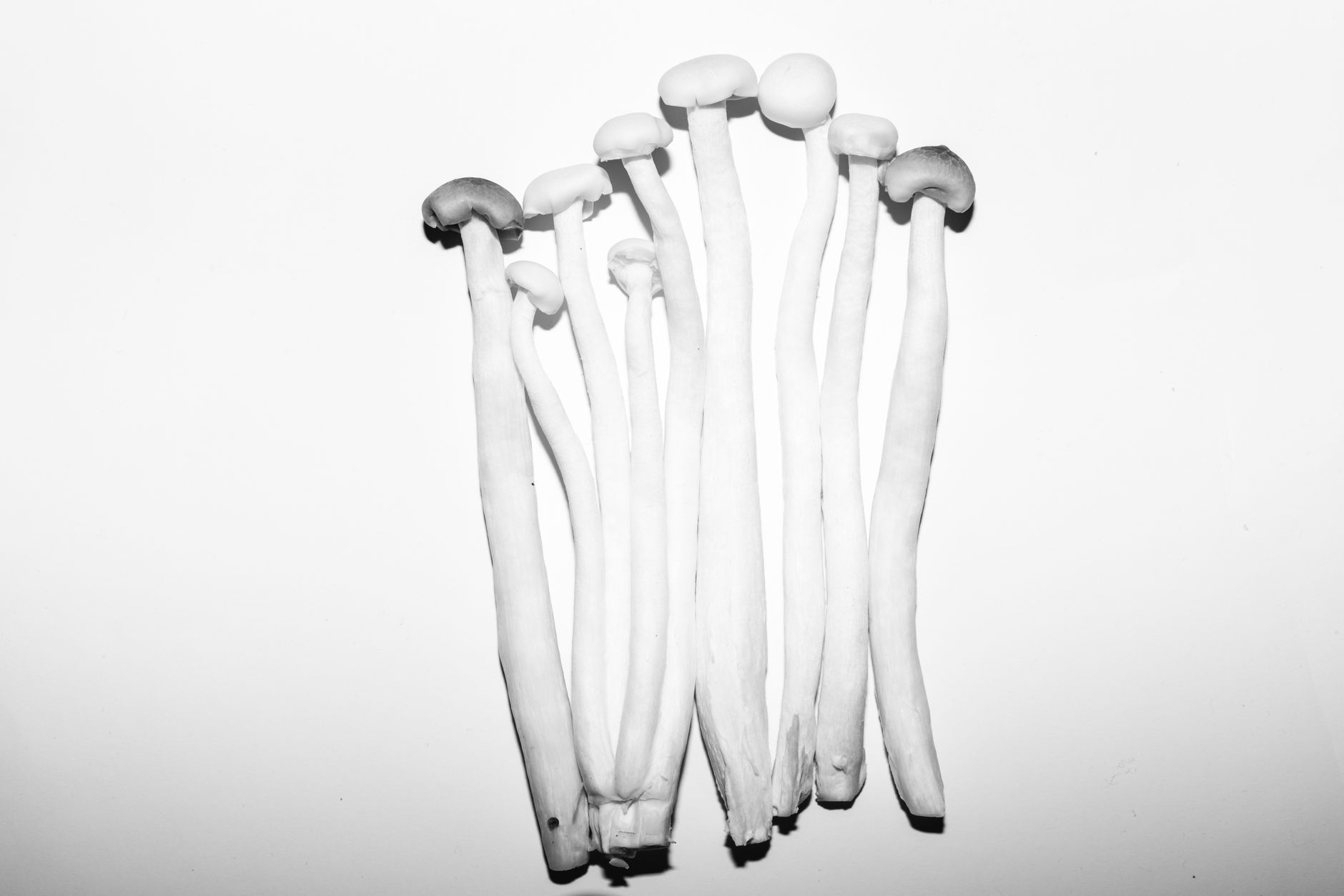
A 2022 study published in the International Journal of Medicinal Mushrooms took a broader comparative approach, testing several functional mushroom species — including Hericium erinaceus, Ganoderma lucidum (Reishi), Pleurotus eryngii (King Oyster), and Flammulina velutipes (Enoki) — in cuprizone-induced MS mouse models.[3]
After five weeks of dietary supplementation coinciding with peak demyelination, all four species showed statistically significant suppression of CPZ-induced demyelination as measured by Black-Gold II myelin staining. Pleurotus eryngii, Ganoderma lucidum, and Flammulina velutipes significantly improved motor dysfunction on rotarod testing. Both Ganoderma lucidum and Hericium erinaceus treatments were associated with attenuation of CPZ-induced weight loss. The authors concluded that these mushrooms may represent promising biological response modifiers (BRMs) with relevance to MS-like pathology, noting epidemiological data showing lower MS prevalence in East Asian countries where medicinal mushroom consumption is higher — though they are careful to note this correlation does not establish causation.
The NGF Connection: A Related Mechanism
The myelin research does not exist in isolation. H. erinaceus has a well-characterized ability to stimulate NGF synthesis via its hericenone and erinacine compounds, as discussed in detail in our review of Lion’s Mane and nerve growth factor. NGF plays a role not only in neuron survival but also in the broader context of CNS repair and neuroplasticity. Some researchers hypothesize that NGF upregulation may contribute indirectly to the supportive effects observed in demyelination models, though the relative contributions of NGF stimulation versus direct oligodendrocyte effects have not yet been fully disentangled.
Important Limitations and What This Research Does Not Show
It is important to approach this research with appropriate caution. All existing studies on mushrooms and multiple sclerosis have been conducted in rodent models using cuprizone-induced demyelination — an experimental tool that mimics certain aspects of MS pathology but does not fully replicate the complexity of human MS, which involves autoimmune T-cell activity and a broader immune dysregulation not present in the cuprizone model.
No human clinical trials have evaluated Lion’s Mane or other functional mushrooms specifically for MS. The bioavailability and CNS penetration of erinacine compounds in humans following oral supplementation have not been confirmed at levels equivalent to those used in animal studies. Researchers consistently note that while results are promising, translation to human clinical applications requires substantially more investigation.
This content is not medical advice and does not substitute for consultation with a qualified neurologist or MS specialist. Individuals living with MS should not alter existing treatment regimens based on preclinical animal data.
Summary
Preclinical research indicates that Lion’s Mane extract and its bioactive erinacine compounds may support oligodendrocyte maturation, increase myelin basic protein expression, and attenuate demyelination in animal models. A comparative study also found that Reishi, King Oyster, and Enoki mushrooms suppressed demyelination in MS-like rodent models. These findings contribute to a growing body of literature on functional mushrooms and neurological health, though human clinical evidence is currently absent. The area represents an active and scientifically credible line of inquiry that warrants further investigation.
References
- 1. Huang HT, et al. Hericium erinaceus mycelium and its small bioactive compounds promote oligodendrocyte maturation with an increase in myelin basic protein. Sci Rep. 2021;11(1):6551. PMID: 33753806
- 2. Fu JT, et al. Erinacine S, a small active component derived from Hericium erinaceus, protects oligodendrocytes and alleviates mood abnormalities in cuprizone-exposed rodents. Biomed Pharmacother. 2024;173:116297. PMID: 38394854
- 3. Yamashina K, et al. Suppressive Effect of Fruiting Bodies of Medicinal Mushrooms on Demyelination and Motor Dysfunction in a Cuprizone-Induced Multiple Sclerosis Mouse Model. Int J Med Mushrooms. 2022;24(9):15-24. PMID: 36004706
Disclaimer: This article is for informational purposes only and does not constitute medical advice, diagnosis, or treatment. The research discussed is primarily preclinical (animal-based) and has not been validated in human clinical trials for multiple sclerosis. Always consult a qualified healthcare professional before making any changes to your health regimen.