Functional mushrooms are widely studied for their immunomodulatory and adaptogenic properties, but a growing body of research is examining a more foundational mechanism: their role as prebiotic substrates that may support gut microbiota composition and activity. Understanding this dimension may help explain why certain bioactive effects are observed after regular mushroom consumption and why the gut may be a key site of action for mushroom-derived compounds.
What Makes Mushrooms Potentially Prebiotic?
Unlike many plant-based fibers, mushrooms contain a distinct suite of structural and bioactive polysaccharides. These include beta-(1,3)/(1,6)-glucans, alpha-glucans, chitin, heteroglucans, and mannans. Because the human digestive tract lacks enzymes capable of fully breaking down these compounds, they resist digestion in the upper gastrointestinal tract and arrive largely intact in the colon, where resident microbial populations can ferment them.
A 2024 review published in Carbohydrate Polymers noted that human fecal fermentation studies are the most reported approach to assessing prebiotic potential in mushroom polysaccharides, and that early findings suggest impacts on intestinal biological, mechanical, chemical, and immunological barriers.[1] Research further distinguishes alpha-glucans and chitin as having particular prebiotic associations, while beta-glucans appear more directly linked to immunomodulatory activity via dectin-1 and Toll-like receptor engagement.
Short-Chain Fatty Acids: A Central Mechanism
One of the most discussed outcomes of prebiotic fermentation in the colon is the production of short-chain fatty acids (SCFAs), particularly acetate, propionate, and butyrate. These metabolites are produced when gut bacteria ferment dietary fibers and certain polysaccharides. SCFAs serve as energy substrates for colonocytes, contribute to intestinal barrier integrity, and may influence systemic immune signaling.
A 2026 narrative review from the University of Bologna examined evidence linking mushroom-derived compounds with SCFA-mediated health effects. The authors found that polysaccharides including beta-glucans, polyphenols, trehalose, and chitin all resist upper GI digestion and are fermented by intestinal microorganisms, promoting SCFA production. The review also noted potential downstream effects on neuroinflammation and neurotransmitter pathways via the gut-brain axis, though the authors emphasized that well-designed human clinical trials remain limited.[2]
Species-Specific Findings
Several mushroom species have been examined individually for their prebiotic potential:
Turkey Tail (Trametes versicolor)
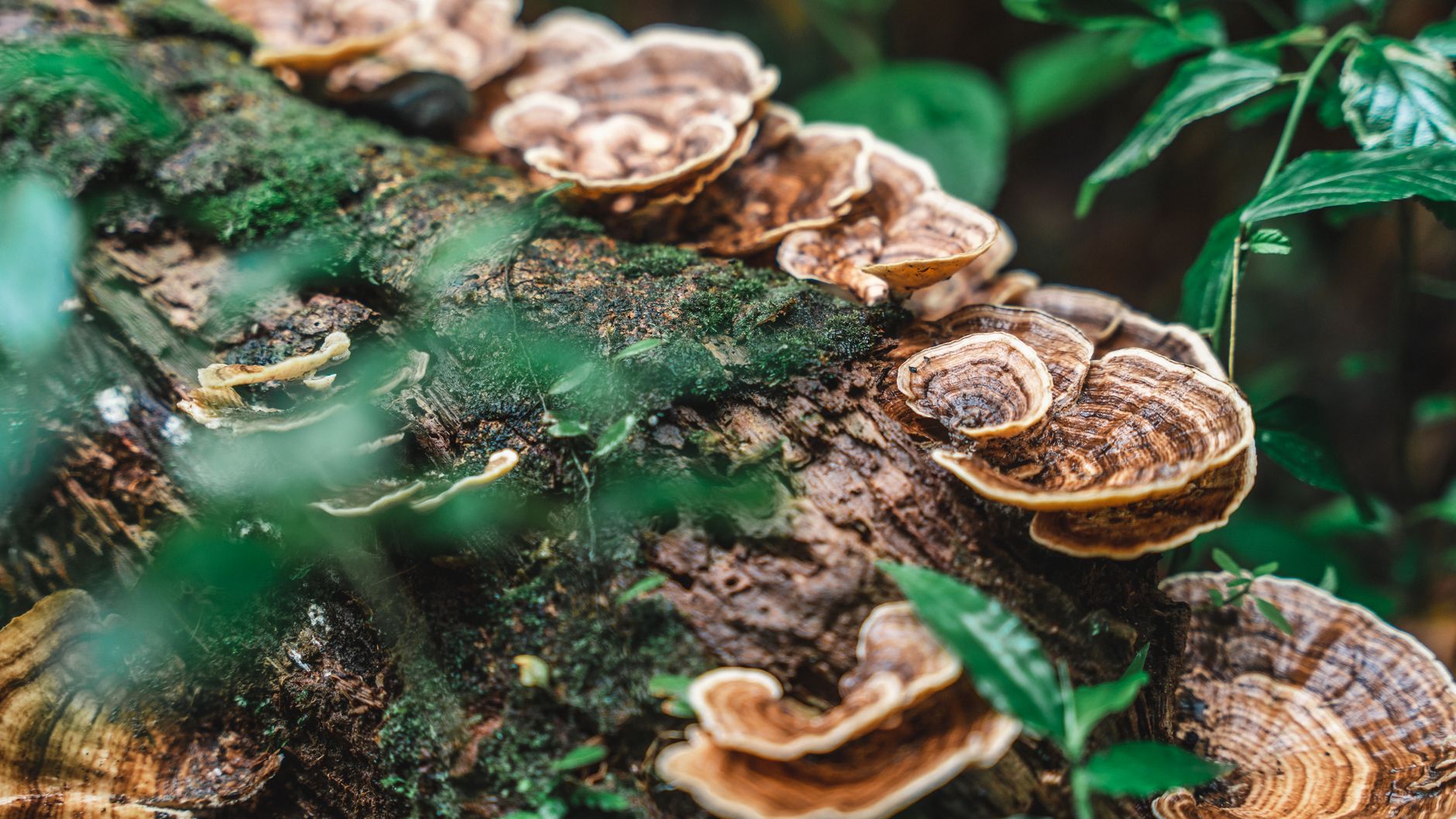
Turkey tail is among the most studied species for gut-immune interactions. Its primary polysaccharides, PSK (krestin) and PSP (polysaccharopeptide), have been examined in both in vitro and in vivo models. Studies suggest these compounds may selectively support beneficial bacterial genera including Bifidobacterium and Lactobacillus, while the gut-modulating effects may in turn amplify systemic immune responses.
Lion’s Mane (Hericium erinaceus)
Lion’s mane polysaccharides have been examined in animal models for effects on intestinal flora diversity. Some findings indicate support for beneficial microbial populations and improvement in intestinal barrier markers, though most studies are preclinical, and human data are sparse.
Reishi (Ganoderma lucidum)
Reishi polysaccharides have received attention for their potential effects along the gut-liver and gut-brain axes. A 2025 review in International Journal of Biological Macromolecules noted that research on extraction methods, structure-activity relationships, and gut microbiota interactions has grown substantially between 2019 and 2024, with beta-glucans and chitin emerging as compounds with distinct but complementary roles.[3]
Shiitake (Lentinula edodes)
Lentinan, a beta-glucan derived from shiitake, has been one of the longer-studied mushroom polysaccharides. Research suggests it may act as a substrate for gut microbiota fermentation and may influence immune cell populations in the gut-associated lymphoid tissue. Shiitake extracts have also been examined for effects on inflammatory bowel conditions in animal models, though clinical evidence in humans remains limited.
Structural Factors That Influence Prebiotic Activity
Not all mushroom polysaccharides behave identically in the gut. Research suggests that several structural variables influence fermentability and microbial selectivity:
- Molecular weight: Studies indicate that low-molecular-weight fractions may be more readily fermented, while high-molecular-weight beta-glucans with triple-helix conformations may be more involved in direct immune receptor engagement.
- Glycosidic linkage pattern: The arrangement of beta-(1,3) and beta-(1,6) linkages and branching density influences how gut bacteria access and ferment these structures.
- Chitin content: Chitin, the structural component of fungal cell walls, has been recognized for antimicrobial and barrier-supporting properties in addition to its fermentation-related roles.
These structural variables also help explain why extraction method matters significantly for supplement quality. Mushroom supplements that have not undergone hot water extraction or enzymatic processing may leave polysaccharides encased in chitin matrix, reducing their bioavailability. For more on evaluating supplement form, see Maitake Mushroom D-Fraction: What the Research Shows About Immune Modulation.
Gut Dysbiosis and Potential Therapeutic Angles
Research has drawn connections between gut microbiota dysbiosis and a range of conditions including inflammatory bowel disease, cardiovascular dysfunction, metabolic disorders, and neurological conditions. A 2024 overview published in Carbohydrate Polymers noted that gut dysbiosis is directly connected to these disease categories, and that mushroom polysaccharides may represent a novel dietary strategy for microbiota modulation, pending further human clinical trials.[1]
Animal experiments examining inflammatory bowel disease models have suggested that mushroom polysaccharide supplementation may reduce proinflammatory cytokine levels and assist in re-establishing redox balance, though these findings require validation in human populations before clinical conclusions can be drawn.
Key Limitations in the Current Evidence
The body of research on mushrooms as prebiotic sources, while growing, carries several important limitations:
- Most mechanistic studies are conducted in vitro or in animal models; well-powered human clinical trials examining gut microbiota endpoints are relatively rare.
- Mushroom preparations vary substantially across studies, making cross-study comparisons difficult.
- Growing conditions, developmental stage, part of mushroom used (mycelium vs. fruiting body), extraction method, and storage all affect polysaccharide profile and bioactivity.
- Individual variation in baseline gut microbiota means prebiotic effects may differ substantially across populations.
These factors do not dismiss the field, but they do underscore the need for standardized preparations and rigorous trial design before specific health claims can be validated.
Summary
Research suggests that functional mushrooms contain a range of non-digestible polysaccharides that may act as prebiotic substrates, promoting the fermentation activity of beneficial gut bacteria and supporting SCFA production. Beta-glucans, alpha-glucans, and chitin appear to play distinct but potentially complementary roles in this process. Species including turkey tail, lion’s mane, reishi, and shiitake have each been examined in this context, with promising but still largely preclinical findings. For consumers interested in gut health, mushroom-derived polysaccharides represent an area of active and credible scientific inquiry, though current evidence does not yet support specific therapeutic recommendations without further human research.
References
- [1] Araújo-Rodrigues H, et al. An Overview on Mushroom Polysaccharides: Health-promoting Properties, Prebiotic and Gut Microbiota Modulation Effects and Structure-function Correlation. Carbohydr Polym. 2024;333:121978. PMID: 38494231
- [2] Mattioli LB, et al. Edible Mushrooms as Emerging Prebiotic Sources: Gut Microbiota Modulation and SCFA-Mediated Health Effects. Foods. 2026;15(9):1539. PMID: 42121482
- [3] Guo D, et al. Advanced insights into mushroom polysaccharides: Extraction methods, structure-activity, prebiotic properties, and health-promoting effects. Int J Biol Macromol. 2025;308(Pt 4):142319. PMID: 40132710
Disclaimer: The information in this article is provided for educational purposes only and does not constitute medical advice. Functional mushroom supplements are not intended to diagnose, treat, cure, or prevent any disease. Consult a qualified healthcare provider before adding any new supplement to your routine, particularly if you have an existing medical condition or are taking medications.