The word “superfood” gets thrown around a lot in wellness circles, but few natural substances have as much documented antioxidant activity as chaga (Inonotus obliquus), a parasitic fungus that grows primarily on birch trees in cold northern climates. Unlike the mushrooms you find at a grocery store, chaga forms a dense, charcoal-like conk on the outside of trees, concentrating a remarkable array of bioactive compounds over decades of growth. Understanding what those compounds actually do, and how chaga stacks up against better-known antioxidant sources, helps cut through the marketing noise.
What Makes Chaga a Notable Antioxidant Source?
Chaga’s antioxidant reputation rests primarily on its high concentration of polyphenols, melanin pigments, and triterpenoids. The melanin complex in chaga is particularly noteworthy: it is derived from the oxidation of polyphenols on the fungal surface and contributes significantly to the organism’s radical-scavenging capacity. Chaga also contains betulinic acid and inotodiol, compounds it synthesizes from the birch bark it inhabits, as well as a rich pool of beta-glucan polysaccharides.
A 2026 study published in Antioxidants isolated three specific polyphenolic compounds from Inonotus obliquus and assessed their antioxidant activity alongside xanthine oxidase inhibition, finding robust free-radical scavenging effects at multiple stages of oxidative cascade testing.[1] Xanthine oxidase is an enzyme that generates reactive oxygen species as a byproduct: inhibiting it is one pathway through which dietary antioxidants help reduce cellular oxidative burden.
Chaga vs. Common Antioxidant Superfoods
You have probably seen ORAC (Oxygen Radical Absorbance Capacity) scores used to rank antioxidant foods. Chaga extract consistently scores exceptionally high on ORAC assays, often compared favorably to acai berries, pomegranate, dark chocolate, and blueberries. While ORAC scores have limitations as a direct proxy for in-vivo activity, they do provide a useful first-pass comparison of radical-neutralizing potential.
Versus Blueberries and Acai
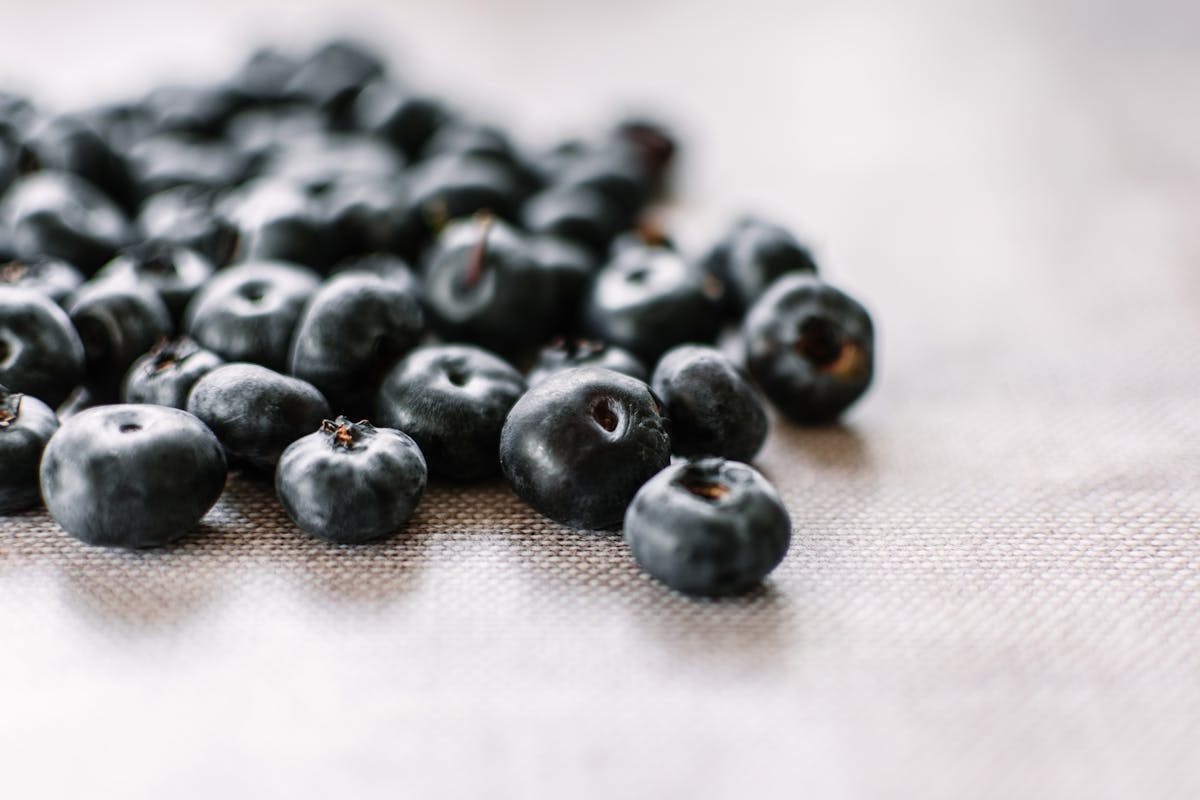
Fresh blueberries and acai are well-studied for their anthocyanin content. Anthocyanins are a subclass of flavonoids with documented effects on oxidative stress markers in human trials. Chaga’s polyphenol profile overlaps with flavonoids but also includes melanin-complex compounds that are largely absent from berries. This means chaga and berry-based antioxidants likely act through overlapping but not identical mechanisms, suggesting they may complement rather than simply replace one another.
Versus Green Tea
Green tea’s antioxidant activity is driven primarily by epigallocatechin gallate (EGCG), a catechin with a substantial body of clinical research behind it. Chaga’s polyphenol matrix is structurally different from EGCG, though both demonstrate the ability to modulate Nrf2 signaling, a master pathway that governs the cell’s endogenous antioxidant response. A 2023 study found that chaga polysaccharides alleviated photoaging in a manner consistent with Nrf2 pathway upregulation, suggesting systemic antioxidant support rather than simple free-radical quenching.[2]
Versus Turmeric (Curcumin)
Curcumin, the active polyphenol in turmeric, is one of the most studied anti-inflammatory and antioxidant compounds in the world. Like chaga, curcumin activates Nrf2 and inhibits NF-kB, a pro-inflammatory signaling molecule. Curcumin’s challenge is bioavailability: it is poorly absorbed without enhancement (piperine or lipid carriers). Chaga’s water-soluble polysaccharides, by contrast, are highly bioavailable when consumed as a hot-water extract or tea, which is the traditional preparation method used across Russia, Scandinavia, and northern Asia for centuries.
The Role of Polysaccharides Beyond Antioxidation
While polyphenols carry most of the antioxidant credit, chaga’s beta-glucan polysaccharides perform a complementary function. A comprehensive 2026 review examined the preparation methods, structural characteristics, and biological activities of Inonotus obliquus polysaccharides, noting their relevance to oxidative stress mitigation alongside immune modulation, anti-tumor, and hepatoprotective effects.[3] This distinction matters for consumers: an extract standardized only for polyphenols may miss the broader spectrum of bioactivity found in a full-spectrum hot-water extract.
How Chaga Is Consumed and What Form Matters
Chaga is available as a raw powder, hot-water extract, dual extract (hot water plus alcohol), and as tea chunks. The preparation method significantly affects which compounds survive processing:
- Hot-water extract: Preserves beta-glucans and most polyphenols; the traditional method
- Alcohol (ethanol) extract: Better for extracting triterpenoids and betulinic acid, which are not water-soluble
- Dual extract: Combines both, theoretically offering the broadest compound profile
- Raw powder: May contain more compounds but lower bioavailability; cell walls require heat to break down
For antioxidant purposes, hot-water extraction is generally considered adequate, since polyphenols and polysaccharides are water-soluble. If you are primarily interested in chaga for its antioxidant properties, look for a hot-water extract standardized to at least 30% polysaccharides.
It is also worth understanding beta-glucans more broadly: they are the key structural polysaccharides in most functional mushrooms, and their role in immune and antioxidant support is well-documented. Our overview of beta-glucans and why they matter in mushroom supplements covers this in detail.
Is Chaga the Best Antioxidant Source?
“Best” depends on what you are optimizing for. Chaga’s polyphenol-melanin complex offers a broad-spectrum radical-scavenging profile that few single foods match. Its Nrf2 activation mechanism places it in a meaningful category alongside curcumin and EGCG. However, chaga lacks the anthocyanin diversity of berries and the fat-soluble antioxidant load (tocopherols, carotenoids) found in vegetables like spinach and sweet potato.
A sensible antioxidant strategy does not pick a single winner. What chaga offers is a functionally unique contribution: a dense cluster of polyphenols and polysaccharides from a non-plant source, delivered in a format with centuries of safe traditional use and a growing body of laboratory research to support it. For people already consuming a produce-rich diet, chaga can round out the antioxidant spectrum rather than replace it.
Safety Considerations
Chaga is generally considered safe for most adults when consumed as a tea or standardized extract. However, it contains high levels of oxalates, which can be problematic for individuals prone to kidney stones. Those on anticoagulant medications should also use caution, as some chaga compounds may potentiate blood-thinning effects. As with all functional mushroom supplements, consulting a healthcare provider before regular use is advisable, particularly for those with existing health conditions.
References
- [1] Shu Y, Chen J, et al. Three Polyphenolic Compounds from Inonotus obliquus: Antioxidant Activity, Xanthine Oxidase Inhibition, and Regulatory Effects on MyD88/TLR4. Antioxidants (Basel). 2026. PMID: 41750647
- [2] Chaga Medicinal Mushroom, Inonotus obliquus (Agaricomycetes), Polysaccharides Alleviate Photoaging by Regulating Nrf2 Pathway. Int J Med Mushrooms. 2023. PMID: 37830196
- [3] Zhang S, Zhang W, et al. Inonotus obliquus Polysaccharides: Preparation, Structural Characteristics, Structure-Activity Relationships, Biological Activities and Applications. 2026. PMID: 41978174
This article is for informational purposes only and does not constitute medical advice. Always consult a qualified healthcare provider before starting any supplement.