Interest in functional mushrooms for cognitive support has grown considerably as researchers investigate compounds that may influence neuronal health, memory, and mental clarity. Several species have been studied for their effects on brain function, ranging from nerve growth factor (NGF) stimulation to antioxidant activity in neural tissue. Below is an overview of the mushrooms with the strongest current evidence base for brain-related benefits, along with what the research actually shows.
1. Lion’s Mane (Hericium erinaceus): The Most Studied Species for Cognition
Lion’s Mane is consistently ranked highest when it comes to evidence for brain health. Its bioactive compounds — hericenones (from the fruiting body) and erinacines (from the mycelium) — have been shown in laboratory studies to stimulate the synthesis of nerve growth factor, a protein essential for the growth and maintenance of neurons.[1]
Human clinical data is limited but notable. A double-blind, placebo-controlled trial involving adults aged 50 to 80 with mild cognitive impairment found that those taking Hericium erinaceus powder showed significantly higher scores on a cognitive function scale at weeks 8, 12, and 16 compared to the placebo group. Scores declined after supplementation ended, suggesting the effect was tied to ongoing intake.[2]
A second randomized, double-blind, placebo-controlled study found that oral intake of Lion’s Mane fruiting body over 12 weeks significantly improved scores on the Mini Mental State Examination (MMSE) and suggested a role in dementia prevention, though the authors noted this requires further investigation.[3]
These results position Lion’s Mane as the functional mushroom with the most direct human evidence for cognitive support. For a deeper look at its research profile, see our full article on Lion’s Mane and Cognitive Decline in Aging.
2. Reishi (Ganoderma lucidum): Neuroprotective and Stress-Related Mechanisms
Reishi is better known for immune modulation and adaptogenic properties, but animal research suggests it may also support brain health through indirect pathways. An animal study found that a Ganoderma lucidum aqueous extract prevented memory deficits induced by hypobaric hypoxia by modulating neurotransmitter levels (catecholamines, serotonin, glutamate), improving neuroplasticity markers including BDNF and CREB expression, and reducing hippocampal oxidative stress.[4]
The relevance to everyday human cognition is not yet established at the clinical level. Reishi’s potential brain benefits may be more relevant for contexts involving oxidative stress or high cortisol burden, as the mushroom’s triterpenoids and polysaccharides appear to work through stress-modulating pathways rather than direct NGF stimulation. Most current clinical use for cognition with Reishi is extrapolated from preclinical data.
3. Cordyceps (Cordyceps militaris): Early Evidence for Neuroprotection
Cordyceps militaris contains cordycepin (3-deoxyadenosine), a nucleoside analogue with documented effects on brain signaling. In rodent models of Alzheimer’s disease, administration of CM extract was associated with improved learning and memory performance on the Morris water maze test and novel object recognition tasks. The extract also inhibited nitric oxide production and lipid peroxidation in brain tissue, suggesting a role in reducing neuroinflammation and oxidative damage.[5]
These findings are promising but limited to animal models. Human trials specifically targeting cognitive outcomes with Cordyceps are sparse, and clinical conclusions should not be drawn from preclinical data alone.
4. Chaga (Inonotus obliquus): Antioxidant Compounds With Neuroprotective Activity
Chaga mushroom contains lanostane-type triterpenoids that have been investigated for neuroprotective effects. Laboratory research found that isolated triterpenoid compounds from Inonotus obliquus protected human neuroblastoma cells (SH-SY5Y line) from oxidative damage induced by hydrogen peroxide, suggesting activity against the kind of oxidative stress associated with neurodegenerative conditions.[6]
Chaga’s antioxidant profile — including betulin, betulinic acid, and polyphenols — may provide indirect neuroprotective effects by reducing systemic oxidative burden. However, direct evidence from human cognitive trials is currently absent, and Chaga’s brain health benefits remain largely theoretical pending clinical investigation.
5. Turkey Tail and Reishi: Gut-Brain Axis as a Secondary Pathway
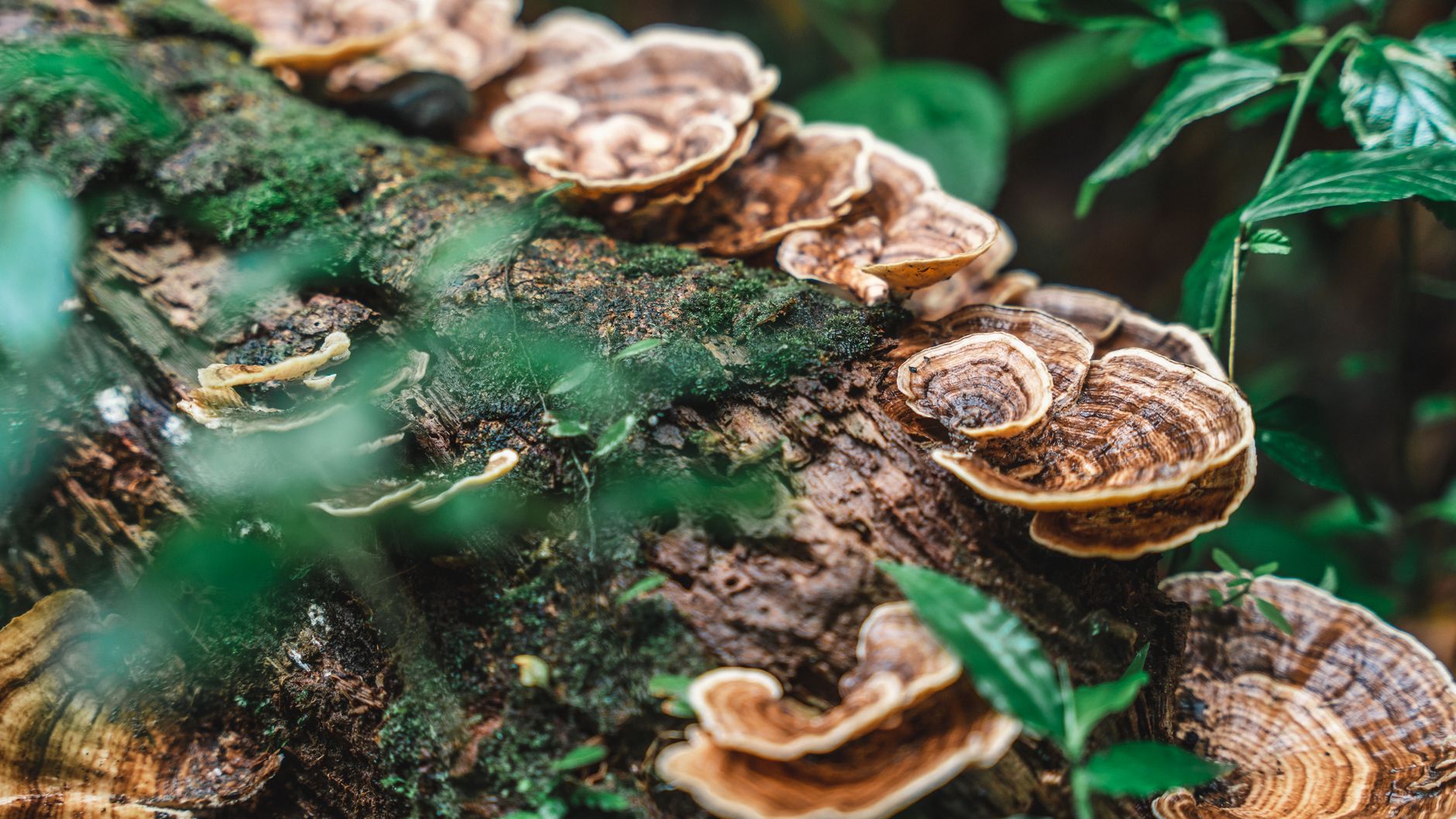
Turkey Tail (Trametes versicolor) and Reishi are primarily studied for immune modulation, but there is growing scientific interest in the gut-brain axis as a pathway through which prebiotic polysaccharides may influence mood and cognition. The beta-glucans and polysaccharopeptides in Turkey Tail may modulate gut microbiota composition, which research suggests can influence neuroinflammatory pathways and neurotransmitter precursor availability. This is an area of active investigation but remains in early stages for both species.
How These Mushrooms Compare: A Practical Summary
Based on the current evidence, a rough ranking by strength of brain-specific research would place the species in the following tiers:
Tier 1: Direct Cognitive Evidence in Humans
- Lion’s Mane — two randomized controlled trials in humans showing improved cognitive scores; NGF-stimulating compounds identified in vitro
Tier 2: Preclinical Evidence with Plausible Mechanisms
- Cordyceps militaris — improved cognitive performance in Alzheimer’s mouse models; cordycepin shown to modulate hippocampal synaptic transmission
- Reishi — neuroprotective effects in animal models; memory-preserving effects linked to neurotransmitter and BDNF modulation
Tier 3: Indirect or Cellular-Level Evidence Only
- Chaga — neuroprotective triterpenoids identified in cell studies; no human cognitive trials yet
- Turkey Tail — gut-brain axis hypothesis; no direct cognitive outcome studies in humans
What to Consider Before Supplementing for Brain Health
Even where evidence exists, it is important to note that most functional mushroom research involves concentrated extracts — not whole mushrooms or food amounts. The quality, extraction method, and standardization of a supplement (particularly its beta-glucan or hericenone content) will significantly affect what the body actually receives.
Anyone considering functional mushrooms as part of a broader brain health strategy should discuss this with a qualified healthcare provider, particularly if managing a neurological condition or taking medications that affect the central nervous system.
References
- 1 Samberkar S, et al. Int J Med Mushrooms. 2015;17(11):1047-54. PMID: 26853959
- 2 Mori K, et al. Phytother Res. 2009;23(3):367-72. PMID: 18844328
- 3 Saitsu Y, et al. Biomed Res. 2019;40(4):125-131. PMID: 31413233
- 4 Sharma P, Tulsawani R. Sci Rep. 2020;10(1):8944. PMID: 32488040
- 5 He MT, et al. Food Sci Biotechnol. 2019;28(3):865-872. PMID: 31093445
- 6 Zou CX, et al. Bioorg Chem. 2020;105:104438. PMID: 33171406
Disclaimer: This article is for informational purposes only and does not constitute medical advice. Functional mushrooms are not intended to diagnose, treat, cure, or prevent any disease. Consult a qualified healthcare professional before beginning any new supplement regimen.