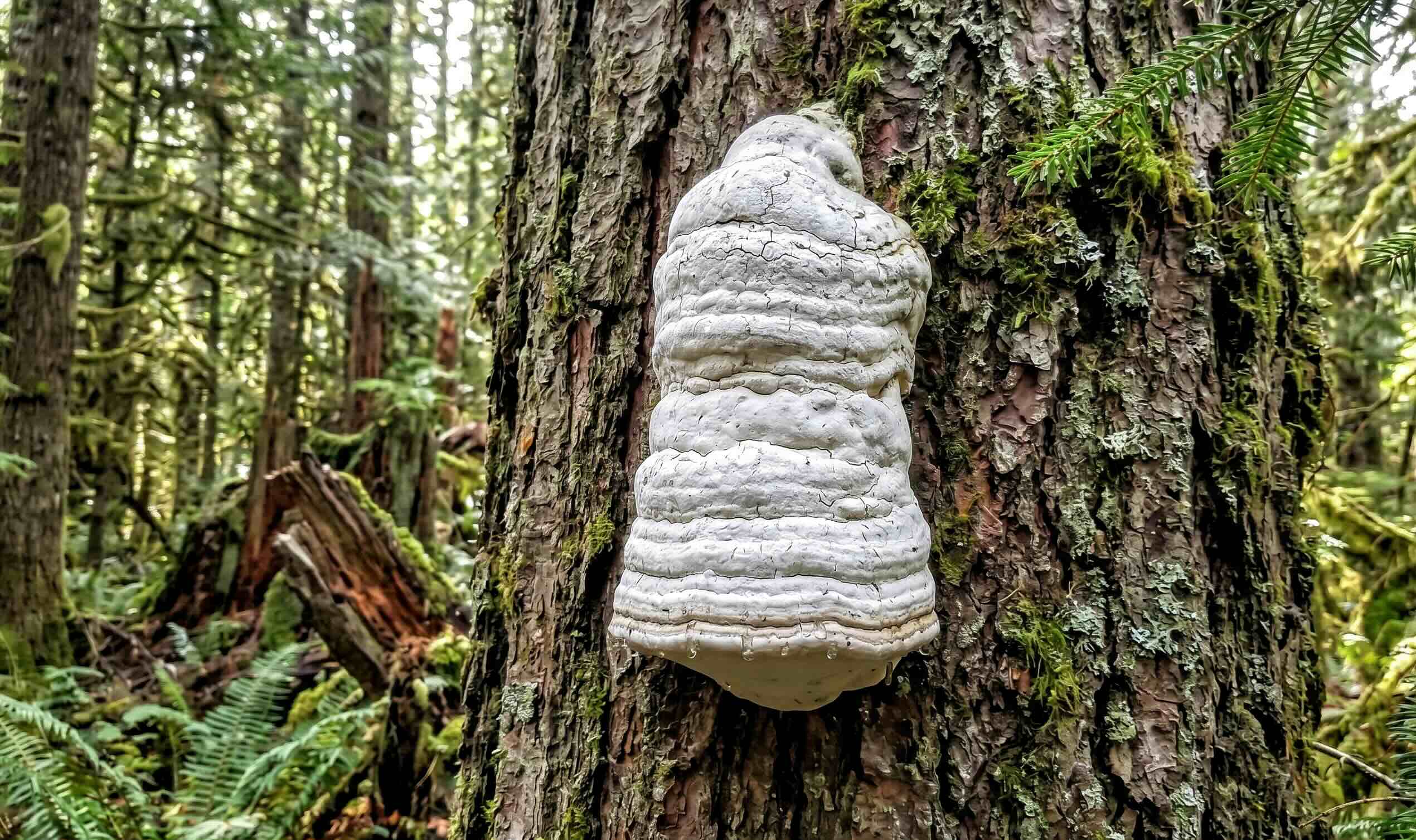
Agarikon (Fomitopsis officinalis) is one of the oldest and rarest medicinal fungi on Earth. Known historically as the “elixir of long life,” this shelf mushroom once grew abundantly across ancient conifer forests in Europe, Asia, and North America. Today, old-growth logging has pushed wild agarikon to near-extinction in many regions, making it one of the most coveted subjects in modern mycological research.
While it lacks the household name recognition of lion’s mane or reishi, the science emerging around agarikon is compelling: antimicrobial activity, anti-tumor properties, and bioactive compounds that researchers are only beginning to map. Here is what we currently know about the rarest functional fungus in the world.
What Is Agarikon?
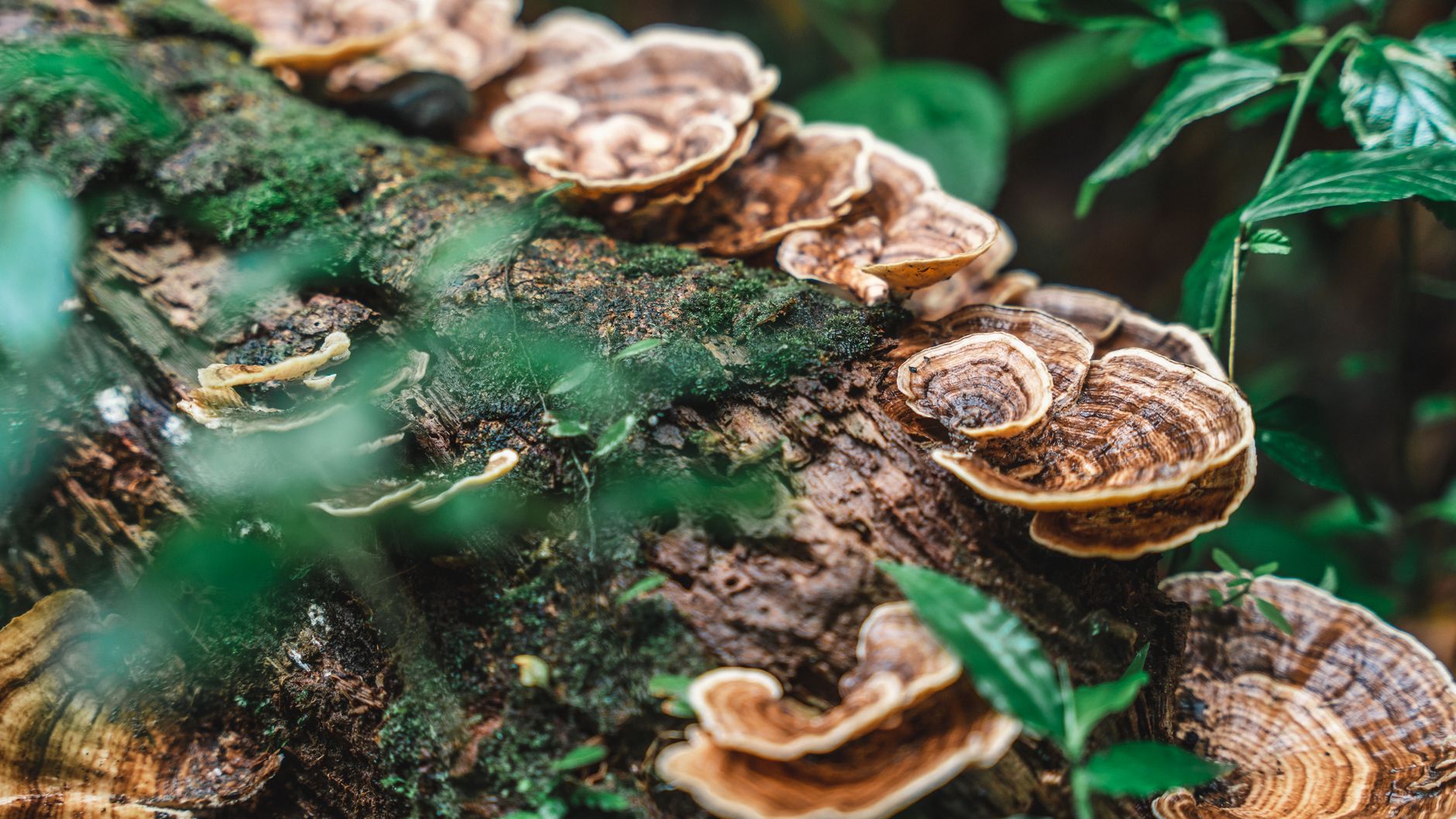
Agarikon is a large, woody polypore fungus that grows exclusively on old-growth conifers: Douglas fir, larch, and hemlock are its primary hosts. It produces a distinctive cylindrical or hoof-shaped fruiting body that can grow for decades, accumulating rings like a tree. A single specimen may take 75 to 100 years to reach full size, which partly explains its rarity.
Historically, agarikon was documented in ancient Greek medicine by Dioscorides, who wrote about it in De Materia Medica around 65 CE. He described it as a remedy for consumption (tuberculosis), bleeding, and a range of respiratory ailments. Indigenous Pacific Northwest tribes also used it as a medicinal and ceremonial fungus long before European contact.
Its scientific name has shifted over the years: you may see it listed as Fomitopsis officinalis, Laricifomes officinalis, or Bridgeoporus nobilissimus depending on the source and classification era. The species is protected under conservation laws in parts of Europe due to its old-growth dependency.
The Bioactive Compounds Behind the Research Interest
Agarikon’s medicinal reputation rests on a suite of bioactive compounds. Chief among these are lanostane-type triterpenes, a class of molecules also found in reishi but present in agarikon in unique structural forms. These triterpenes are believed to be responsible for much of the fungus’s antimicrobial and anti-inflammatory activity.
The mushroom is also a source of polysaccharides, including beta-glucans, which are well-documented as immune modulators in other functional fungi. You can read more about how beta-glucans work across different species in our deep-dive on beta-glucans.
A 2019 review published in Mycology catalogued the known bioactive metabolites of Fomitopsis officinalis and found evidence of antimicrobial activity against a range of bacterial and fungal pathogens. The authors concluded that agarikon deserved significantly more research attention given its historical use and the breadth of its chemical profile.[1]
Antimicrobial and Antiviral Properties
Perhaps the most attention-grabbing area of agarikon research involves its potential antiviral activity. Mycologist Paul Stamets has been one of the most vocal proponents of agarikon’s antiviral potential, particularly following research conducted in collaboration with the Bioshield Defense Program. His team screened hundreds of fungal extracts for activity against influenza, poxvirus, and herpes simplex viruses; agarikon-derived extracts consistently stood out.
Laboratory studies have demonstrated activity against influenza A and B, swine flu (H1N1), bird flu (H5N1), and HSV-1 in cell-based models. It is important to note that these are in vitro (cell culture) and in vivo (animal) results: no clinical trials in humans have yet been completed to confirm these effects.
A 2020 review in Chemistry and Biodiversity provided a comprehensive summary of biological and medicinal properties documented for Fomitopsis officinalis, covering antiviral, antimicrobial, cytotoxic, and anti-inflammatory data from preclinical studies. The authors noted the fungus’s multi-target potential but acknowledged that human evidence remains absent.[2]
Anti-Tumor Research: Early but Intriguing
The anti-tumor properties of agarikon have attracted interest from researchers exploring polysaccharide-based cancer support compounds. Lanostane triterpenes isolated from Fomitopsis officinalis have shown cytotoxic activity against cancer cell lines in laboratory settings, though this category of research is still at an early stage.
A 2024 study published in the International Journal of Biological Macromolecules specifically investigated a polysaccharide fraction isolated from F. officinalis and described it as a “multi-target molecule” with potential applications in cancer research. The researchers identified anti-oxidant, anti-inflammatory, and cytotoxic effects across multiple in vitro models.[3]
As with all preclinical cancer research, these findings are hypothesis-generating: they point to mechanisms worth investigating in clinical settings, not outcomes you can count on from a supplement. No agarikon product has been approved or validated for cancer treatment.
Conservation Status and Why Sourcing Matters
Because wild agarikon is so rare, the sourcing of any commercial agarikon product is a serious ethical and quality question. Wild-harvested agarikon is essentially off the table: the fungus takes decades to mature, and removing it from old-growth habitat threatens already-fragile ecosystems.
Legitimate agarikon supplements use mycelium cultivated in controlled laboratory environments. Stamets’ company Fungi Perfecti was instrumental in developing techniques to cultivate this species at scale. Look for products that specify cultivated (not wild-harvested) origin and ideally provide third-party testing for beta-glucan content.
Because agarikon grows so slowly, mycelium-on-grain products can sometimes contain high filler ratios. This is the same quality concern that applies to all mushroom supplement categories: always verify beta-glucan content over simple extract weight claims.
How Is Agarikon Typically Used?
Agarikon supplements on the market today are almost exclusively mycelium-based extracts, available in capsule or powder form. It is more often found as a component of multi-mushroom blends than as a standalone product, partly because of its production difficulty and partly because its benefits may complement those of better-studied species like lion’s mane or reishi.
No standardized dosing protocol exists for agarikon. Published research has typically used specific extract concentrations within controlled laboratory conditions. Any dose guidance you encounter in supplement marketing should be treated with skepticism until clinical trials establish human-relevant parameters.
Agarikon is generally considered non-toxic at typical supplemental levels based on animal studies, but its long-term safety in humans has not been formally studied. If you are considering adding it to a stack, consult with a healthcare provider, particularly if you are immunocompromised, pregnant, or taking prescription medications.
The Bottom Line on Agarikon
Agarikon is one of the most historically significant and scientifically intriguing fungi in the functional mushroom space, yet it remains largely under the radar for mainstream consumers. Its antimicrobial profile, preclinical antiviral data, and emerging anti-tumor research make it a legitimate subject of scientific interest. At the same time, the absence of human clinical trials means its benefits in supplement form remain unproven.
What sets agarikon apart is the combination of a rich ethnobotanical record and a genuinely distinctive chemical profile. As old-growth forest conservation intersects with renewed interest in natural bioactive compounds, this rare fungus is likely to receive considerably more research attention in the years ahead.
References
- [1] Heleno SA, et al. Antimicrobial properties of Fomitopsis officinalis in the light of its bioactive metabolites: a review. Mycology. 2019.
- [2] Zheng W, et al. Fomitopsis officinalis: a Species of Arboreal Mushroom with Promising Biological and Medicinal Properties. Chem Biodivers. 2020.
- [3] Wang X, et al. A fungal polysaccharide from Fomitopsis officinalis as a multi-target molecule to combat cancer. Int J Biol Macromol. 2024.
This article is for informational purposes only and does not constitute medical advice. Always consult a qualified healthcare provider before starting any supplement.