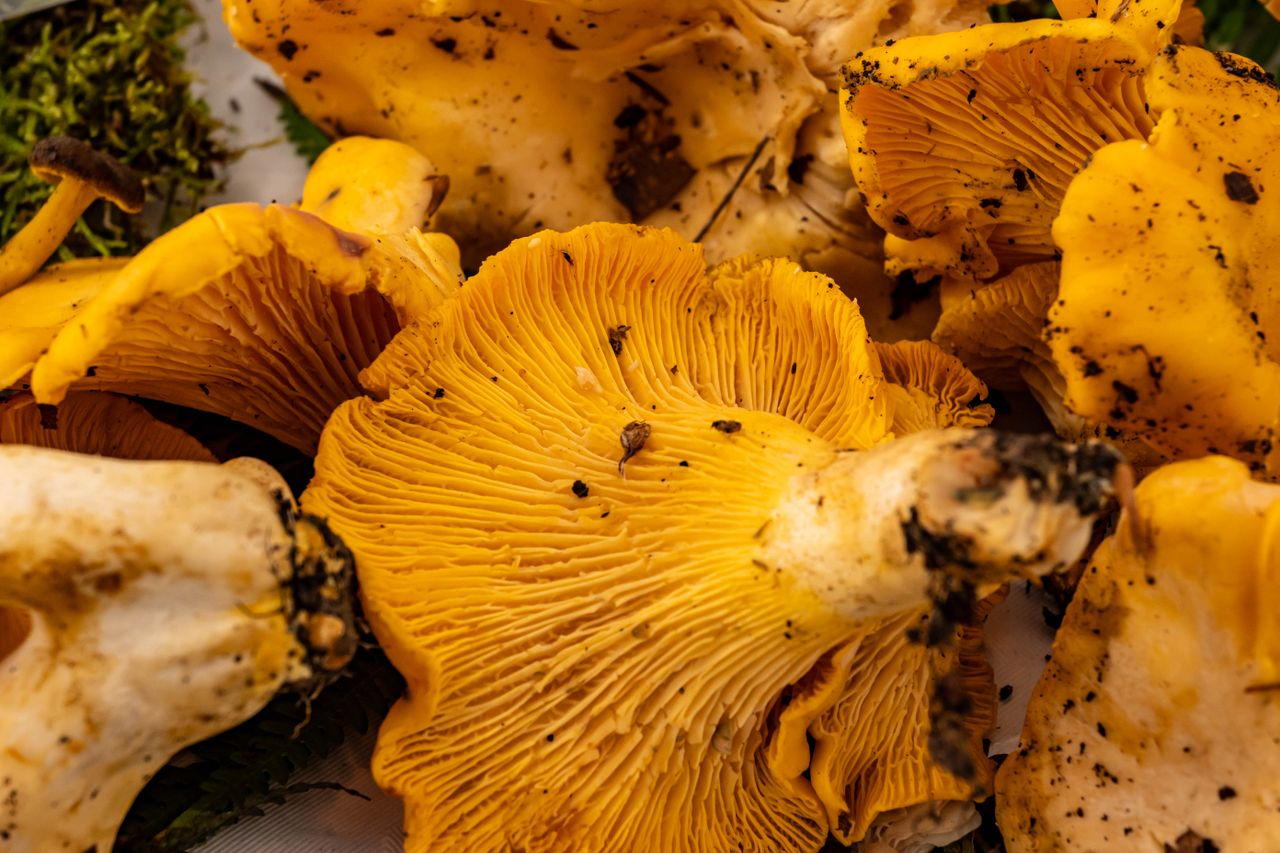
Cantharellus cibarius, the golden chanterelle, is one of the most recognizable and widely foraged wild mushrooms in the world. Prized for its delicate apricot-like aroma and egg-yolk coloration, it has been a fixture in European and North American culinary traditions for centuries. More recently, scientific attention has turned to characterizing its nutritional composition and bioactive properties, and a growing body of research suggests that chanterelle may offer a range of health-relevant compounds beyond its culinary appeal.
Overview and Botanical Context
Cantharellus cibarius belongs to the family Cantharellaceae and forms ectomycorrhizal associations with the roots of deciduous and coniferous trees, including oaks, beeches, spruce, and pine. This mycorrhizal dependency means that chanterelle cannot be commercially cultivated on substrate like oyster mushrooms or lion’s mane, which keeps it firmly in the category of wild-harvested forest fungi. Its distinctive false gills, which appear as forking ridges running partway down the stem rather than true blade-like gills, and its uniform golden to egg-yellow color make it relatively identifiable in the field.
A 2024 comprehensive review published in Food Science and Nutrition examined the taxonomy, global distribution, chemical composition, ecological significance, and biological properties of C. cibarius in detail. The authors described it as a mushroom with a wide array of demonstrated biological properties, including antioxidant, anticancer, anti-inflammatory, antifungal, antibacterial, antihyperglycemic, wound-healing, and cytotoxic activity across preclinical models. The review positioned chanterelle as a candidate functional food with potential applications in nutraceuticals and dietary supplements, while calling for further mechanistic and clinical investigation.[1]
Nutritional Composition
The nutritional profile of C. cibarius is consistent with what is found in other wild edible mushrooms: relatively high in protein for a plant-like food, low in fat and calories, and a meaningful source of dietary fiber, B vitamins, and essential minerals. Specific minerals documented in chanterelle include potassium, calcium, phosphorus, zinc, selenium, and silver. Among the vitamins, it contains measurable levels of tocopherols (vitamin E precursors), B vitamins, and vitamin D precursors in the form of ergosterol, which converts to vitamin D2 upon UV exposure.
A 2024 review in Food and Function summarized chanterelle’s nutritional components as including carbohydrates, proteins, minerals, vitamins, and aroma compounds, with notably low fat and caloric content. The review further catalogued its bioactive substances as encompassing phenolic compounds, vitamin precursors, and indole derivatives, and summarized documented biological functions as including antioxidant, antimicrobial, immunoregulatory, anti-inflammatory, antitumor, neuroprotective, antidiabetic, and prebiotic effects in in vitro or in vivo settings, while emphasizing that most evidence to date derives from laboratory or animal studies.[2]
Beta-Glucan Content
Beta-glucans are among the most studied functional compounds across the mushroom kingdom. These structural polysaccharides found in fungal cell walls interact with immune receptors and have been associated with immune-modulatory activity in both preclinical models and some human clinical studies. The beta-glucan content of chanterelle has been directly measured and compared against other mushroom species.
A 2017 study published in Food Chemistry screened beta-glucan content across a range of commercially cultivated and wild-growing mushrooms, providing one of the first systematic comparative analyses of this compound across species. The data confirmed that C. cibarius contains measurable beta-glucan concentrations, though levels varied among samples and were generally lower than those found in the most beta-glucan-dense species such as lion’s mane or turkey tail. The study underscored that wild mushrooms show considerable variability in bioactive compound concentrations depending on environmental conditions, collection timing, and storage handling.[3]
Antioxidant Activity
Among the most consistently documented properties of C. cibarius extracts is antioxidant activity. The mushroom contains multiple classes of phenolic compounds, including flavonoids, that have demonstrated free radical scavenging capacity in laboratory assays. Phenolic content varies with extraction method, solvent polarity, drying conditions, and geographic origin, but water and ethanol extracts have both shown measurable DPPH and ABTS radical scavenging activity in multiple independent studies.
The 2024 Food and Function review noted that processing and thermal treatment can significantly affect the phenolic profile and antioxidant capacity of chanterelle, with some thermal methods causing losses while others may preserve or concentrate certain fractions. This is relevant context for consumers choosing between fresh, dried, and commercially processed forms of the mushroom, as well as for supplement developers working with chanterelle-derived ingredients.
Anti-Inflammatory Properties
Chronic low-grade inflammation is associated with a broad range of conditions including metabolic syndrome, cardiovascular disease, and neurodegeneration. Research suggests that C. cibarius extracts may influence inflammatory signaling pathways in cell-based models. The phenolic and flavonoid compounds present in chanterelle have been evaluated in vitro for their ability to modulate cytokine production and inflammatory mediators, with results suggesting inhibitory effects on pro-inflammatory markers. These findings are consistent with patterns observed in other mushroom species with similar phenolic profiles.
It is worth noting that in vitro anti-inflammatory results do not automatically translate to clinical outcomes. The bioavailability of chanterelle compounds in human gastrointestinal models, their absorption and tissue distribution after consumption, and their pharmacodynamics at physiological concentrations have not been characterized in human clinical trials to the same degree as compounds from more extensively studied functional mushrooms.
Immunoregulatory Research
Both reviews referenced above identified immunoregulatory properties in chanterelle extracts, attributed primarily to its polysaccharide fractions. Research in cell culture models has shown that chanterelle polysaccharides may stimulate macrophage activity and modulate cytokine profiles, though the specific receptors and downstream signaling pathways involved have not been as thoroughly mapped as for species like reishi or turkey tail. This places chanterelle in a category of mushrooms with credible preliminary immune-supportive data but limited mechanistic depth compared to the more extensively researched functional species.
For a broader perspective on how functional mushrooms interact with immune pathways, our overview of mushrooms and gut health covers the intersection of polysaccharide activity and immune modulation across multiple species.
Neuroprotective and Antidiabetic Potential
The 2024 Food and Function review identified neuroprotective and antidiabetic properties as among the documented functions of chanterelle extracts. In cell-based models, chanterelle components have been tested in contexts relevant to oxidative stress in neural cells, and some polysaccharide fractions have shown inhibitory activity against alpha-glucosidase, an enzyme involved in carbohydrate digestion and postprandial glucose regulation. These are preliminary findings that do not constitute clinical evidence, but they suggest mechanistic pathways that warrant further investigation, particularly given the global burden of type 2 diabetes and neurodegenerative conditions.
Carotenoids and Vitamin D Precursors
One of chanterelle’s more distinctive nutritional attributes is its carotenoid content. It contains beta-carotene and related carotenoids that give it its characteristic color and contribute to its antioxidant profile. Among wild edible mushrooms, chanterelle is considered one of the richer dietary sources of provitamin A carotenoids.
Additionally, like other mushrooms, chanterelle contains ergosterol, which converts to vitamin D2 (ergocalciferol) when exposed to sunlight or ultraviolet light. Sun-dried chanterelle has been identified as a meaningful dietary source of vitamin D2, which is relevant in populations where vitamin D deficiency is common and sunlight exposure is limited.
Heavy Metal Considerations and Safety
The 2024 Food and Function review raised the issue of heavy metal accumulation in C. cibarius, noting that wild-harvested chanterelle can bioaccumulate metals including cadmium, mercury, and lead from soil, depending on collection environment. This is a relevant consideration when consuming wild-harvested chanterelle regularly or in concentrated supplement form. Specimens collected from clean forest areas away from industrial contamination generally pose low risk at typical culinary consumption levels, but the issue underscores the importance of sourcing transparency when purchasing any wild mushroom product.
Chanterelle is not known to have clinically significant drug interactions, and it does not produce the notable toxins associated with species such as Amanita or certain Gyromitra. Its safety profile in culinary quantities is well-established across centuries of human consumption. As with all functional mushroom preparations, individuals with autoimmune conditions or those taking immunomodulatory medications should consult a healthcare provider before using high-dose supplements.
Chanterelle as a Functional Food
The distinction between chanterelle as a culinary ingredient and chanterelle as a functional supplement is worth maintaining. As food, it provides a range of micronutrients, fiber, and bioactive compounds in the context of a balanced diet, with a well-established safety record. As a supplement ingredient, the evidence base is promising but early-stage, with most mechanistic data coming from in vitro or animal models.
Commercial chanterelle supplements are relatively uncommon compared to reishi, lion’s mane, or cordyceps products, in part because cultivation is not possible at scale and standardizing wild-harvested material is challenging. Where supplement products do exist, the same quality markers apply as for any functional mushroom product: clear specification of source material, extraction method, and ideally a verified beta-glucan or polysaccharide concentration.
Summary
Research suggests that Cantharellus cibarius contains a range of nutritionally significant compounds, including beta-glucans, phenolics, carotenoids, and ergosterol. Studies indicate that chanterelle extracts may support antioxidant, anti-inflammatory, and immunoregulatory activity in preclinical models. The 2024 comprehensive reviews in Food Science and Nutrition and Food and Function represent the most complete characterizations of this species’ bioactive profile to date, though both identify the need for more rigorous mechanistic and human clinical research. Chanterelle occupies a well-defined position as a nutritionally dense wild edible with a developing functional food research base.
References
- [1] Kumar A, et al. Nutritional, Nutraceutical, and Medicinal Potential of Cantharellus cibarius Fr.: A Comprehensive Review. Food Sci Nutr. 2025;13(1):e4641. PMID: 39803245
- [2] Chen X, Xu B. Insights into chemical components, health-promoting effects, and processing impact of golden chanterelle mushroom Cantharellus cibarius. Food Funct. 2024;15(15):7696-7732. PMID: 38967456
- [3] Sari M, et al. Screening of beta-glucan contents in commercially cultivated and wild growing mushrooms. Food Chem. 2017;216:45-51. PMID: 27596390
Disclaimer: This article is for informational purposes only and does not constitute medical advice. Chanterelle mushroom supplements have not been evaluated by the FDA for the diagnosis, treatment, cure, or prevention of any disease. Consult a qualified healthcare provider before starting any new supplement regimen, particularly if you have an existing health condition or are taking medications.