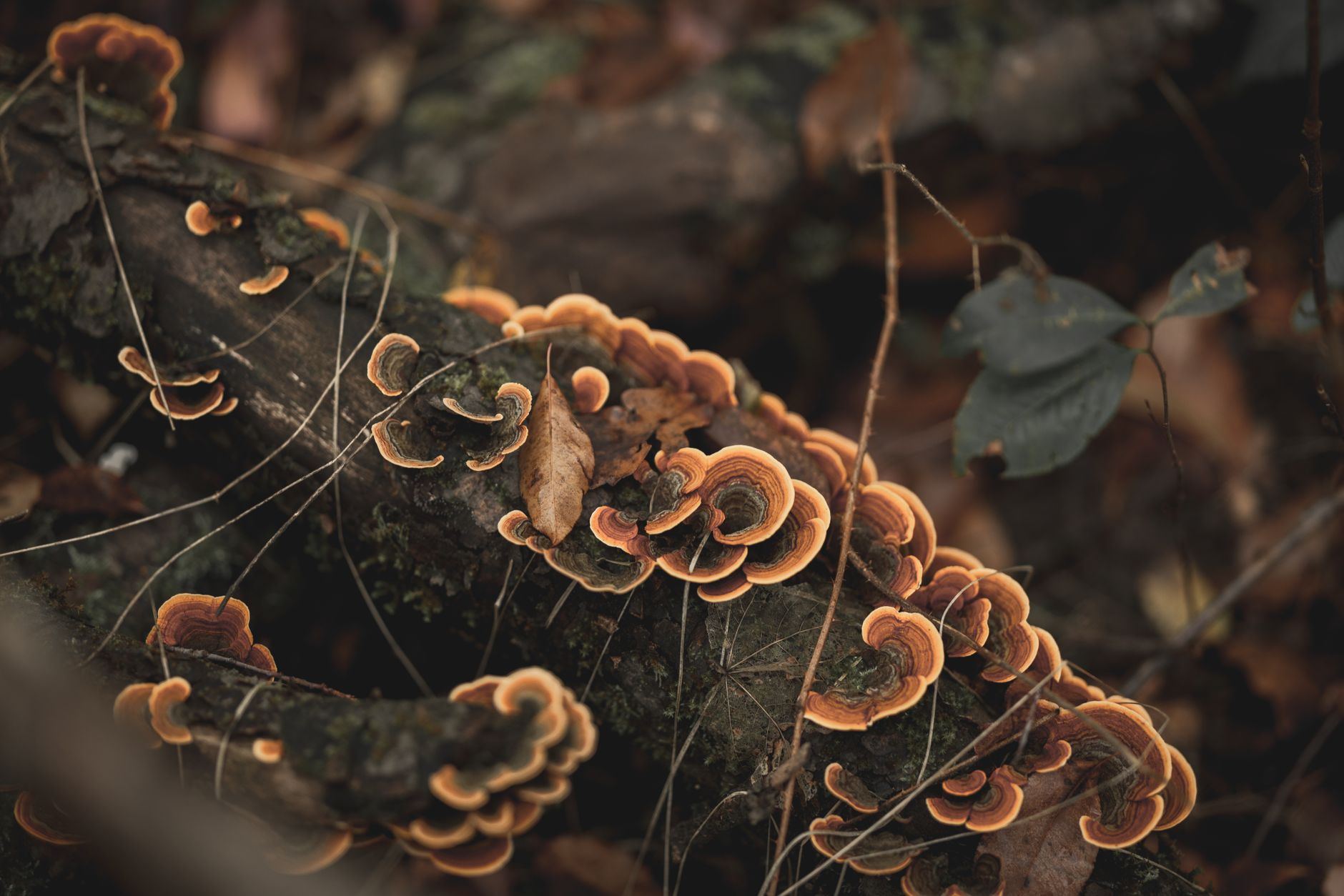
Turkey tail mushroom (Trametes versicolor) has been studied extensively for its immune-modulating polysaccharides, but a growing body of research has begun examining a more specific mechanism: its potential to act as a prebiotic, selectively feeding beneficial gut bacteria and supporting microbiome diversity. Understanding this connection may offer additional context for why this mushroom has been used in traditional East Asian medicine for centuries.
What Is Turkey Tail and What Are Its Key Compounds?
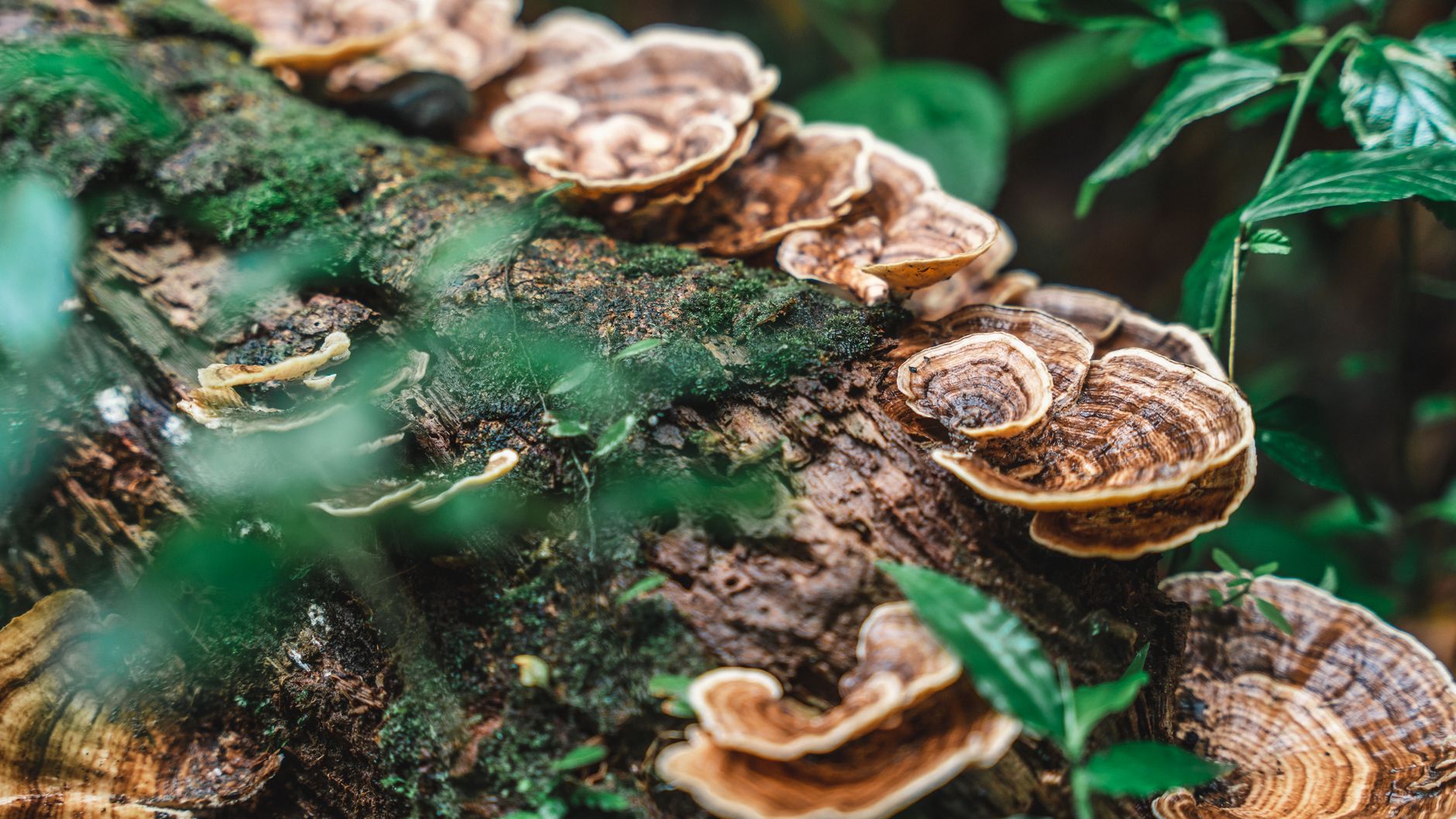
Turkey tail is a bracket fungus found on decaying hardwood throughout temperate forests worldwide. Its distinctive concentric bands resemble the tail feathers of a wild turkey, giving the mushroom its common name. The two most studied bioactive compounds extracted from Trametes versicolor are polysaccharide-K (PSK, marketed as Krestin in Japan) and polysaccharopeptide (PSP, from cultured mycelia of the Cov-1 strain). Both are beta-glucan-rich polysaccharides, though they differ in molecular structure and protein content.
These compounds are classified as immunomodulators — they appear to influence both innate and adaptive immune responses — but research has also characterized them as candidate prebiotics due to their resistance to upper gastrointestinal digestion and their ability to reach the colon largely intact, where they may serve as substrates for microbial fermentation.[1]
Prebiotics and the Gut Microbiome: A Brief Framework
A prebiotic is broadly defined as a substrate that is selectively utilized by beneficial host microorganisms, conferring a health benefit. Traditional prebiotics such as inulin and fructooligosaccharides preferentially feed Bifidobacterium and Lactobacillus species. Mushroom-derived polysaccharides occupy an emerging category of potential prebiotics, characterized by complex beta-glucan backbones that resist enzymatic breakdown in the small intestine.
Mushrooms are rich in chitin, beta-glucans, mannans, galactans, and hemicellulose — structural components that pass largely undigested to the large intestine. Research suggests these compounds may support the growth of beneficial microbial communities and contribute to short-chain fatty acid (SCFA) production, which plays a role in maintaining intestinal barrier integrity and modulating local immune responses.[1]
Human Trial Evidence: PSP and Microbiome Shifts
One of the most frequently cited human studies on turkey tail and the gut microbiome was published in Gut Microbes in 2014. Researchers at Harvard Medical School conducted a randomized controlled trial with 24 healthy volunteers assigned to receive PSP from Trametes versicolor, the antibiotic amoxicillin, or no treatment. Stool specimens were analyzed on seven occasions over eight weeks using microbial ecology methods.
The PSP group showed microbiome changes consistent with prebiotic activity: increased abundance of certain beneficial bacterial populations and reduced levels of potentially pathogenic species, including Clostridiales subgroups. The amoxicillin group, by contrast, showed marked increases in Escherichia/Shigella populations, with microbiome disruption persisting 42 days after antibiotic treatment ended. The investigators noted that baseline microbiome composition remained a stronger determinant of overall clustering than treatment effects, and emphasized the need for larger trials.[2]
This trial was relatively small, and the authors acknowledged that the observed shifts, while consistent with prebiotic behavior, did not meet the full evidentiary threshold for a formal prebiotic designation. Larger, longer-duration studies with defined clinical endpoints would be needed to draw definitive conclusions.
PSK, PSP, and Immune Cross-Talk at the Gut Level
The gut-associated lymphoid tissue (GALT) represents a substantial proportion of the body’s total immune cell mass. Microbial composition influences GALT activity through pattern recognition receptors, including toll-like receptors (TLRs) that respond to fungal beta-glucans. PSK and PSP have both been shown in preclinical models to interact with immune pathways, and some researchers have proposed that part of their observed immunomodulatory activity may be mediated through gut microbiome modulation rather than — or in addition to — direct systemic action.
A comprehensive review of Trametes versicolor polysaccharides and their roles in cancer-adjunct therapy catalogued the compound’s effects on T-cell activation, natural killer cell function, and dendritic cell maturation. The review noted that PSP and PSK appear to engage dectin-1 receptors on innate immune cells, a known pathway for beta-glucan recognition.[3] Whether gut microbial metabolism of these polysaccharides contributes to downstream immune signaling remains an active area of inquiry.
Structural Properties That Enable Prebiotic Activity
For a compound to function as a prebiotic, it must be resistant to gastric acid and digestive enzymes, fermentable by gut microbiota, and capable of selectively stimulating beneficial organisms. Turkey tail polysaccharides appear to meet the first two criteria with reasonable consistency.
Resistance to Digestion
The beta-(1,3)-glucan and beta-(1,4)-glucan linkages characteristic of turkey tail polysaccharides are not cleaved efficiently by human amylases or proteases. This structural feature allows these compounds to pass through the small intestine and reach the colon, where they become available for microbial fermentation — a prerequisite for prebiotic activity.
Microbial Fermentation and SCFA Production
In vitro fermentation studies have indicated that mushroom-derived polysaccharides, including those from turkey tail, may undergo fermentation by colonic bacteria, yielding short-chain fatty acids such as butyrate, propionate, and acetate. Butyrate in particular is a preferred energy source for colonocytes and has been associated with maintaining mucosal integrity. Research suggests that beta-glucan fermentation from various fungal sources may support Bifidobacterium and Lactobacillus populations, though species-specific effects vary significantly.[1]
Limitations and What the Research Cannot Yet Confirm
Despite promising early data, several important limitations apply to the current body of evidence:
- Most microbiome studies are small-scale or preclinical. The 2014 RCT enrolled only 22 evaluable participants, which limits statistical power and generalizability.
- Standardization varies. Commercial turkey tail products differ substantially in PSP and PSK content, beta-glucan percentages, and extraction methods. This makes cross-study comparisons difficult.
- Clinical endpoints are not yet established. Prebiotic activity (microbiome shifts) has not been consistently linked to measurable clinical outcomes such as reduced infection rates or improved gastrointestinal symptoms in healthy populations.
- Individual microbiome variation is high. The 2014 trial noted that baseline microbiome composition overshadowed treatment effects, suggesting that responses to PSP supplementation may vary considerably between individuals.
For context on the broader immune research behind turkey tail’s key polysaccharides, see Turkey Tail Mushroom: What the Research Shows About PSK, PSP, and Immune Health.
Summary
Turkey tail mushroom contains complex polysaccharides — primarily PSP and PSK — that research suggests may support gut microbiome diversity through prebiotic mechanisms. A randomized controlled trial indicates that PSP may selectively shift microbial populations in a manner consistent with prebiotic activity, and structural analyses confirm that turkey tail polysaccharides are candidates for colonic fermentation. However, the clinical evidence base remains early-stage, with small sample sizes and limited long-term data. Those interested in functional mushrooms for gut health may find turkey tail a relevant subject of ongoing research, though consulting a healthcare provider before use is advisable, particularly for individuals managing gastrointestinal conditions.
References
- [1] Fernandes A, et al. Exploring Mushroom Polysaccharides for the Development of Novel Prebiotics: A Review. Int J Med Mushrooms. 2023;25(2):1-10. PMID: 36749052
- [2] Pallav K, et al. Effects of polysaccharopeptide from Trametes versicolor and amoxicillin on the gut microbiome of healthy volunteers: a randomized clinical trial. Gut Microbes. 2014;5(4):458-67. PMID: 25006989
- [3] Habtemariam S. Trametes versicolor (Synn. Coriolus versicolor) Polysaccharides in Cancer Therapy: Targets and Efficacy. Biomedicines. 2020;8(5):135. PMID: 32466253
Disclaimer: This article is for informational purposes only and does not constitute medical advice. The statements on this site have not been evaluated by the Food and Drug Administration. Functional mushroom products are not intended to diagnose, treat, cure, or prevent any disease. Consult a qualified healthcare provider before starting any new supplement regimen.