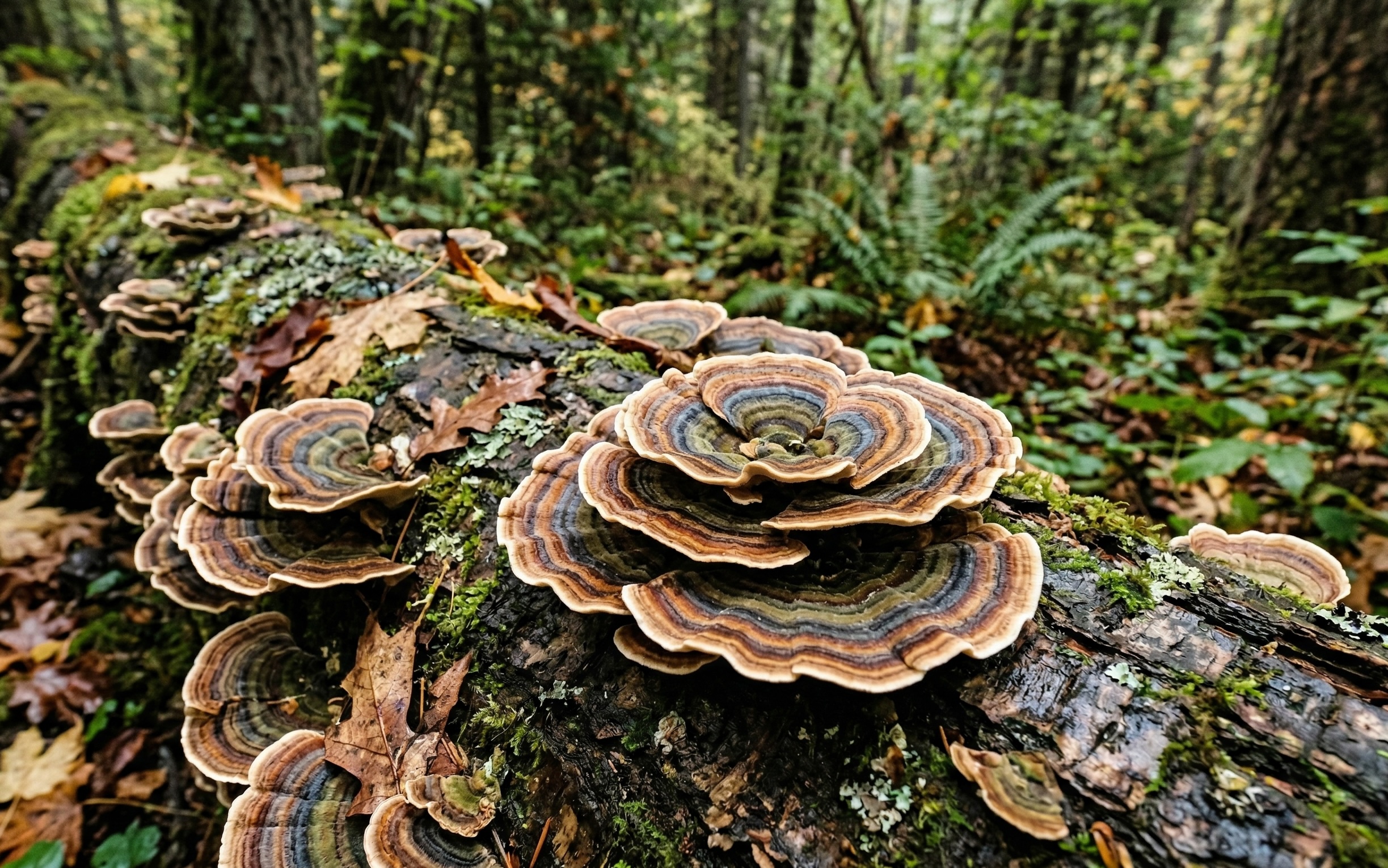
Turkey tail mushroom (Trametes versicolor) has become one of the most talked-about functional fungi in integrative oncology circles. With a fan-shaped, multicolored appearance resembling a wild turkey’s plumage, this common woodland mushroom has been used in traditional Chinese medicine for centuries — and modern science is beginning to validate why. But what does the research actually say about turkey tail and cancer support? Let’s take a careful, evidence-based look.
What Makes Turkey Tail Mushroom Special?
Turkey tail is rich in bioactive polysaccharides, most notably Polysaccharide-K (PSK) — also known as krestin — and Polysaccharide-P (PSP). These compounds are classified as biological response modifiers, meaning they work by modulating the immune system rather than attacking cancer cells directly.
PSK has been approved as an adjunct cancer therapy in Japan since the 1980s. It’s not a fringe supplement there — it’s a mainstream pharmaceutical-grade product prescribed alongside conventional treatments. This clinical history gives turkey tail a research foundation that most other functional mushrooms simply don’t have.
The Clinical Research on Turkey Tail and Cancer
Breast Cancer: A Landmark NIH-Funded Study
One of the most cited studies was funded by the National Institutes of Health (NIH) and conducted at Bastyr University. [source] Researchers gave turkey tail mushroom extract to breast cancer patients who had completed conventional treatment. The study found that patients who received higher doses showed improved immune cell activity — specifically increased natural killer (NK) cell counts and T-cell function. NK cells and T-cells are critical components of the body’s anti-cancer immune surveillance system.
While this study was not large enough to draw definitive conclusions about survival rates, the immune-enhancing results were statistically significant and prompted further research.
Colorectal and Gastric Cancers: Japan’s PSK Trials
Japanese clinical trials involving PSK are extensive. A meta-analysis published in Anticancer Research reviewed multiple randomized controlled trials and found that PSK, when used alongside chemotherapy in colorectal cancer patients, was associated with improved 5-year survival rates compared to chemotherapy alone. Similar results have been reported in gastric cancer studies.
Importantly, PSK appeared to reduce some side effects of chemotherapy, including immune suppression — a major concern during cancer treatment.
Immune Reconstitution After Chemotherapy
Chemotherapy is highly effective but notoriously immunosuppressive. Several studies suggest that turkey tail extract can help restore immune function more quickly after treatment. A study published in the Journal of Alternative and Complementary Medicine found that prostate cancer patients who took PSP experienced faster recovery of lymphocyte counts after radiation therapy.
How Turkey Tail Supports the Immune System
Understanding the mechanism helps explain why turkey tail is studied in oncology:
- Activates NK cells: Natural killer cells are the immune system’s first line of defense against abnormal cells, including tumors.
- Stimulates T-cell proliferation: CD4+ and CD8+ T-cells play a central role in identifying and destroying cancer cells.
- Enhances macrophage activity: Macrophages engulf and destroy foreign cells, including early-stage cancerous ones.
- Acts as a prebiotic: PSP has been shown to promote beneficial gut bacteria, and gut health is closely linked to immune function and even treatment response in some cancers.
- Reduces inflammatory cytokines: Chronic inflammation is a known driver of cancer progression; turkey tail’s anti-inflammatory properties may help slow this process.
What Turkey Tail Is NOT
It’s essential to be clear: turkey tail mushroom is not a cancer cure. No reputable researcher, oncologist, or supplement brand should claim otherwise. The research supports turkey tail as a complementary therapy — something used alongside, not instead of, conventional cancer treatment.
If you or someone you love is dealing with cancer, always consult with an oncologist before adding any supplement, including turkey tail. Some compounds can interact with certain chemotherapy drugs or interfere with treatment protocols.
Turkey Tail vs. Other Medicinal Mushrooms for Immune Support
Turkey tail is often compared to other immune-supporting mushrooms:
- Reishi: Excellent for stress, sleep, and general immune regulation — but turkey tail has more direct oncology research behind it.
- Chaga: Powerful antioxidant mushroom with some tumor-inhibiting compounds, but less clinical trial data than turkey tail.
- Maitake: Contains beta-glucans similar to turkey tail and has been studied in breast cancer patients with some promising results.
- Lion’s Mane: Primarily studied for cognitive and neurological benefits, not immune oncology.
For gut and immune synergy specifically, our post on Turkey Tail for Gut Health covers how PSP functions as a prebiotic in more detail.
Quality Matters: How to Choose a Turkey Tail Supplement
Not all turkey tail products are equal. Here’s what to look for:
- Hot water extracted: Beta-glucans are water-soluble; a proper hot water extraction ensures you’re actually getting active polysaccharides.
- Fruiting body, not mycelium on grain: Mycelium products often contain significant amounts of starch from the grain substrate with little actual beta-glucan content.
- Beta-glucan content listed: Look for products that disclose actual beta-glucan percentages (ideally 30%+).
- Third-party tested: Choose brands that provide certificates of analysis (COAs) from independent labs.
- Organic certification: Turkey tail absorbs compounds from its substrate; organic sourcing reduces pesticide risk.
Dosage and How to Take Turkey Tail
Dosage protocols in clinical research vary by study design, indication, and patient population. Japanese oncology trials involving PSK used amounts established and overseen by researchers in controlled hospital settings — these are not general supplement guidelines. According to the researchers behind the Anticancer Research meta-analysis, PSK was administered as part of a structured clinical protocol. If you are considering turkey tail as part of a cancer support regimen, discuss appropriate use with your oncologist.
Turkey tail is generally considered very safe with an excellent tolerability profile. Side effects are rare and typically mild; some trial participants reported minor digestive discomfort, as noted in study adverse event reports.
The Bottom Line
Turkey tail mushroom stands out from the functional mushroom crowd because it has genuine clinical trial data behind it — not just traditional use or lab studies. The evidence suggests it can meaningfully support immune function, help the body recover from the immunosuppressive effects of cancer treatment, and may improve outcomes when used alongside conventional therapy for certain cancers.
If you’re interested in incorporating functional mushrooms into your wellness routine, turkey tail is one of the most well-validated options available. Explore our range of top functional mushrooms or contact us to ask about the right supplement protocol for your needs.
Always consult with your healthcare provider before starting any new supplement, especially if you are undergoing cancer treatment or have a serious medical condition.