Among the many fungi studied for their potential health-related properties, Phellinus linteus occupies an unusual position: it is both deeply rooted in East Asian traditional medicine and the subject of a growing body of modern pharmacological research. Known in Japan as meshima (meaning “island mushroom”) and in Korea as sanghuang, this bracket fungus has been used for centuries, and scientists are now beginning to investigate the mechanisms behind its traditional applications.
What Is Phellinus linteus?
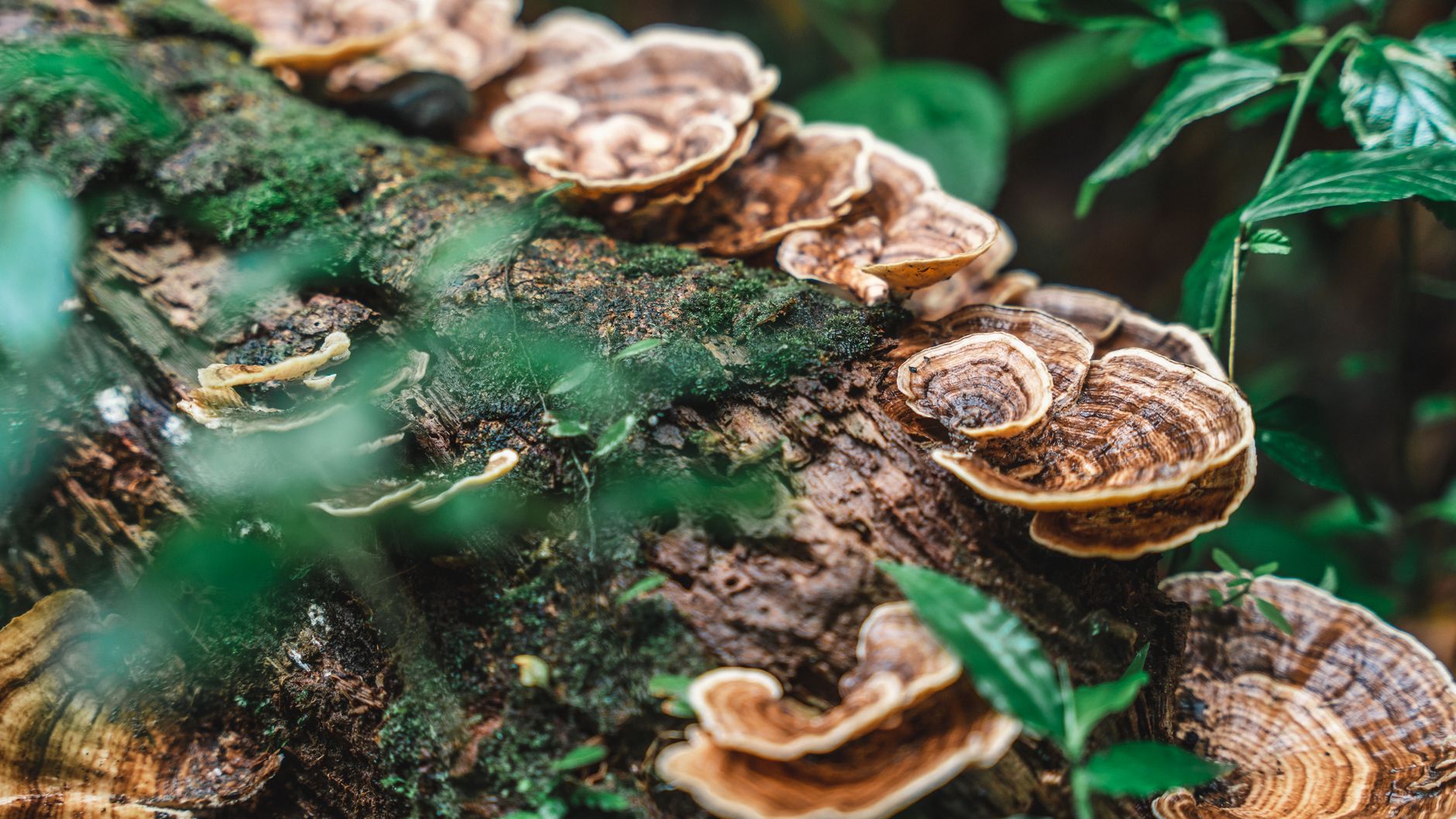
Phellinus linteus is a woody, shelf-forming fungus that grows primarily on mulberry trees in parts of East Asia, including Japan, Korea, and China. It belongs to the family Hymenochaetaceae and produces a dark, resinous fruiting body that is not consumed as a culinary mushroom but rather extracted and prepared as a tincture, powder, or capsule for supplemental use. Its relative scarcity in the wild and the slow growth of its fruiting body have historically made it one of the more difficult-to-source medicinal fungi, though cultivated versions are now increasingly available.
Like several other functional mushrooms, P. linteus contains a variety of bioactive compounds, most notably high-molecular-weight polysaccharides, including beta-glucans and proteoglycans. These compounds have attracted significant scientific interest due to their apparent effects on immune signaling pathways.
Polysaccharides and Immune Modulation
The polysaccharide fraction of Phellinus linteus is among the most extensively studied aspects of the mushroom. A 2024 review published in International Journal of Biological Macromolecules examined the structural diversity of P. linteus polysaccharides, noting that they exhibit immunomodulatory, antitumor, anti-inflammatory, and antioxidant properties in preclinical settings. The review also found that these polysaccharides may influence gut microbiota composition and mitigate insulin resistance in animal models.[1] The authors noted, however, that variability in polysaccharide structure depending on extraction method significantly affects bioactivity, a consideration relevant to supplement quality.
This structural complexity is one reason why P. linteus extracts can differ considerably between products. The temperature, solvent, and duration of extraction all influence which polysaccharide fractions are preserved and in what ratios. Hot water extraction at high temperatures tends to yield different beta-glucan profiles than ethanol extraction, and the clinical relevance of these differences remains an open area of investigation.
Clinical Evidence: A Randomized Controlled Trial
One of the strongest pieces of human clinical evidence for P. linteus comes from a CONSORT-randomized, double-blinded, placebo-controlled trial published in Medicine in 2022. The study enrolled 98 participants who were randomly assigned to receive either 1,000 mg of P. linteus extract per day or a placebo (dextrin) for eight weeks. The primary outcome measured was natural killer (NK) cell activity, a key marker of innate immune function.
Researchers found that NK cell activity was significantly increased in the P. linteus group compared to placebo (p < .05). While secondary outcomes including cytokine levels (TNF-alpha, IFN-gamma, several interleukins) and immunoglobulin markers did not reach statistical significance, there was a noted trend toward improvement in the treatment group. Importantly, no adverse effects on liver or renal function were detected, suggesting a favorable short-term safety profile at the dose tested.[2]
NK cells play a central role in early immune surveillance, identifying and eliminating abnormal or infected cells before adaptive immune responses are fully activated. Research suggesting P. linteus may support NK cell activity is therefore of considerable interest, though larger and longer-duration trials are needed to confirm these findings.
Preclinical Antitumor Research
A significant portion of the existing Phellinus linteus literature comes from preclinical (cell culture and animal model) studies investigating antitumor effects. A 2020 study published in Nutrients examined a combination extract called MeshimaMax, which included P. linteus alongside bamboo leaf and chaga mushroom extracts. Using mouse sarcoma, colon cancer, and breast cancer models, researchers found that MeshimaMax treatment significantly inhibited tumor growth and reduced tumor occurrence in carcinogen-induced models. In vitro data suggested the effect was partly mediated through activation of macrophage phagocytosis, supporting an innate immunity mechanism.[3]
It is important to note that combination extracts make it difficult to attribute specific effects to P. linteus alone, and animal model results do not reliably translate to human outcomes. These findings are best understood as hypothesis-generating rather than conclusive evidence of clinical benefit.
How Phellinus linteus Compares to Other Immune-Focused Mushrooms
Readers familiar with functional mushroom research may notice thematic overlap between P. linteus and other well-studied species such as reishi (Ganoderma lucidum) or turkey tail (Trametes versicolor). All three fungi are characterized by polysaccharide-rich extracts with documented immunomodulatory effects in preclinical models. For a broader overview of how mushroom-derived compounds may support immune function, see our article on reishi for immune support.
What distinguishes P. linteus is its relative scarcity in the research literature compared to better-studied species, its unusual taxonomy (it belongs to a different family than most popular functional mushrooms), and its traditional use context, which has focused more on immune-related and cancer-adjacent applications than on cognitive or athletic performance outcomes.
Considerations for Consumers
Because Phellinus linteus remains less commercially prevalent than reishi, lion’s mane, or turkey tail, the quality and composition of available supplements may vary considerably. Consumers considering P. linteus supplements should look for products that specify whether the extract derives from the fruiting body or mycelium, the extraction method used, and the beta-glucan content per serving. Products with third-party certificates of analysis (COAs) provide the most transparency regarding active compound concentration.
It is also worth noting that Phellinus taxonomy has undergone revisions in recent years, and some products labeled as P. linteus may contain related species such as Sanghuangporus sanghuang or other members of the sanghuang complex. A 2016 study in Fungal Biology (PMID 27033204) highlighted the importance of species verification in sanghuang products sold commercially in Korea, emphasizing that mislabeling has been documented in the market.
What Remains Unknown
The clinical research on Phellinus linteus in humans is still limited. The 2022 randomized trial represents one of the first controlled human studies on this species, and its relatively small sample size and short duration leave several questions unanswered: Do effects persist beyond eight weeks? Are there dose-response relationships? Do benefits differ across populations with different baseline immune status?
Anti-inflammatory and antioxidant properties suggested in preclinical work have not yet been replicated in well-designed human trials. The gap between laboratory findings and clinical evidence is a common challenge across functional mushroom research, and P. linteus is no exception. Ongoing research may eventually clarify whether the immune effects observed in early trials are durable, dose-dependent, and broadly applicable.
References
- [1] Kou F, et al. Phellinus linteus polysaccharides: A review on their preparation, structure-activity relationships, and drug delivery systems. Int J Biol Macromol. 2024;258(Pt 1):128702. PubMed
- [2] Ku YH, Kang JH, Lee H. Effects of Phellinus linteus extract on immunity improvement: A CONSORT-randomized, double-blinded, placebo-controlled trial. Medicine (Baltimore). 2022;101(34):e30226. PubMed
- [3] Fang J, et al. Extracts of Phellinus linteus, Bamboo Leaf and Chaga Mushroom Exhibit Antitumor Activity through Activating Innate Immunity. Nutrients. 2020;12(8):2279. PubMed
This article is for informational purposes only and does not constitute medical advice. Always consult a qualified healthcare provider before starting any supplement.