The relationship between functional mushrooms and digestive health is one of the more actively researched areas in the field of nutritional science. Several mushroom species contain compounds that resist digestion, reach the colon intact, and are fermented by gut bacteria in ways that may influence the broader composition of the microbiome. Understanding which mushrooms have the strongest evidence in this area, and what the proposed mechanisms are, can help inform decisions about supplementation.
How Mushrooms Interact With the Gut
Most functional mushrooms contain significant quantities of polysaccharides, particularly beta-glucans, as well as chitin and smaller amounts of other fiber-like compounds. Unlike simple sugars or proteins, these complex carbohydrates are not readily broken down in the small intestine. Instead, they pass into the colon largely intact, where they become available as substrates for fermentation by gut bacteria.
This fermentation process can generate short-chain fatty acids (SCFAs) such as acetate, propionate, and butyrate. SCFAs have been associated in the research literature with intestinal barrier integrity, anti-inflammatory signaling, and systemic metabolic effects. A 2026 review published in Foods examined the prebiotic potential of edible mushrooms across a range of species and concluded that mushroom-derived polysaccharides, beta-glucans, chitin, and polyphenols resist digestion and promote SCFA production through fermentation by intestinal microorganisms, and that these metabolites may contribute to intestinal barrier function, immune regulation, and metabolic homeostasis.[1]
The same review also noted that current evidence comes largely from animal and in vitro studies, and that well-designed human clinical trials remain limited, meaning results should be interpreted with appropriate caution.
Reishi and Gut Microbiota Modulation
Reishi (Ganoderma lucidum) has been studied for its beta-glucan content in the context of both immune function and gut health. The beta-glucans isolated from Reishi are structurally characterized by (1-3)-linked backbones with (1-6)-linked side chains, a configuration that appears relevant to their biological effects.
Research published in the International Journal of Biological Macromolecules (2025) isolated a water-soluble, low-molecular-weight beta-glucan from G. lucidum and found that it demonstrated gut microbiota-regulating activity and immune-enhancing effects in experimental models. The study identified that when gut microbiota was depleted using antibiotics, the immune-stimulating effect of the beta-glucan preparation was significantly reduced, indicating that the gut microbiome may mediate at least part of its immunological activity. Lactobacillus and Alistipes were identified as bacterial species potentially responsible for the observed immune effects.[2]
This finding is significant because it suggests a mechanistic link between Reishi supplementation, gut microbiota composition, and downstream immune signaling, rather than a direct pharmacological effect.
Lion’s Mane and Intestinal Barrier Support
Lion’s Mane (Hericium erinaceus) is most widely recognized for its potential neurotrophic effects, but emerging research also points to relevant activity in the gastrointestinal tract. Polysaccharides derived from H. erinaceus (referred to in the literature as HEP) have been studied in the context of intestinal inflammation and gut microbiota modulation.
A 2026 study published in Food and Function compared the effects of several galactan-type polysaccharides on a colitis mouse model and found that Hericium erinaceus polysaccharides significantly alleviated colitis symptoms, reduced inflammatory cytokine levels, and improved intestinal barrier function. Notably, the HEP treatment modulated the gut microbiota by promoting the relative abundance of beneficial bacteria including Lactobacillus and Bacteroides, while suppressing the proliferation of pathogenic bacteria such as Enterobacteriaceae.[3]
Separate research published in Nutrients (2025) found that dietary supplementation with H. erinaceus polysaccharides in a rat model of gastrointestinal dysfunction alleviated disruptions to gastrointestinal hormone secretion, enhanced intestinal barrier function, reduced inflammation, and improved gut microbiota composition by increasing beneficial bacteria and reducing harmful species. Tryptophan metabolism and SCFA production were identified as pathways involved in the anti-inflammatory effects.[4]
These findings position Lion’s Mane as a species with potential relevance not only for cognitive applications but also for gastrointestinal support, though the bulk of evidence remains preclinical.
Turkey Tail as a Prebiotic Agent
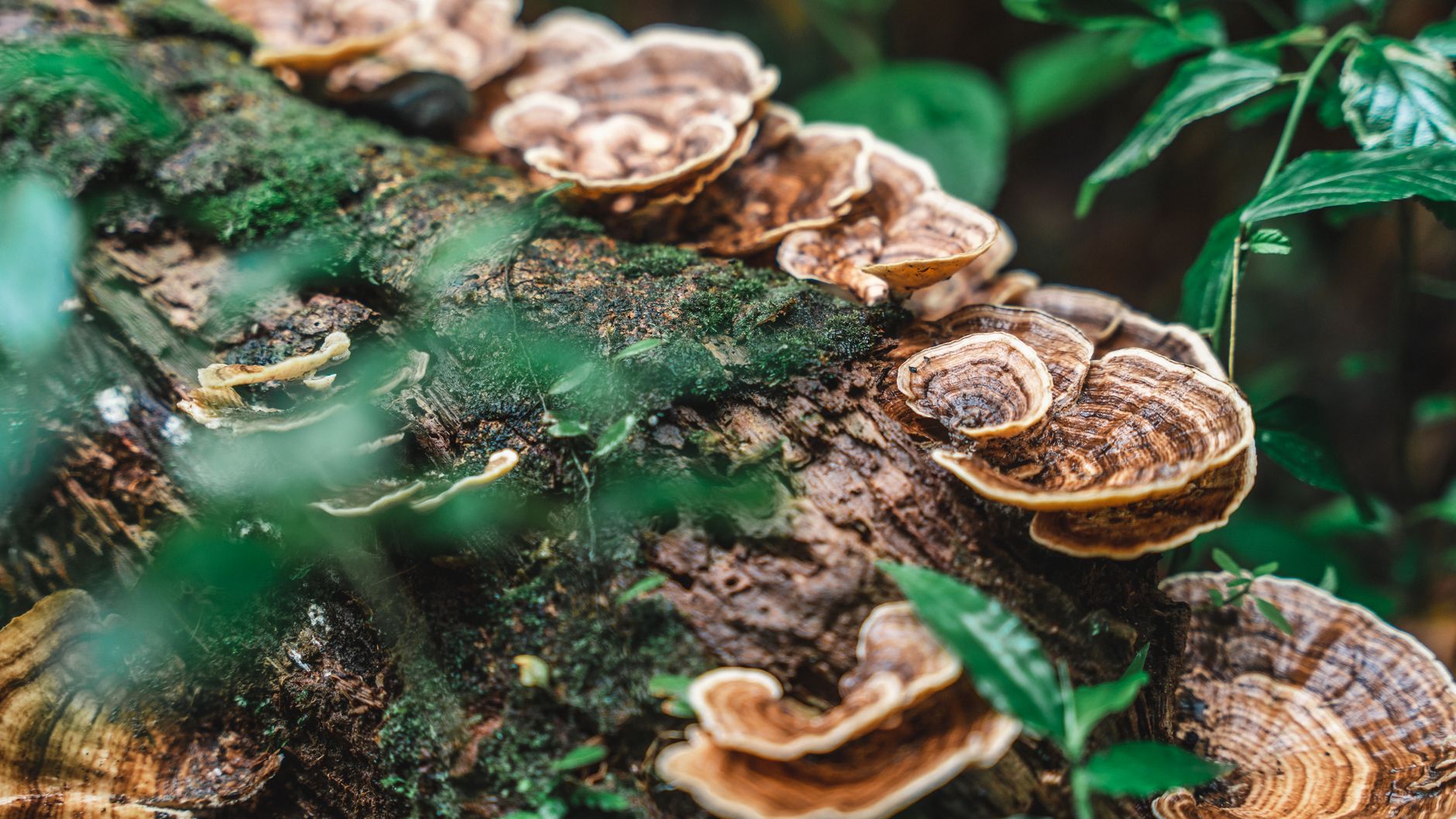
Turkey Tail (Trametes versicolor) is among the most studied functional mushrooms in clinical oncology research, largely due to its polysaccharopeptide extracts known as PSK and PSP. PSP, derived from a cultivated strain of T. versicolor, has been investigated for its prebiotic and gut microbiome-modulating properties.
A review published in the International Journal of Medicinal Mushrooms summarized evidence indicating that Turkey Tail-derived PSP may act as a prebiotic by modulating the composition of the intestinal microbiome, and that its immunomodulatory effects may in part be mediated through this gut-based mechanism. The review described findings from limited human clinical work and tissue culture models suggesting that PSP influences host-microbiome interactions in ways potentially relevant to both immune function and gut health.[5]
Turkey Tail is currently one of the few functional mushrooms with clinical trial data in humans, though most of this research has focused on immune outcomes in oncology settings rather than gastrointestinal health as a primary endpoint.
Other Species With Relevant Gut Research
Chaga
Chaga (Inonotus obliquus) contains a range of polyphenols and polysaccharides that have been studied for their antioxidant and anti-inflammatory properties. Some preclinical research indicates that Chaga-derived compounds may reduce intestinal inflammation and modulate cytokine activity in gut tissue, though human data specific to gut microbiota outcomes is limited.
Shiitake
Shiitake (Lentinula edodes) contains a specific beta-1,3-glucan called lentinan, which has been studied extensively in oncology contexts for its immune-activating properties. Lentinan binds to the Dectin-1 receptor on immune cells in the gut-associated lymphoid tissue (GALT), which may contribute to mucosal immune support. Some dietary fiber studies involving shiitake suggest prebiotic-type effects on gut microbiota composition, though species-specific human gut microbiome trials remain sparse.
Maitake
Maitake (Grifola frondosa) contains beta-1,3/1,6-glucans that have been associated in research with immune modulation and, in some animal studies, with favorable changes in gut microbiota composition. Its primary research profile in humans has focused on blood glucose and immune effects rather than gut health specifically.
The Gut-Immune Connection
A consistent theme across mushroom gut health research is the bidirectional relationship between gut microbiota composition and systemic immune function. Approximately 70 to 80 percent of immune cells are located in or near the gut, and the composition of the microbiome is understood to influence immune tone at a systemic level. The SCFA butyrate, for example, serves as the primary energy source for colonocytes and also helps regulate T-regulatory cells, which play a role in dampening excessive inflammatory responses.
Mushroom polysaccharides that support SCFA production and favorable microbiota shifts may therefore have indirect effects on immune function that extend beyond the gut. This is consistent with the mechanistic findings from the Reishi beta-glucan research (PMID 40541876), where the immunological effects depended on an intact gut microbiome to manifest.
For a broader look at how specific species compare across health categories, see our guide on which functional mushrooms work better together.
Supplement Considerations for Gut Health
When evaluating functional mushroom supplements for gut-related applications, several factors are relevant. Whole mushroom powder products retain more of the fibrous chitin and structural polysaccharides that contribute to prebiotic effects, while concentrated extracts may prioritize other bioactive fractions such as immunomodulatory beta-glucans. Neither form is categorically superior for gut health; the right choice depends on the specific mechanism being targeted.
Products derived from fruiting bodies rather than mycelium grown on grain substrates will generally contain fewer residual grain starches, which can contribute to total polysaccharide counts without contributing meaningfully to gut-active fiber fractions. Third-party testing for beta-glucan content and species verification provides additional assurance of product quality.
As with all functional mushroom supplements, individuals with inflammatory bowel conditions or those taking immunosuppressive medications should consult a healthcare provider before starting supplementation, as the immune-modulating properties of these mushrooms may interact with existing treatments.
References
- 1. Mattioli LB, et al. Edible Mushrooms as Emerging Prebiotic Sources: Gut Microbiota Modulation and SCFA-Mediated Health Effects. Foods. 2026;15(9):1539. PMID: 42121482
- 2. Wang X, et al. Water-soluble beta-glucan from G. lucidum as a potential functional food ingredient with gut microbiota-regulating and immune-enhancing activities. Int J Biol Macromol. 2025;319(Pt 1):145361. PMID: 40541876
- 3. Wei X, et al. Effects of different galactans on DSS-induced colitis and the gut microbiota. Food Funct. 2026;17(9):4171-4184. PMID: 42007799
- 4. Zang P, et al. Alteration of Gastrointestinal Function and the Ameliorative Effects of Hericium erinaceus Polysaccharides in Tail Suspension Rats. Nutrients. 2025;17(4):724. PMID: 40005052
- 5. Wu JM, et al. Recent Advances and Challenges in Studies of Control of Cancer Stem Cells and the Gut Microbiome by the Trametes-Derived Polysaccharopeptide PSP. Int J Med Mushrooms. 2016;18(8):651-660. PMID: 27910783
Disclaimer: The information in this article is for educational purposes only and does not constitute medical advice. Functional mushroom supplements have not been approved by the FDA to diagnose, treat, cure, or prevent any disease. Consult a qualified healthcare provider before beginning any new supplement regimen, particularly if you have a gastrointestinal condition or take prescription medications.