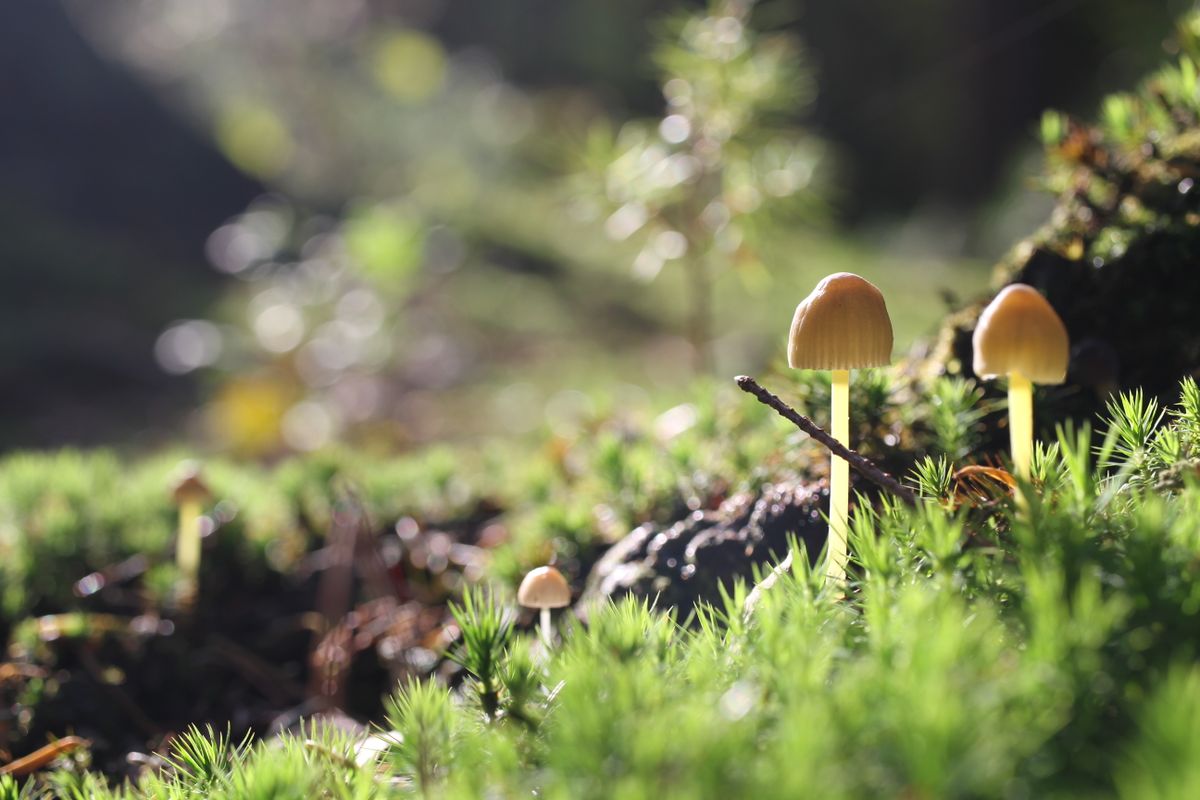
Vitamin D deficiency affects a substantial portion of the global population, and dietary sources of the vitamin are relatively limited. Most people associate vitamin D with sunlight exposure or animal-derived foods such as fatty fish and fortified dairy. Edible mushrooms, however, represent a largely overlooked plant-based source of vitamin D, and the research behind their potential contribution to vitamin D status is more substantive than is commonly recognized.
Ergosterol: The Key Precursor
Unlike animals, which synthesize vitamin D3 (cholecalciferol) from 7-dehydrocholesterol, fungi contain ergosterol in their cell membranes. Ergosterol is a sterol compound that serves as a direct precursor to vitamin D2 (ergocalciferol) when exposed to ultraviolet (UV) radiation. This conversion mirrors the process that occurs in human skin when exposed to sunlight, though the precise photochemical pathway differs.
When UV light, particularly UVB in the 280-315 nm range, strikes mushroom tissue, ergosterol undergoes a photochemical transformation. Research indicates that this process can dramatically increase the vitamin D2 content of mushrooms in a relatively short period of exposure.[1] The extent of conversion depends on several variables, including the UV wavelength and dose, mushroom species, tissue thickness, and whether the mushrooms are fresh or dried.
How Much Vitamin D Can Mushrooms Contain?
Mushrooms grown in conventional indoor conditions, without UV exposure, contain little to no vitamin D2. Their ergosterol content remains intact but unconverted. Once UV-treated, however, levels can increase substantially. Studies have found that gills-up placement during UV exposure maximizes conversion, as the gill surface contains higher concentrations of ergosterol-rich tissue and receives more direct UV contact.
Different species vary in their ergosterol content and thus their vitamin D2 conversion potential. Button mushrooms (Agaricus bisporus), shiitake (Lentinula edodes), and maitake (Grifola frondosa) have all been examined in this context. Maitake in particular has been noted for relatively high ergosterol concentrations. Research examining Tremella fuciformis (white jelly mushroom) using liquid chromatography-mass spectrometry confirmed measurable vitamin D2 accumulation following UV treatment, with the highest levels recorded under specific irradiation conditions.[2]
Does Mushroom-Derived Vitamin D2 Actually Raise Serum Levels in Humans?
The more practically important question is whether consuming UV-exposed mushrooms translates to measurable improvements in vitamin D status. Several randomized controlled trials have attempted to answer this.
One trial enrolled 26 adults with low serum 25-hydroxyvitamin D levels (below 50 nmol/L) and randomized them into three groups: UV-B-irradiated button mushroom soup, a vitamin D2 supplement, or placebo. Participants in both the mushroom and supplement groups showed significant increases in serum 25-hydroxyvitamin D over the five-week study period. Notably, the mushroom group’s increase was not statistically different from the supplement group, suggesting that the vitamin D2 from UV-irradiated mushrooms may be bioavailable in a manner comparable to supplemental vitamin D2.[3]
A subsequent systematic review and meta-analysis examined data from six randomized controlled trials to assess the overall effect of UV-exposed mushroom consumption on serum 25-hydroxyvitamin D. The pooled analysis found high heterogeneity across studies. When stratified by baseline vitamin D status, trials conducted in European populations with lower baseline levels showed a statistically significant increase in serum 25(OH)D following UV-mushroom consumption. Trials conducted in US populations with higher baseline levels did not show a significant effect. The authors concluded that UV-exposed mushrooms may support vitamin D status particularly in individuals who are deficient at baseline.[4]
Vitamin D2 vs. Vitamin D3: Is There a Difference?
A common point of discussion in the literature concerns whether vitamin D2, the form found in mushrooms, is as effective as vitamin D3, the form produced in human skin and found in most animal-based foods and supplements. Some research suggests vitamin D3 may be more potent at raising and sustaining serum 25(OH)D levels over time. A mini-review on cultivated mushrooms under UV irradiation noted that while UV-treated mushrooms show effectiveness in raising 25-hydroxyvitamin D levels in some studies, there is ongoing debate about the relative bioavailability of D2 compared to D3, and further research is needed to clarify optimal consumption amounts and conditions.[5]
For individuals who follow plant-based diets, mushroom-derived vitamin D2 may nonetheless represent one of the few non-fortified, whole-food sources available. This is a meaningful consideration in dietary planning.
Practical Factors: Sun-Dried vs. UV-Treated vs. Grocery Store Mushrooms
Most commercially available fresh mushrooms in supermarkets are grown indoors and contain negligible vitamin D unless specifically UV-treated by the producer. Some brands now market UV-treated mushrooms and include vitamin D content on the label, which can be a useful signal for consumers seeking to use mushrooms as a dietary source.
Sun-drying mushrooms gills-up outdoors during peak UV hours has also been explored as a practical method for increasing vitamin D2 content, though variability in sunlight intensity and geography make this approach less standardized than controlled UV treatment.
Drying and storage also affect vitamin D content. Research suggests that dried mushrooms can retain substantial vitamin D2 if stored appropriately, but that heat processing and prolonged storage under certain conditions may reduce levels over time.
Mushrooms Within a Broader Nutritional Context
Beyond vitamin D, mushrooms contain a range of other compounds relevant to health, including beta-glucans, ergothioneine, and various polysaccharides. For a detailed look at ergothioneine, a unique antioxidant amino acid found almost exclusively in fungi, see our article on ergothioneine in mushrooms and what the research says.
The vitamin D content of mushrooms, when present, adds a further dimension to their nutritional profile. As functional food interest grows, the potential for UV-enhanced mushrooms to contribute meaningfully to vitamin D intake in at-risk populations is an active area of research.
Summary
Mushrooms are the only non-animal food that naturally contains vitamin D, albeit in precursor form. Ergosterol, present in the cell membranes of fungi, converts to vitamin D2 upon UV exposure. Human trials suggest this vitamin D2 may be bioavailable and capable of raising serum 25-hydroxyvitamin D levels, particularly in individuals with deficient baseline status. The degree of vitamin D in any given mushroom depends heavily on how it was produced, whether it received UV treatment, and storage conditions. For consumers and clinicians, the key practical point is that not all mushrooms are equal in this regard, and label checking or sourcing UV-treated varieties is necessary to obtain meaningful amounts.
References
- [1] Ben AE, Orsat V. UV-Induced Nutritional Transformation of Mushrooms: From Molecular Shifts to Health Outcomes. Food Res Int. 2026;228:118235. PMID: 41703798
- [2] Begum M, Saikia R, Saikia SP. Triple quadrupole LC-MS-mediated evaluation of vitamin D2 accumulation potential of white jelly mushroom (Tremella fuciformis Berk.). Mycologia. 2024;116(3):464-474. PMID: 38489159
- [3] Urbain P, et al. Bioavailability of vitamin D2 from UV-B-irradiated button mushrooms in healthy adults deficient in serum 25-hydroxyvitamin D: a randomized controlled trial. Eur J Clin Nutr. 2011;65(8):965-971. PMID: 21540874
- [4] Cashman KD, et al. Effect of Ultraviolet Light-Exposed Mushrooms on Vitamin D Status: Systematic Review plus Meta-Analysis. J Nutr. 2016;146(3):565-575. PMID: 26865648
- [5] Leung MF, Cheung PCK. Vitamins D and D2 in Cultivated Mushrooms under Ultraviolet Irradiation and Their Bioavailability in Humans: A Mini-Review. Int J Med Mushrooms. 2021;23(11):1-15. PMID: 34936304
Disclaimer: This article is for informational purposes only and does not constitute medical advice. Consult a qualified healthcare provider before making changes to your diet or supplement routine, particularly if you have an existing health condition or take medications.