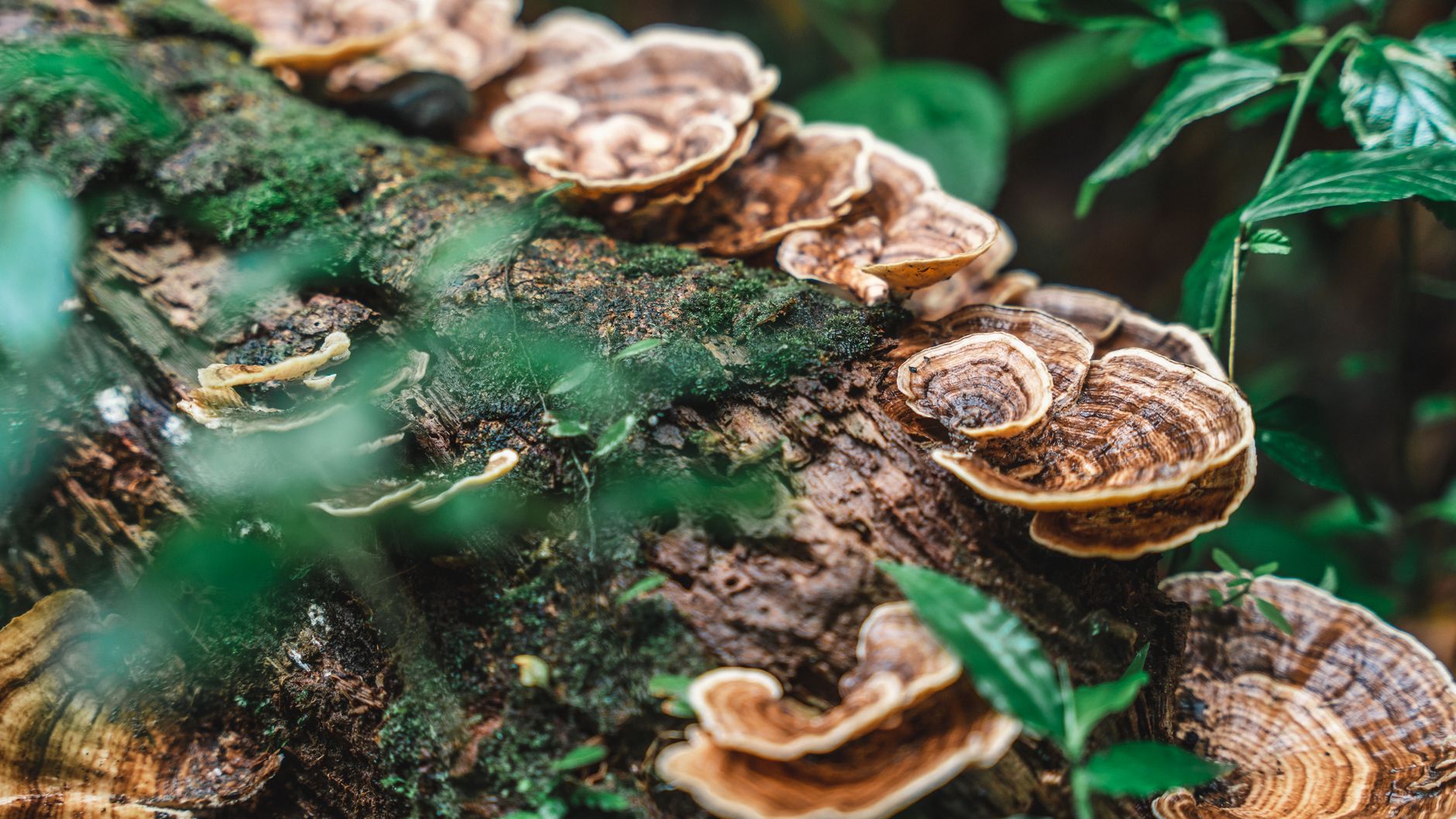

Maitake (Grifola frondosa) is a large, fan-shaped fungus native to temperate forests of North America, Europe, and Japan. Long prized in traditional Japanese and Chinese medicine, maitake has attracted growing scientific interest over the past two decades, particularly for its effects on blood sugar regulation and immune function. The compounds responsible for these effects are well characterized, and a meaningful body of preclinical and clinical research now exists to evaluate them.
Bioactive Compounds in Maitake
The most extensively studied compounds in maitake are its beta-glucans, particularly a branched polysaccharide fraction commonly referred to as D-Fraction or MD-Fraction. These beta-1,3/1,6-glucans are high-molecular-weight carbohydrates that interact with pattern recognition receptors on immune cells, primarily Dectin-1 and toll-like receptors. Maitake also contains alpha-glucans, ergosterol (a precursor to vitamin D2), various B vitamins, potassium, and a range of antioxidant phenolic compounds. Each of these constituents may contribute to the functional properties observed in laboratory and animal studies.
Blood Sugar and Insulin Sensitivity
Among the most replicated findings in maitake research is its potential to support healthy glucose metabolism. Multiple lines of evidence suggest that polysaccharide fractions from G. frondosa may improve insulin sensitivity through several mechanisms.
A 2015 study isolated two polysaccharide fractions from maitake (designated F2 and F3) and examined their effects in diabetic rats. Both fractions significantly reduced fasting serum glucose and insulin levels and lowered the homeostasis model assessment of insulin resistance (HOMA-IR) score. The researchers found that the fractions appeared to reactivate insulin receptor (IR) and insulin receptor substrate-1 (IRS-1) signaling, components of the classical PI3K/Akt pathway that governs cellular glucose uptake.[1]
A 2018 investigation found that a lipid-soluble extract of G. frondosa activated peroxisome proliferator-activated receptor delta (PPARdelta) in skeletal muscle cells and in high-fat diet-induced obese mice. Administration of the extract to obese mice lowered total blood cholesterol and improved glucose tolerance. The authors also observed restoration of impaired glucose uptake in muscle cells treated with palmitate, suggesting a PPARdelta-independent pathway may also be involved.[2]
More recent network pharmacology research published in 2025 identified glucokinase (GCK) as a probable molecular target of maitake polysaccharide fraction GF5000. Using transcriptomics and proteomics in diabetic rats, the study found that GF5000 treatment was associated with upregulation of GCK expression in liver tissue, a finding consistent with improved hepatic glucose sensing.[3] It is worth noting that the majority of this research is preclinical; well-powered human trials are needed before definitive conclusions can be drawn about blood sugar outcomes in people.
For a broader look at how functional mushrooms may relate to metabolic markers, see Functional Mushrooms and Metabolic Health: What the Research Shows.
Immune-Modulating Effects
Maitake’s immune-related properties have been the subject of considerable laboratory and animal research. The D-Fraction beta-glucan complex is thought to prime innate immune cells, including macrophages, dendritic cells, and natural killer (NK) cells, to respond more effectively to pathogens and abnormal cells.
A 2016 animal study using a murine breast cancer model found that treatment with Maitake D-Fraction Pro4X prior to tumor cell implantation was associated with blocking more than 60% of breast cancer development in treated animals compared to controls. The researchers observed reduced tumor invasiveness, lower angiogenic activity, and improved overall survival in the treated group, effects they attributed primarily to immune pathway modulation.[4] These are animal findings and should not be interpreted as evidence of efficacy in human cancer prevention or treatment.
A 2024 pharmacology study examined whether maitake beta-glucan MD-Fraction could enhance the activity of trastuzumab, a monoclonal antibody used in HER2-positive breast cancer. In xenograft mouse models, the combination of MD-Fraction and trastuzumab produced greater tumor suppression than trastuzumab alone. Ex vivo analysis suggested MD-Fraction enhanced antibody-dependent cellular cytotoxicity (ADCC) via NK cell activation and also potentiated complement-dependent cytotoxicity (CDC) through macrophage and neutrophil engagement.[5] These findings are preliminary and restricted to animal and ex vivo models.
Nutritional Profile
Beyond its bioactive polysaccharides, maitake is a nutritionally dense food. As a whole mushroom, it provides dietary fiber, B vitamins including niacin and riboflavin, copper, potassium, and phosphorus. Maitake is also one of the better dietary sources of ergosterol, the fungal precursor that converts to vitamin D2 under ultraviolet light exposure. When dried in sunlight, maitake can accumulate substantial levels of vitamin D2, which may be of interest for populations at risk of insufficiency.
Forms and Considerations
Maitake is available as a whole or dried culinary mushroom, as standardized liquid extracts (typically standardized to D-Fraction beta-glucan content), and as encapsulated powders. Extract products vary considerably in their polysaccharide content and bioavailability, so consumers should look for products that specify beta-glucan percentage and extraction method. Those with diabetes or who take medications affecting blood sugar or immune function should consult a qualified healthcare provider before using concentrated maitake extracts, given the observed metabolic and immunological activity documented in the research literature.
Summary
Maitake mushroom contains well-characterized beta-glucan fractions that research suggests may support insulin sensitivity and immune cell activity. Preclinical studies indicate plausible mechanisms involving insulin receptor signaling, PPARdelta activation, glucokinase expression, and NK cell priming. Human clinical trial data remain limited, and the findings from animal and in vitro models cannot be directly extrapolated to clinical outcomes. Maitake continues to be an active area of study, and its profile as a functional food warrants ongoing investigation.
References
- Xiao C et al. Hypoglycemic effects of Grifola frondosa polysaccharides F2 and F3 through improvement of insulin resistance in diabetic rats. Food Funct. 2015;6(11):3567-75. PMID: 26311233
- Aoki H et al. Grifola frondosa (Maitake) extract activates PPARdelta and improves glucose intolerance in high-fat diet-induced obese mice. Biosci Biotechnol Biochem. 2018;82(9):1550-1559. PMID: 29873587
- Xiao C et al. Network Pharmacology-Based Elucidation of the Hypoglycemic Mechanism of Grifola frondosa GF5000 Polysaccharides via GCK modulation in Diabetic Rats. Nutrients. 2025;17(6):964. PMID: 40289960
- Roldan-Deamicis A et al. Maitake Pro4X has anti-cancer activity and prevents oncogenesis in BALBc mice. Cancer Med. 2016;5(9):2427-41. PMID: 27401257
- Masuda Y et al. Maitake Beta-Glucan Enhances the Therapeutic Effect of Trastuzumab via ADCC and CDC. Biol Pharm Bull. 2024;47(4):840-847. PMID: 38616114
Disclaimer: The information on this page is intended for educational purposes only and does not constitute medical advice. Functional mushroom supplements are not intended to diagnose, treat, cure, or prevent any disease. Consult a qualified healthcare provider before starting any new supplement, especially if you have a medical condition or take medications.