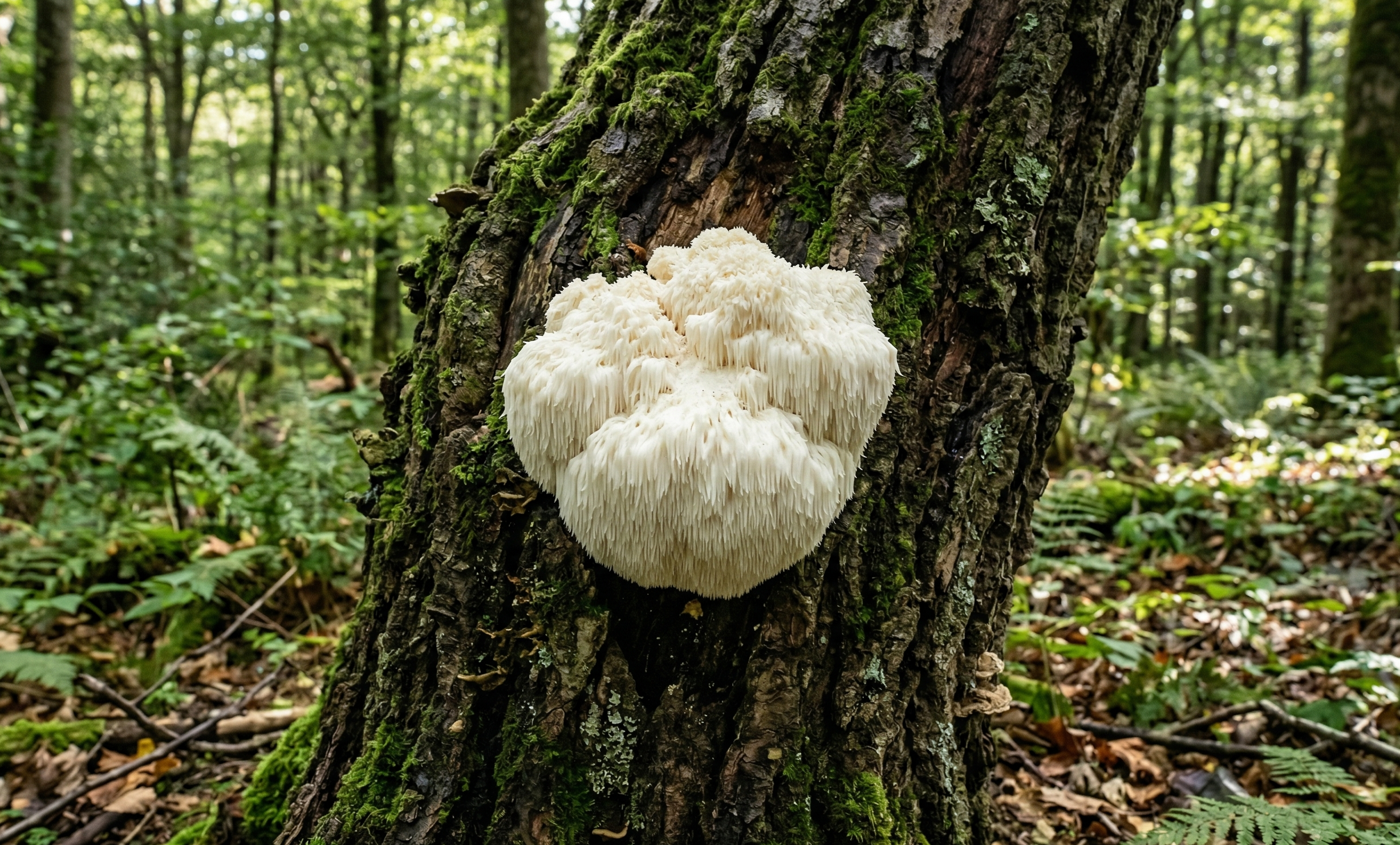
Lion’s Mane mushroom (Hericium erinaceus) has moved from obscure health food curiosity to mainstream supplement shelf staple — and the growing interest is backed by a meaningful body of research. Here’s an evidence-based breakdown.
What Lion’s Mane Actually Does
Lion’s Mane is unique among functional mushrooms because its primary effects are neurological rather than immunological. Its two key active compounds — hericenones (fruiting body) and erinacines (mycelium) — have been shown in studies to stimulate the production of Nerve Growth Factor (NGF) and Brain-Derived Neurotrophic Factor (BDNF).
NGF and BDNF are proteins your brain uses to grow, maintain, and repair neurons. Higher levels are associated with better memory consolidation, faster cognitive processing, and greater neuroplasticity. For the full scientific picture, the NIH has published a comprehensive review of its neuroprotective properties.
What the Research Shows
The most cited human trial found that older adults with mild cognitive impairment who took Lion’s Mane for 16 weeks showed significantly improved cognitive scores vs. placebo — and those improvements reversed after stopping, suggesting real dependency on continued use.
More recent research found reduced anxiety and irritability in women after four weeks of supplementation, with the proposed mechanism being NGF’s role in hippocampal function — which regulates emotional processing as well as memory.
What Some Users Report Noticing
Lion’s Mane is not a stimulant. Any effects tend to be subtle and cumulative. Some consistent users report:
- Clearer, more sustained focus — less mental fog, especially in the afternoon
- Improved word recall — finding the right words more readily
- Better mood stability — a more even emotional baseline
- Improved memory — particularly with names, details, and sequential tasks
Individual experiences vary. Clinical trials suggest effects may begin to emerge after 2–4 weeks of consistent use, with fuller effects developing over 4–8 weeks.
How to Take It
Dosing in the research ranges from 500mg to 3,000mg daily. A practical starting point is 1,000mg per day in the morning. Look for products with dual extraction — water extraction for beta-glucans, alcohol extraction for hericenones and erinacines. You need both.
Lion’s Mane pairs well with other nootropic mushrooms — see our guide on combining mushrooms with nootropics. For a full comparison of functional mushrooms for immune and brain health, our Chaga vs. Reishi guide is a good companion read.
Who Should Consider It
- Knowledge workers, students, anyone whose livelihood depends on sharp cognition
- People experiencing brain fog from stress, poor sleep, or aging
- Those interested in long-term neuroprotection
- Anyone dealing with mild anxiety or mood instability
If you want a convenient daily format, mushroom gummies have come a long way and are worth considering for consistent dosing.