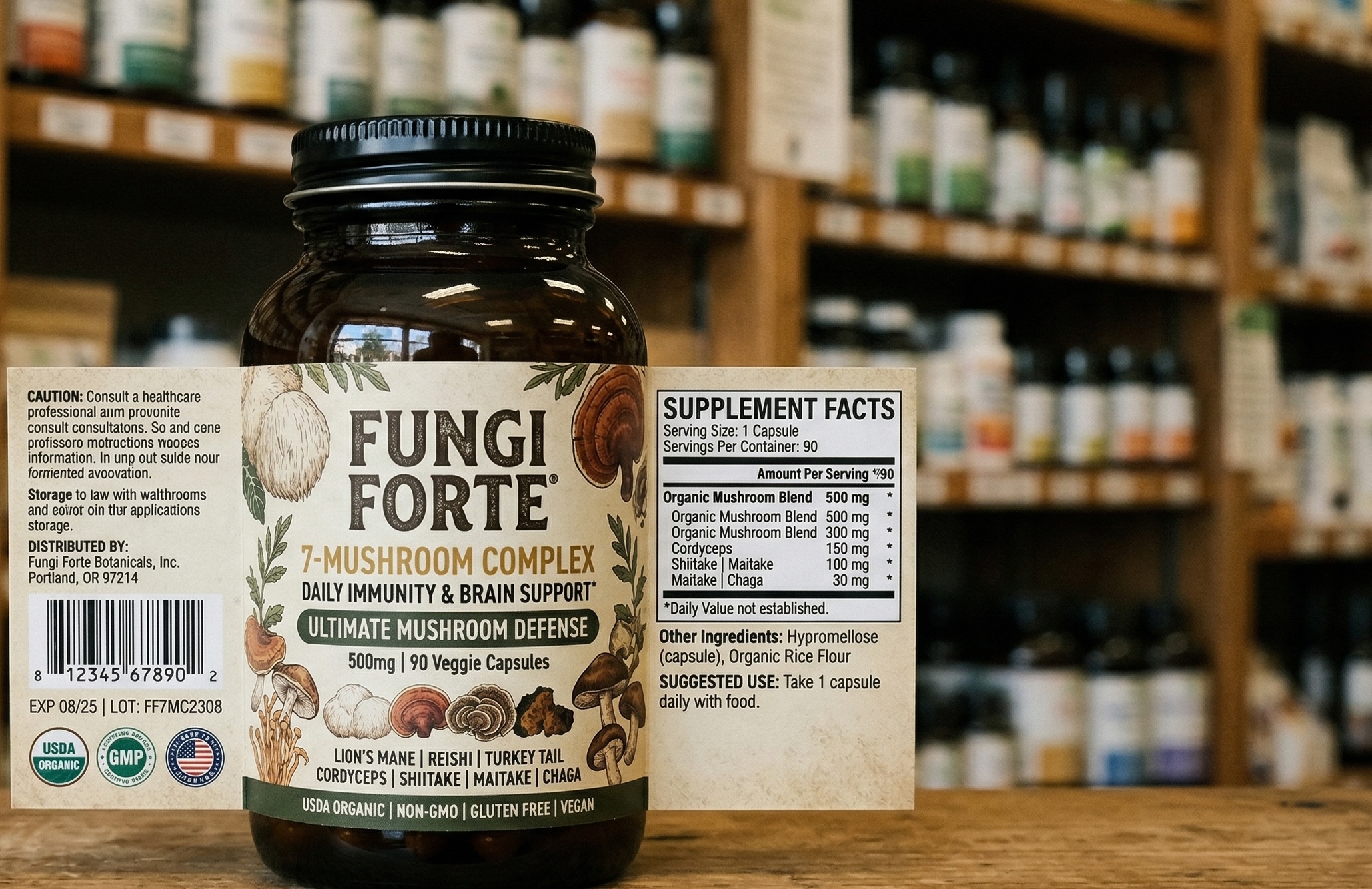
The mushroom supplement market has exploded, and so has the noise. Products with identical-sounding names can vary wildly in quality, potency, and actual medicinal value. Knowing how to read a label properly is one of the most practical skills you can develop as a consumer.
Here’s what actually matters, and what to ignore.
Fruiting Body vs Mycelium on Grain
This is the single most important distinction. The ingredient list will tell you which you’re getting:
- “Fruiting body” ; the actual mushroom, highest concentration of actives
- “Mycelium” or “myceliated brown rice/oats” ; mycelium grown on grain substrate, often high in starch filler
- “Full spectrum” ; usually myceliated grain with some fruiting body; check the rest of the label carefully
Studies have found myceliated grain products can contain as little as 5% beta-glucans compared to 30%+ in quality fruiting body extracts.[2] The grain substrate adds bulk but not benefit.
Beta-Glucan Percentage
Beta-glucans are the primary immune-modulating compounds in most medicinal mushrooms.[2] A quality supplement will state the beta-glucan percentage. Look for:
- 20–40%+ beta-glucans for a quality fruiting body extract
- Under 10% ; likely a myceliated grain product or low-quality extract
- No beta-glucan listed ; a red flag; the manufacturer may not want you to know
Alpha-Glucans: The Starch Test
Alpha-glucans are starches ; they come from the grain substrate in myceliated products. High alpha-glucan content means you’re paying for filler. Some premium brands now list both beta-glucan and alpha-glucan content; a high beta-glucan to alpha-glucan ratio is what you want.
Extraction Method
Raw mushroom powder has limited bioavailability ; the beneficial compounds are locked behind chitin cell walls that human digestion can’t break down efficiently. Extraction matters:
- Hot water extraction ; releases beta-glucans and most polysaccharides. Required for immune-active compounds.
- Alcohol (ethanol) extraction ; releases fat-soluble compounds like triterpenes (especially important for Reishi)
- Dual extraction ; both methods combined. The gold standard, especially for Reishi and Chaga
Look for “extract” on the label and ideally a statement about extraction method. “Mushroom powder” without extraction language is usually just ground-up mushroom with limited bioavailability.
Third-Party Testing
Reputable brands send their products to independent labs for verification of active compound content, heavy metals, and contaminants. Look for a QR code, certificate of analysis (COA), or mention of third-party testing. If a brand doesn’t offer this, ask why.
What “Proprietary Blend” Really Means
When a label lists a “proprietary blend” without individual compound amounts, it usually means the manufacturer doesn’t want you to know how much of each ingredient is actually present. This is common in underdosed products. A confident manufacturer lists exact amounts.
References
- [1] Rupa T et al.. Adaptogenic Effects of Mushroom Blend Supplementation on Stress, Fatigue, and Sleep Quality. PMID: 41540766
- [2] Guo Y et al.. Water-soluble beta-glucan from Ganoderma lucidum as a potential functional food ingredient. PMID: 40541876
- [3] Motta F, Gershwin ME, Selmi C. Mushrooms and immunity. PMID: 33276307
This article is for informational purposes only and does not constitute medical advice. Always consult a qualified healthcare provider before starting any supplement.