Cordyceps is among the most studied genera in functional mushroom research, yet the category contains more than one species marketed to consumers. Two names appear most often on supplement labels: Cordyceps militaris and Ophiocordyceps sinensis (formerly classified as Cordyceps sinensis). While both belong to the same fungal order, they differ in origin, chemical composition, accessibility, and the depth of available research. Understanding these distinctions can help consumers make more informed choices when evaluating Cordyceps-based products.
Origins and Cultivation
Ophiocordyceps sinensis is the wild species traditionally harvested on the Tibetan Plateau and surrounding high-altitude regions of China, Nepal, and Bhutan. It completes its lifecycle by parasitizing the larvae of ghost moths, producing a fruiting body that emerges from the mummified caterpillar. Owing to its labor-intensive wild harvest and the narrow ecological conditions required for its growth, authentic O. sinensis commands extremely high prices and remains difficult to verify in supplement form.
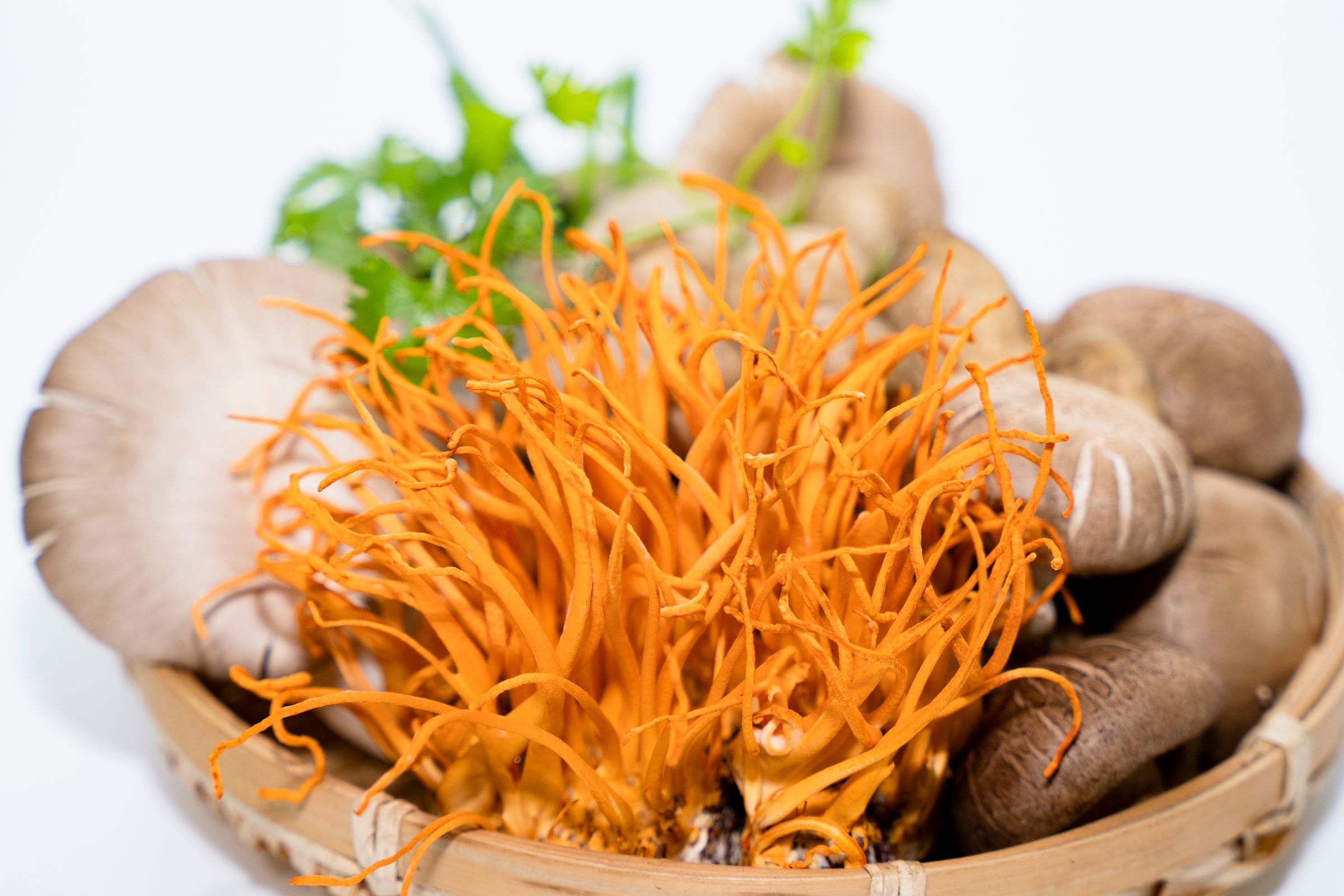
Cordyceps militaris, by contrast, can be cultivated commercially on grain-based substrates under controlled laboratory conditions. This agricultural accessibility has made it the dominant species in the modern supplement market and the subject of a growing body of scientific literature. The ability to standardize cultivation conditions also allows for more consistent bioactive compound profiles between batches.
Key Bioactive Compounds: Where They Converge and Diverge
Both species contain polysaccharides (including beta-glucans), nucleosides, and various amino acids. However, research indicates meaningful quantitative differences in several key compounds.[1]
Cordycepin
Cordycepin (3′-deoxyadenosine) is one of the most studied bioactive compounds associated with the Cordyceps genus. Analytical comparisons suggest that C. militaris fruiting bodies consistently contain measurable cordycepin levels, whereas this compound is not reliably detected in O. sinensis preparations or its mycelial fermentation products at comparable concentrations.[1] Given that a significant portion of the preclinical research attributing energy-related and anti-fatigue properties to Cordyceps focuses on cordycepin specifically, this difference has practical implications for interpreting which species a given study was investigating.
Polysaccharides
Both species contain polysaccharides that researchers have associated with immune-modulating activity, but the structural composition of these polysaccharides differs. Analysis of C. militaris polysaccharides shows a high glucose content, while the polysaccharide fractions from mycelial preparations of related species contain varying monosaccharide ratios including fucose.[1] Whether these structural differences translate into clinically distinct effects has not been established in head-to-head human trials.
Adenosine and Nucleoside Profile
Both species contain adenosine and related nucleosides, which are thought to contribute to vasodilatory and energy metabolism effects observed in preclinical models. The overall nucleoside profile, however, varies between the two species, with O. sinensis preparations showing different ratios of cytidine, hypoxanthine, and other nucleosides compared to C. militaris.
What the Research Shows for Each Species
Cordyceps militaris
Because C. militaris can be cultivated reliably, it has accumulated a broader clinical and preclinical research record. A 2026 review published in Phytotherapy Research assessed immunomodulatory effects across in vitro, in vivo, and clinical studies, concluding that C. militaris extract, cordycepin, and its polysaccharides may support both innate and adaptive immune function under a range of conditions, and that available evidence suggests the species is well tolerated.[2]
Separately, preclinical research has examined cordycepin’s potential role in reducing physical fatigue markers. One study in mice found that cordycepin administration was associated with prolonged endurance performance and modulation of energy metabolism pathways, including TIGAR/SIRT1/PGC-1alpha signaling, along with reductions in lactic acid and blood uric nitrogen levels following exertion.[3] These findings are preclinical and require validation in human trials before conclusions can be drawn about real-world anti-fatigue effects.
Ophiocordyceps sinensis
Research into O. sinensis has a longer traditional history, particularly within traditional Chinese medicine where it has been used for centuries as a tonic for fatigue and respiratory conditions. However, the scientific literature is complicated by several factors: limited supply of authenticated wild material, variation in mycelial fermentation preparations, and inconsistent standardization. Most modern supplement products labeled simply as “Cordyceps” and sold at accessible price points are likely derived from C. militaris rather than authentic O. sinensis.
Supplement Label Considerations
Consumers reviewing Cordyceps supplement labels should look for the species name written in full. A label that reads “Cordyceps” without specifying militaris or sinensis leaves the species ambiguous. Additionally, the substrate on which the fungus was grown can affect the final chemical profile. Products grown on grain substrates may contain residual starch content that dilutes the concentration of active compounds, which is why beta-glucan content specified on a certificate of analysis may be more meaningful than the raw weight of mushroom extract. For a broader overview of how to evaluate supplement labels, see our guide to reading mushroom supplement labels and understanding beta-glucans.
Which Species Is More Relevant to Current Research?
For consumers interested in cordycepin-related research specifically, C. militaris is the more relevant species to evaluate because it consistently contains this compound at measurable levels, and the majority of contemporary clinical research uses C. militaris extracts. For those interested in the traditional use history and polysaccharide-based immune support research, O. sinensis preparations have their own literature, though the quality and supply variability of authentic material remain concerns.
Neither species has been the subject of large-scale randomized controlled trials sufficient to make definitive efficacy claims in humans. Both may support immune function and energy-related pathways based on current preclinical and early clinical evidence, but the mechanisms, optimal preparations, and direct human outcomes remain areas of active investigation.
References
- 1. Qiao J, et al. Comparison of Chemical Compositions, Bioactive Ingredients, and In Vitro Antitumor Activity of Four Products of Cordyceps Strains from China. Int J Med Mushrooms. 2019;21(4):331-342. PMID: 31002629
- 2. Yang EJ, et al. An Immunomodulatory Mushroom, Cordyceps militaris, and Its Constituents: A Review of In Vitro/In Vivo Studies and Clinical Trials. Phytother Res. 2026;40(2):635-665. PMID: 41432716
- 3. Chai X, et al. Cordycepin exhibits anti-fatigue effect via activating TIGAR/SIRT1/PGC-1alpha signaling pathway. Biochem Biophys Res Commun. 2022;637:127-135. PMID: 36399798
Disclaimer: The information on this page is provided for educational purposes only and does not constitute medical advice. Functional mushroom supplements have not been evaluated by the FDA for the prevention, treatment, or cure of any disease. Consult a qualified healthcare provider before beginning any new supplement regimen.