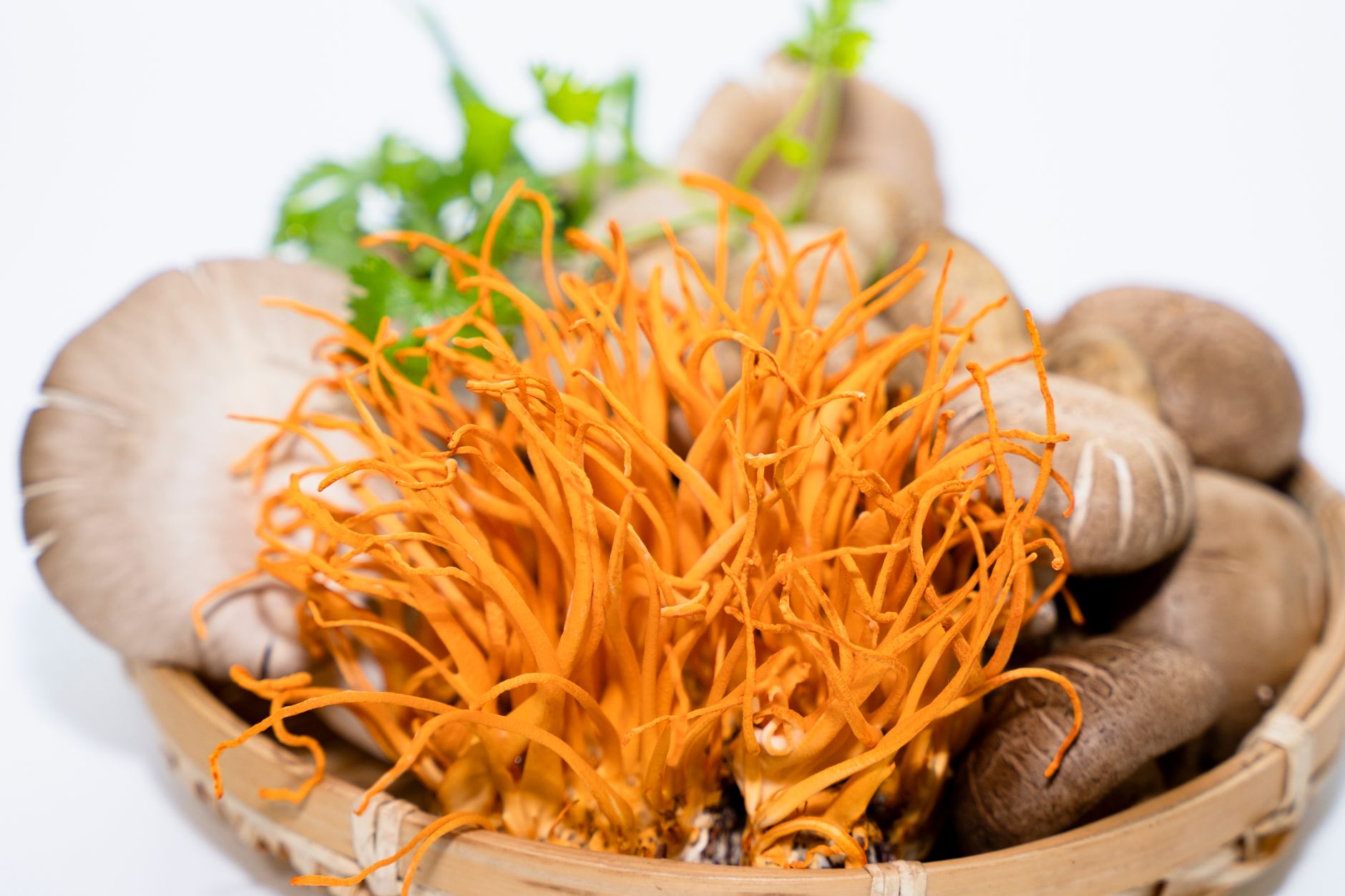
Cordyceps has been used in traditional East Asian medicine for centuries, often associated with vitality and resilience. In recent decades, researchers have turned their attention to a more specific question: does Cordyceps meaningfully influence immune function, and if so, through what mechanisms? The evidence, while still developing, suggests that certain Cordyceps preparations may support key aspects of immune activity — particularly natural killer (NK) cell function and cytokine regulation.
What Is Cordyceps and Why Does It Matter for Immunity?
The genus Cordyceps encompasses more than 400 species of parasitic fungi, but two are most commonly studied in the context of human health: Cordyceps sinensis (also known as Ophiocordyceps sinensis) and Cordyceps militaris. Wild C. sinensis is rare and expensive; most commercially available supplements use cultivated C. militaris or mycelium-derived extracts as more accessible alternatives.
The primary bioactive compounds associated with immune effects include polysaccharides (particularly beta-glucans), cordycepin (3′-deoxyadenosine), adenosine, and various glycoproteins. These compounds are believed to interact with immune receptors — including Toll-like receptors (TLRs) — and modulate downstream signaling pathways such as MAPK and NF-kB, both of which play central roles in immune cell activation.
NK Cell Activity and Lymphocyte Proliferation
Natural killer cells are a critical component of innate immunity, tasked with detecting and eliminating virally infected or abnormal cells without prior sensitization. Several studies have examined whether Cordyceps supplementation influences NK cell activity in humans.
A randomized, placebo-controlled trial in healthy Korean men found that C. militaris supplementation over four weeks was associated with statistically significant increases in NK cell activity (specifically NK200 values), lymphocyte proliferation index, and elevations in the Th1 cytokines IL-2 and IFN-gamma compared to placebo. No significant adverse effects were observed.[1]
A separate randomized, double-blind clinical trial investigated the immunomodulatory effects of a Cordyceps mycelium culture extract (CBG-CS-2, derived from Paecilomyces hepiali) in healthy adults over eight weeks. The intervention group demonstrated a 38.8% enhancement in NK cell cytotoxic activity relative to baseline, a statistically significant improvement compared to the placebo group (P < 0.019). The authors concluded that the extract appeared safe and effective for supporting cell-mediated immunity.[2]
Polysaccharides and Macrophage Activation
Beyond NK cells, research has examined how specific Cordyceps polysaccharides affect a broader range of immune cells. A study isolating a novel polysaccharide (CMPB90-1) from C. militaris found that it promoted splenic lymphocyte proliferation, enhanced NK cell cytotoxicity, stimulated macrophage phagocytosis, and induced macrophage M1 polarization — a phenotype associated with pro-inflammatory, pathogen-clearing activity. The researchers identified TLR2, MAPK, and NF-kB pathway activation as probable mechanisms.[3]
M1 macrophage polarization is generally considered beneficial for acute immune responses, though the long-term implications of sustained macrophage polarization in healthy individuals remain an area of active investigation. These in vitro findings provide mechanistic context for human clinical observations, though they do not directly confirm equivalent effects in vivo.
Exopolysaccharides, Cytokines, and Gut Microbiota
More recent research has explored the intersection of Cordyceps polysaccharides, the gut microbiome, and immune regulation. An animal study using cyclophosphamide-induced immunosuppression found that acidic exopolysaccharides (AEPS) from C. militaris fermentation broth elevated the cytokines IL-2, IL-4, and IFN-gamma, increased immunoglobulins (IgA, IgM, IgG), and positively modulated gut microbial composition — increasing short-chain fatty acid-producing bacterial populations. The authors proposed MAPK/NF-kB/PI3K-Akt signaling as the underlying mechanism.[4]
While mouse models of chemotherapy-induced immunosuppression differ substantially from typical human immune states, this line of research points toward a possible gut-mediated pathway for some of Cordyceps’ immune effects — a hypothesis that aligns with the broader literature on beta-glucan fermentation and microbiota modulation.
Important Limitations and Considerations
The human clinical trials on Cordyceps and immunity are limited in number and scope. Most involve small sample sizes, short durations, and healthy adult populations — making it difficult to draw broad conclusions about immunocompromised individuals or those with specific conditions. The species, extraction method, and preparation form also vary significantly between studies, and not all commercial Cordyceps products have been tested in clinical settings.
Individuals taking immunosuppressive medications should consult a healthcare provider before using Cordyceps supplements, as theoretical interactions with immune-modulating pathways may exist. For further context on how Cordyceps has been studied in the context of physical performance and oxygen utilization, see our overview of Cordyceps and Oxygen Utilization.
Summary
Research suggests that certain Cordyceps preparations — particularly C. militaris extracts and isolated polysaccharides — may support NK cell activity, promote lymphocyte proliferation, and modulate cytokine profiles in ways consistent with enhanced cell-mediated immunity. Two randomized clinical trials in healthy adults provide some human-level support for these effects, though the overall evidence base remains relatively limited. As with all functional mushroom research, findings should be interpreted with appropriate context regarding study design, population, and preparation specifics.
References
- 1. Kang HJ et al. Cordyceps militaris Enhances Cell-Mediated Immunity in Healthy Korean Men. J Med Food. 2015;18(10):1164-72. PMID: 26284906
- 2. Jung SJ et al. Immunomodulatory effects of a mycelium extract of Cordyceps (Paecilomyces hepiali; CBG-CS-2): a randomized and double-blind clinical trial. BMC Complement Altern Med. 2019;19(1):77. PMID: 30925876
- 3. Bi S et al. Structural elucidation and immunostimulatory activity of a new polysaccharide from Cordyceps militaris. Food Funct. 2018;9(1):279-293. PMID: 29168868
- 4. Xuan J et al. Cordyceps Militaris Exopolysaccharides and Lactiplantibacillus Plantarum H8 Synergistically Improve Immune Function Damage in Cyclophosphamide-Induced Immunosuppressed Mice. Probiotics Antimicrob Proteins. 2026. PMID: 42029995
Disclaimer: This article is for informational purposes only and does not constitute medical advice. Cordyceps supplements have not been evaluated by the FDA for the prevention, treatment, or cure of any disease. Consult a qualified healthcare provider before starting any new supplement, particularly if you are pregnant, nursing, taking medications, or managing a health condition.