The gastrointestinal tract is home to trillions of microorganisms collectively known as the gut microbiome, a complex ecosystem that influences digestion, immune function, metabolic regulation, and even neurological signaling. Emerging research suggests that certain functional mushrooms may support this ecosystem through prebiotic-like mechanisms, primarily driven by their polysaccharide content. This article reviews the current evidence on which mushrooms may benefit gut health and the plausible biological pathways involved.
Why Mushrooms May Support the Gut
Most of the bioactive compounds in functional mushrooms that interest researchers in the context of gut health are polysaccharides, particularly beta-glucans and chitin. These compounds resist digestion in the upper gastrointestinal tract and reach the colon largely intact, where they become available for fermentation by resident bacteria.
A 2026 narrative review published in Foods summarized this mechanism: mushroom-derived polysaccharides, including beta-glucans, polyphenols, trehalose, and chitin, resist enzymatic breakdown and are fermented by intestinal microorganisms, promoting the production of short-chain fatty acids (SCFAs).[1] SCFAs such as butyrate, propionate, and acetate are recognized as important metabolites for intestinal barrier integrity, local immune regulation, and metabolic homeostasis.
A complementary review on beta-glucans published in Carbohydrate Polymers further described how these polysaccharides interact with immune receptors including Dectin-1 and Toll-like receptors, potentially mediating both direct immune effects and indirect effects through changes in gut microbial composition and metabolite production.[2]
Lion’s Mane and Gut Inflammation
Hericium erinaceus (Lion’s Mane) is among the most studied functional mushrooms for neurological support, but research also indicates potential gut-relevant effects. A 2026 study published in International Journal of Biological Macromolecules investigated a beta-glucan-rich hot-water extract of Hericium erinaceus in mouse colitis models.[3]
Researchers found that the extract suppressed pro-inflammatory cytokines including IL-6, appeared to restore tight junction gene expression (including occludin, ZO-1, and MUC2) in barrier cells, and attenuated changes in specific gut bacteria associated with inflammation. Microbiome profiling indicated selective remodeling of inflammation-related microbial populations, suggesting the extract may help rebalance the gut ecosystem under inflammatory conditions. The authors noted these findings support the extract’s potential to protect against colitis-related changes through both anti-inflammatory and microbiota-modulating mechanisms, though human clinical data remain limited.
Reishi and Gut Microbiota Modulation
Ganoderma lucidum (Reishi) has long been used in traditional systems for its broad-spectrum wellness associations. More recently, its effects on the gut microbiome have attracted scientific attention. A 2026 study in Food Research International evaluated aqueous and ethanol extracts of G. lucidum using in vitro digestion models combined with immunological assays.[4]
The study described a “digestion-metabolism-immunity” cascade in which gut microbiota modulation appeared to favor anti-inflammatory activity and increased colonic butyrate production. The researchers observed suppressed inflammatory mediators in macrophage assays and identified regulatory gene pathways involved in these immune interactions. Notably, the study found that oral bioavailability of G. lucidum extract components was limited (less than 10%), suggesting that colonic fermentation by gut bacteria may represent a key route through which Reishi compounds exert physiological effects.
Turkey Tail: Immune and Microbiome Activity
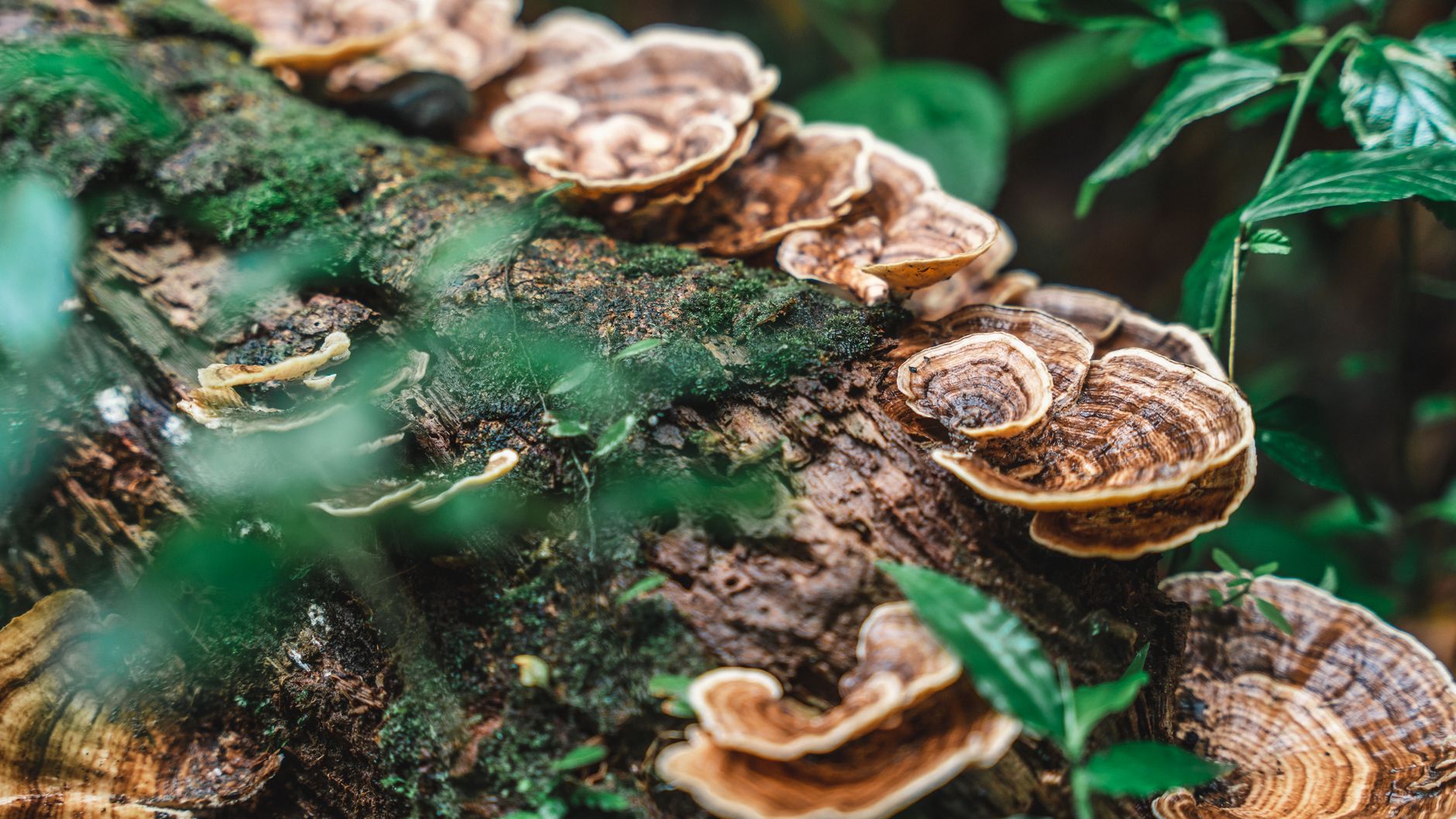
Trametes versicolor (Turkey Tail) is one of the most clinically researched functional mushrooms, with a body of work focused on its polysaccharopeptides (PSP) and polysaccharide-K (PSK). Beyond direct immune support, Turkey Tail is also of interest for its prebiotic potential. Its rich beta-glucan content may selectively promote the growth of beneficial bacteria, including Bifidobacterium and Lactobacillus species, while potentially reducing populations of less favorable microorganisms.
The general prebiotic narrative review referenced above noted that mushroom polysaccharides from various species, including those with high PSK content, consistently demonstrate selective fermentability in the colon.[1] Turkey Tail’s established beta-glucan profile positions it as a candidate for further gut-specific clinical investigation. For more on Turkey Tail’s broader properties, see our overview of Turkey Tail Mushroom and what early research suggests about its systemic effects.
Shiitake and Oyster Mushrooms
Culinary mushrooms are often overlooked in functional discussions, but both Lentinula edodes (Shiitake) and Pleurotus species (Oyster mushrooms) contain meaningful quantities of beta-glucans and dietary fiber that may influence gut microbiota composition.
Shiitake contains lentinan, a beta-1,3-glucan that has been studied primarily in immune contexts but may also confer prebiotic effects in the colon. Oyster mushrooms provide both beta-glucans and a range of polyphenolic compounds. The prebiotic review cited above included Pleurotus species among mushrooms that demonstrated gut microbiota modulation and SCFA-mediated effects in available studies.[1]
Chaga and Prebiotic Fiber Content
Inonotus obliquus (Chaga) is primarily known for its antioxidant and immune-associated properties. Its polysaccharide content, including beta-glucans derived from the fungal cell wall, may also exhibit prebiotic properties. Animal studies have explored Chaga polysaccharide effects on gut microbial diversity, with some findings suggesting shifts toward Bacteroidetes and reductions in Firmicutes ratios, changes often described as favorable in metabolic research. Human clinical evidence in this specific context remains limited.
Understanding SCFAs: Why They Matter
Short-chain fatty acids, produced when colonic bacteria ferment prebiotic substrates, are increasingly recognized as important mediators of gut-systemic health. Butyrate, in particular, serves as the primary energy source for colonocytes, the cells lining the intestinal wall, and studies indicate it may support tight junction integrity and help regulate intestinal permeability. Propionate and acetate travel to peripheral tissues and may influence metabolic and immune signaling.
Mushroom polysaccharides that increase SCFA production are therefore of interest not only for direct gut effects but for their potential downstream influence on inflammation, immune tone, and metabolic balance. This systemic reach is one reason gut-focused functional mushroom research has attracted growing scientific attention.
Considerations and Limitations
The evidence base supporting functional mushrooms for gut health is promising but remains at an early stage for human clinical applications. Most studies are either in vitro (cell culture), conducted in animal models, or based on narrative reviews rather than randomized controlled trials. Variability in mushroom species, extraction methods, beta-glucan content, and dosing makes cross-study comparisons difficult.
Individuals with immune conditions, those taking immunosuppressive medications, or those with gastrointestinal disorders should consult a qualified healthcare provider before introducing functional mushroom supplements. Responses to prebiotic compounds can vary significantly based on an individual’s existing microbiome composition.
References
- 1. Mattioli LB, et al. Edible Mushrooms as Emerging Prebiotic Sources: Gut Microbiota Modulation and SCFA-Mediated Health Effects. Foods. 2026;15(9):1539. PMID: 42121482
- 2. Wang X, et al. Harnessing beta-glucans for immune regulation: Bridging structural diversity, therapeutic potential, and functional food development. Carbohydr Polym. 2026;372:124554. PMID: 41274724
- 3. Yu H, et al. beta-Glucan-rich Hericium erinaceus hot-water extract ameliorates acute colitis by suppressing inflammation, preserving the epithelial barrier, and modulating gut microbiota ecosystem. Int J Biol Macromol. 2026;354:151368. PMID: 41819322
- 4. Jiang T, et al. Comprehensive evaluation of Ganoderma lucidum extracts: digestion kinetics, gut microbiota modulation, and immunoregulatory mechanisms. Food Res Int. 2026;230:118664. PMID: 41794511
Disclaimer: This article is for informational purposes only and does not constitute medical advice. Functional mushrooms are not intended to diagnose, treat, cure, or prevent any disease. Consult a qualified healthcare professional before starting any new supplement regimen.