The relationship between the gut microbiome and systemic health has become one of the most researched areas in biomedical science over the past two decades. An increasingly studied category of dietary compounds in this context is fungal polysaccharides, the complex carbohydrates found in the cell walls and tissues of functional mushrooms. Research suggests that several species, including Turkey Tail (Trametes versicolor), Lion’s Mane (Hericium erinaceus), Shiitake (Lentinula edodes), and certain oyster mushroom varieties, may support gut health through prebiotic activity, short-chain fatty acid production, and intestinal immune modulation.
This article reviews the available evidence across these species, with a focus on what has been demonstrated in peer-reviewed research and what remains to be established.
Why Gut Health Matters for Immune Function
Approximately 70 percent of the body’s immune tissue is located in or around the gastrointestinal tract, in a system known as the gut-associated lymphoid tissue (GALT). The composition of the gut microbiome, meaning the trillions of bacteria, fungi, and other microorganisms residing in the intestines, has a direct influence on immune signaling, inflammatory tone, and epithelial barrier integrity. Dysbiosis, or an imbalance in microbial communities, has been associated with a range of conditions including inflammatory bowel disease, metabolic dysfunction, and immune dysregulation.
Dietary fibers and polysaccharides that resist digestion in the small intestine and are selectively fermented by beneficial colonic bacteria are classified as prebiotics. Functional mushrooms represent a structurally distinct category of prebiotic material, distinct from plant-derived fibers, due to the specific architecture of their beta-glucan and heteropolysaccharide fractions.
Turkey Tail: Prebiotic Activity and Microbiome Modulation
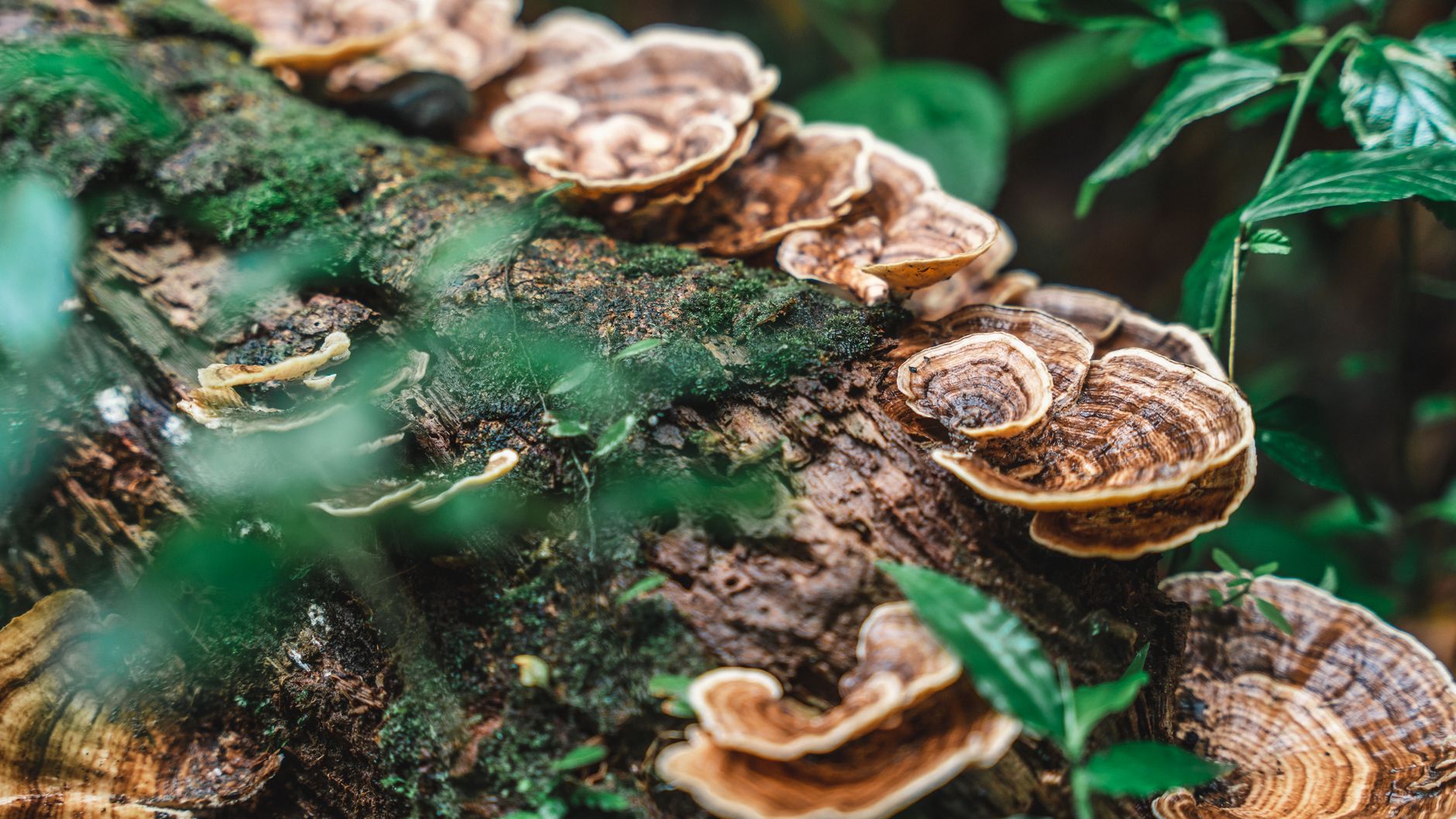
Trametes versicolor, commonly known as Turkey Tail, is among the most studied functional mushrooms for both immune support and gut health. Its polysaccharide fractions, including polysaccharide-K (PSK) and related beta-glucans, have been examined in multiple research contexts.
A 2024 study in Microorganisms investigated the effects of Turkey Tail polysaccharides on gut dysbiosis in mice fed a high-fat diet. Oral administration of both extracellular and intracellular polysaccharide fractions significantly attenuated the dysbiosis characteristically produced by high-fat feeding, including a reduction in the Firmicutes/Bacteroidetes ratio, which is a marker associated with metabolic health. Notably, Turkey Tail polysaccharides enhanced the growth of butyrate-producing bacteria via the buk and but pathways, accompanied by measurable increases in short-chain fatty acids (SCFAs), particularly butyrate. Butyrate is a primary energy source for colonocytes and plays a key role in maintaining intestinal barrier integrity and modulating mucosal immune responses. The study also found increased expression of G-protein-coupled receptors GPR41 and GPR43, which mediate SCFA signaling in the gut.[1]
These findings build on Turkey Tail’s existing evidence base for immune modulation, suggesting a mechanistic link between its prebiotic activity and the downstream immunological effects previously observed in clinical settings.
Lion’s Mane: Gut Barrier and Inflammatory Modulation
Hericium erinaceus is most widely recognized for its potential effects on nerve growth factor synthesis and cognitive function. However, emerging research also points to meaningful activity in the gut. A 2026 study published in the International Journal of Biological Macromolecules evaluated a beta-glucan-rich hot-water extract of H. erinaceus using both cell culture and a mouse colitis model.
In macrophage cell models, the extract suppressed lipopolysaccharide-induced nitric oxide and pro-inflammatory cytokines including IL-6 and MCP-1 without cytotoxicity. In DSS-stimulated intestinal cell models, it downregulated inflammatory mediators and restored expression of tight junction proteins including occludin, ZO-1, and MUC2, all of which are markers of epithelial barrier integrity. In mice with DSS-induced colitis, oral administration of the extract improved disease activity and normalized serum and tissue cytokine levels. Microbiome profiling showed attenuation of DSS-associated enrichment of several inflammation-related microbial populations, suggesting selective remodeling of the gut microbial community toward a less pro-inflammatory composition.[2]
While this research was conducted in animal models and cell systems, the mechanistic specificity of these findings offers a plausible basis for investigating Lion’s Mane’s gut effects in future human trials.
Shiitake (Lentinan): Precision Prebiotic Effects by Molecular Weight
Lentinula edodes, the shiitake mushroom, produces a well-studied polysaccharide called lentinan, a beta-1,3-glucan with multiple immune-related properties that have been investigated clinically. More recent research has examined its prebiotic effects on the gut microbiome with considerable mechanistic detail.
A 2026 study in Food Research International investigated three molecular weight fractions of water-soluble lentinan (WSL) using an in vitro fermentation model with gut microbiota from both healthy and obese individuals. Results showed that lentinan fractions demonstrated molecular-weight-dependent effects on microbial community composition. In healthy microbiota, the lowest molecular weight fraction produced the highest butyric acid levels and specifically promoted the growth of Parabacteroides, a genus associated with metabolic health and anti-inflammatory activity. In obese microbiota, all lentinan fractions alleviated dysbiosis markers and promoted beneficial genera, with a progressive reduction in the Firmicutes/Bacteroidetes ratio as molecular weight decreased. The authors concluded that lentinan’s molecular weight gradient functions as a directional regulator of gut microbiota composition, providing a theoretical basis for precision nutritional interventions.[3]
Oyster Mushroom Varieties: Prebiotic Polysaccharides
Oyster mushroom species in the Pleurotus genus have also been examined for their gut health effects. A 2026 study in Food Research International characterized the polysaccharides of Pleurotus ferulae and investigated their fermentative properties and effects on human gut microbiota using an in vitro model.
Both the water-extracted and alkali-extracted polysaccharide fractions resisted digestion in the gastrointestinal tract but were readily fermented by human gut microbiota. This resistance to digestion while being accessible to microbial fermentation is the defining characteristic of a prebiotic. Both fractions yielded significantly higher propionic acid levels compared to the established prebiotic inulin, which serves as a reference standard in fermentation research. Each fraction selectively modulated different microbial populations: the water-extracted fraction primarily enhanced Parabacteroides, while the alkali-extracted fraction promoted Paraclostridium enrichment. The authors concluded that both fractions possessed meaningful prebiotic potential, supporting gut health via specific modulation of intestinal microbial communities.[4]
Short-Chain Fatty Acids and Why They Matter
A recurring theme across the mushroom gut health literature is the production of short-chain fatty acids, particularly butyrate and propionate, as downstream products of microbial fermentation of mushroom polysaccharides. These metabolites serve multiple physiological roles:
- Butyrate is the primary energy substrate for colonocytes (intestinal lining cells) and plays a central role in maintaining mucosal barrier integrity and regulating local immune responses.
- Propionate is transported to the liver, where it participates in gluconeogenesis regulation and may influence satiety signaling.
- Acetate, produced in higher quantities during fermentation, enters systemic circulation and may influence peripheral immune and metabolic processes.
The capacity of functional mushroom polysaccharides to selectively promote SCFA-producing bacteria may partly explain why immune-related effects have been observed in clinical studies of these species, as gut-derived immune signaling is closely linked to SCFA availability.
Gut-Immune Axis: Connecting Prebiotic Activity to Systemic Effects
The intersection of prebiotic activity and immune modulation is particularly relevant to understanding functional mushrooms’ clinical effects. Turkey Tail’s PSK has been evaluated in human trials as an adjunct in oncology, with proposed mechanisms involving immune activation. The emerging prebiotic data on Turkey Tail suggests that part of its immunostimulatory effect may be mediated through gut microbiome modulation and SCFA signaling, rather than purely through direct receptor engagement by its polysaccharides.
Similarly, Lion’s Mane’s emerging gut health evidence complements its better-known neurological research. Given the well-documented gut-brain axis, through which gut microbial metabolites influence neurotransmitter production and neuroinflammation, Lion’s Mane’s dual activity in the gut and the nervous system represents an interesting area for future translational research.
Limitations of Current Evidence
Most gut health research on functional mushrooms remains preclinical, conducted in cell culture systems or animal models. In vitro fermentation models, while informative, may not precisely predict what occurs in a complex living gut ecosystem. Animal studies present translation challenges due to differences in microbiome composition, diet, and physiology between species.
Human randomized controlled trials specifically examining functional mushrooms and gut microbiome composition are limited in number, small in sample size, and often use proprietary extract blends that make species-specific attribution difficult. Standardization of polysaccharide content and molecular characterization also varies substantially across commercial products and research preparations, further complicating comparisons.
For an understanding of how to identify quality markers on functional mushroom supplements, including beta-glucan content and extraction method disclosures, see our detailed guide on how to read a mushroom supplement label.
Summary
Evidence from preclinical and in vitro research suggests that several functional mushrooms, including Turkey Tail, Lion’s Mane, Shiitake, and oyster mushroom species, may support gut health through prebiotic mechanisms, enhancement of butyrate-producing bacterial populations, and modulation of gut barrier integrity and intestinal immune function. The generation of short-chain fatty acids appears to be a shared downstream effect across species, with molecular weight and structural features of specific polysaccharide fractions influencing which microbial populations are selectively promoted. Human clinical data in this specific area remains limited and further well-designed trials are needed before definitive conclusions can be drawn.
References
- [1] Bai M, et al. Polysaccharides from Trametes versicolor as a Potential Prebiotic to Improve the Gut Microbiota in High-Fat Diet Mice. Microorganisms. 2024;12(8):1654. PMID: 39203496
- [2] Yu H, et al. Beta-Glucan-rich Hericium erinaceus hot-water extract ameliorates acute colitis by suppressing inflammation, preserving the epithelial barrier, and modulating gut microbiota ecosystem. Int J Biol Macromol. 2026;354:151368. PMID: 41819322
- [3] Yan X, et al. Molecular weight-engineered lentinan fractions as prebiotic modulators: Steering gut microbiota for precision obesity intervention. Food Res Int. 2026;226:118169. PMID: 41539802
- [4] Jiang L, et al. Structural characterization, digestive and fermentative properties of Pleurotus ferulae polysaccharides and their effects on human gut microbiota. Food Res Int. 2026;230:118633. PMID: 41794498
Disclaimer: This article is for informational purposes only and does not constitute medical advice. Functional mushroom supplements are not intended to diagnose, treat, cure, or prevent any disease. Consult a qualified healthcare professional before starting any new supplement, particularly if you have an existing medical condition or take prescription medications.