Lion’s Mane mushroom (Hericium erinaceus) has accumulated a growing body of research around cognitive support, mood regulation, and neuroprotection. Less frequently discussed is how these properties may intersect with women’s hormonal health, particularly during the menopause transition. This article reviews the current evidence on Lion’s Mane and menopause-related neurological symptoms, including mood disturbance, sleep disruption, and cognitive changes.
What Is Lion’s Mane and What Are Its Key Bioactives?
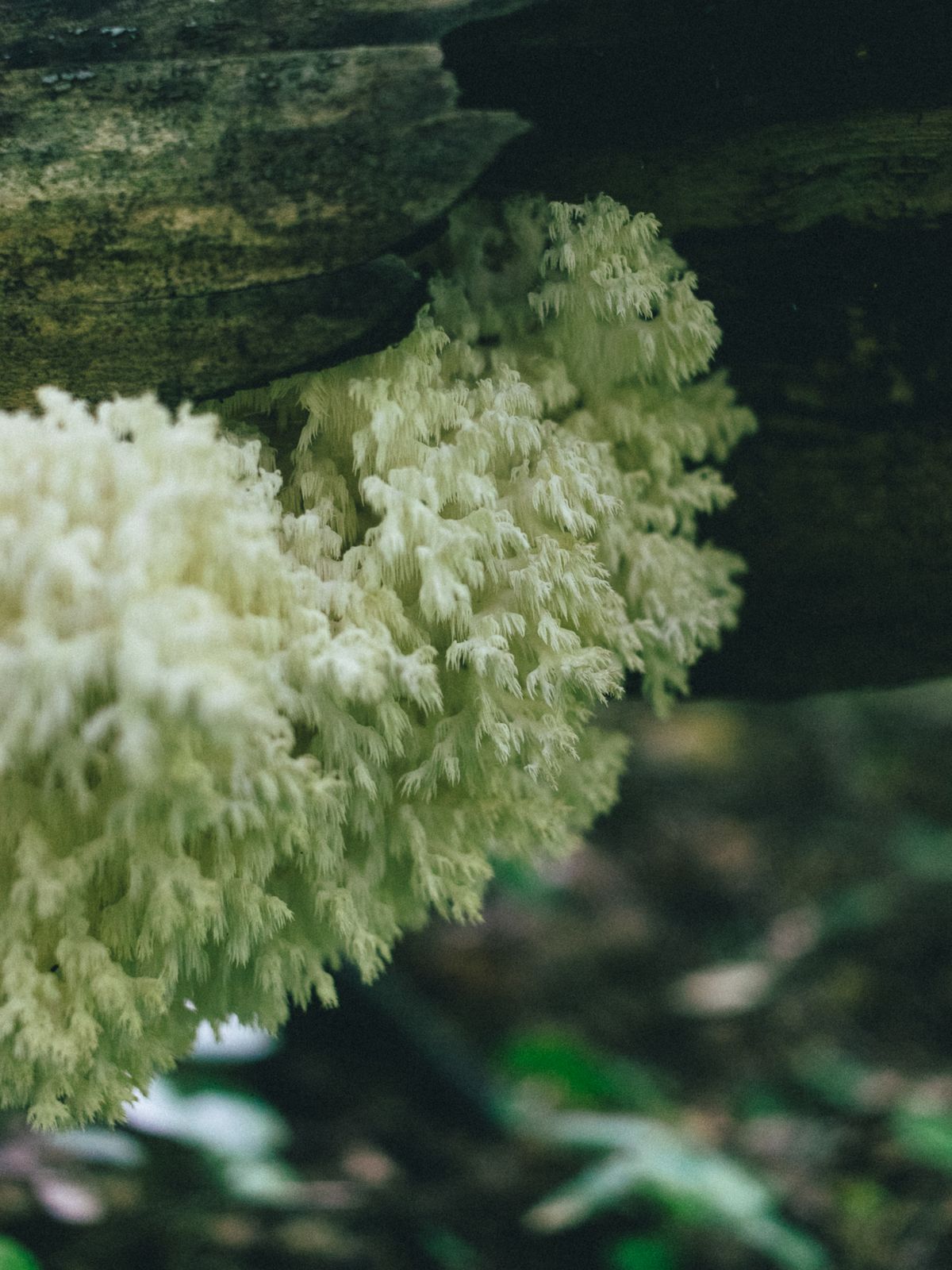
Lion’s Mane is a white, cascading fungus found on hardwood trees across North America, Europe, and Asia. It has been used in traditional East Asian medicine for centuries, and modern research has identified two primary classes of neuroactive compounds in its fruiting body and mycelium: hericenones (in the fruiting body) and erinacines (in the mycelium). Both compound classes may stimulate the synthesis of nerve growth factor (NGF), a protein that supports neuronal survival and differentiation.
Additional bioactives include polysaccharides with immunomodulatory properties, as well as phytoestrogens, including daidzein and genistein, which have been identified in the fruiting body extract.
Menopause, Estrogen, and the Brain
The decline in estrogen during perimenopause and menopause affects not only reproductive organs but also brain function. Estrogen receptors are distributed throughout the central nervous system, and estrogen plays a modulatory role in serotonergic, dopaminergic, and cholinergic signaling. This may explain why depressive symptoms, anxiety, cognitive fog, and sleep disruption are common during the menopause transition.
The estrogen receptor beta (ERβ) subtype is expressed in brain regions involved in mood and cognition. Research suggests that compounds binding to ERβ may help ameliorate neurological menopause symptoms without activating estrogen receptor alpha (ERα), which has been associated with increased breast and uterine cancer risk with long-term hormone therapy.
What the Research Shows: Lion’s Mane and Menopause-Like Models
A 2022 study published in Biological and Pharmaceutical Bulletin investigated the effects of a methanol extract of H. erinaceus fruiting body on depressive-like behavior in ovariectomized (OVX) rats, a standard preclinical model of estrogen-deficient menopause.[1] Researchers observed that 92 days of HE administration reduced depressive-like behavior in forced swim testing. Notably, HE did not appear to activate ERα, suggesting it may exert its effects via ERβ or NGF-related pathways rather than classical estrogen receptor stimulation. The study concluded that HE may be relevant to menopausal depression without the carcinogenesis risk associated with ERα activation.
While this study was conducted in animals and cannot be directly extrapolated to human clinical outcomes, it provides a biologically plausible mechanism for further investigation.
Human Clinical Evidence: Mood, Sleep, and BDNF
A 2019 clinical study published in Evidence-Based Complementary and Alternative Medicine enrolled 77 adults with overweight or obesity and co-occurring mood and/or sleep disorders in an 8-week supplementation trial with H. erinaceus.[2] Participants receiving the mushroom extract showed reductions in depression and anxiety scores, along with improvements in sleep quality. Investigators measured circulating levels of brain-derived neurotrophic factor (BDNF) and its precursor pro-BDNF as potential biomarkers; HE supplementation was associated with increased pro-BDNF levels.
BDNF is a neurotrophin that supports neuronal health and plasticity. During menopause, BDNF levels may fluctuate alongside estrogen, potentially contributing to mood instability and cognitive changes. The clinical relevance of pro-BDNF increases in this context warrants further investigation.
Cognitive Function: Randomized Controlled Data
A 2019 randomized, double-blind, placebo-controlled trial published in Biomedical Research assessed the effects of H. erinaceus fruiting body supplementation on cognitive function over 12 weeks.[3] Mini Mental State Examination (MMSE) scores improved significantly in the supplementation group compared to placebo. The authors speculated that hericenones and related compounds may influence brain neural networks through multiple pathways to support cognitive performance. Cognitive decline during menopause, often described by women as “brain fog,” shares some features with the domains assessed in this trial, though that specific population was not studied.
Anxiety and Stress: Preclinical Dose-Response Data
A 2025 study published in the Journal of Pharmacy and Pharmacology examined dose-dependent effects of dietary H. erinaceus supplementation on anxiety-like behavior and stress-coping strategies in rats over 3 weeks.[4] Results indicated dose-dependent anxiolytic and antidepressant-like effects, with proposed mechanisms involving serotonergic, noradrenergic, GABAergic, and anti-inflammatory pathways. The authors noted these effects were comparable in magnitude to a reference dose of fluoxetine. These findings extend preclinical support for Lion’s Mane as a potential adjunct for stress-related neuropsychiatric symptoms, though clinical translation remains to be established.
Important Limitations and Considerations
Several caveats apply when interpreting this body of evidence:
- Most mechanistic data are preclinical. Animal models of menopause (ovariectomy) do not fully replicate the physiological complexity of human perimenopause.
- Human trials are small and heterogeneous. The 2019 mood/sleep trial included adults with obesity and was not limited to women or menopausal individuals.
- Extract standardization varies. Fruiting body and mycelial products differ in their erinacine and hericenone concentrations; study findings may not generalize across product types.
- No dose has been established for menopause-related applications; studies have used varying amounts that should not be replicated without clinical guidance.
- Women currently using hormone replacement therapy, antidepressants, or other medications should consult a healthcare provider before adding functional mushroom supplements, given potential interactions.
For a broader look at the cognitive research on this species, see our overview of Lion’s Mane and Cognitive Aging.
Summary
Research on Lion’s Mane mushroom and women’s menopause-related neurological health is still early-stage but directionally consistent. Preclinical studies indicate that H. erinaceus extracts may reduce depressive-like behavior in estrogen-deficient animal models, potentially via ERβ and NGF-related pathways rather than ERα stimulation. Human clinical data suggest the mushroom may support mood, sleep quality, and cognitive function, though no trials have been conducted specifically in menopausal populations.
For women exploring complementary approaches to menopause-related mood or cognitive symptoms, Lion’s Mane represents a scientifically credible area of inquiry, with the understanding that evidence from large, well-controlled human trials is still lacking. Consultation with a licensed healthcare provider is advisable before use.
References
- Anuar AM, et al. Ameliorating Effect of the Edible Mushroom Hericium erinaceus on Depressive-Like Behavior in Ovariectomized Rats. Biol Pharm Bull. 2022;45(10):1438-1443. PMID: 36184501
- Vigna L, et al. Hericium erinaceus Improves Mood and Sleep Disorders in Patients Affected by Overweight or Obesity. Evid Based Complement Alternat Med. 2019;2019:7861297. PMID: 31118969
- Saitsu Y, et al. Improvement of cognitive functions by oral intake of Hericium erinaceus. Biomed Res. 2019;40(4):125-131. PMID: 31413233
- Emil T, et al. Effects of dietary supplementation with arboreal medicinal mushrooms on stress coping strategies, depressive and anxiety-like behavior of rats. J Pharm Pharmacol. 2025;77(12):1787-1796. PMID: 40974039
Disclaimer: The information provided in this article is for educational purposes only and does not constitute medical advice. Functional mushroom supplements are not intended to diagnose, treat, cure, or prevent any disease or medical condition. Consult a qualified healthcare provider before beginning any new supplement regimen, particularly if you are pregnant, nursing, taking prescription medications, or managing a chronic health condition.