Several functional mushrooms have been examined in research settings for their potential to support cognitive function, neurogenesis, and brain-related health outcomes. The evidence base varies considerably across species, from clinical trials with validated cognitive assessments to purely preclinical work in cell and animal models. This ranked overview organizes the most-studied mushrooms by the strength and specificity of available brain health evidence.
How This Overview Is Organized
Rankings reflect the degree to which existing published research directly addresses cognitive or neurological outcomes in humans or in well-established preclinical models. A species with a single rigorous double-blind human trial focused on cognition ranks above a species with broader but less specific research. For each species, the primary proposed mechanism is described alongside key study findings and research limitations.
1. Lion’s Mane (Hericium erinaceus)
Hericium erinaceus is the most extensively studied functional mushroom for brain-specific outcomes. It contains two classes of bioactive compounds unique to the species: hericenones, concentrated in the fruiting body, and erinacines, concentrated in the mycelium. Both compound classes appear to stimulate nerve growth factor (NGF) synthesis in neuronal tissue. NGF is a protein critical to the growth, maintenance, and survival of neurons, and its decline has been associated with age-related cognitive deterioration.
Clinical Evidence
A double-blind, placebo-controlled clinical trial published in Phytotherapy Research enrolled 30 adults aged 50 to 80 with mild cognitive impairment. Participants in the active treatment group consumed dried H. erinaceus powder tablets three times daily for 16 weeks. Cognitive function scores on the Revised Hasegawa Dementia Scale were significantly higher in the treatment group at weeks 8, 12, and 16 compared to placebo. Scores declined after supplementation ended. No significant adverse effects were observed on laboratory testing.[1]
A 2024 systematic review in Frontiers in Nutrition that evaluated outcomes across randomized controlled trials and observational studies concluded that H. erinaceus supplementation was associated with improvements in cognitive function, anxiety, depression, and sleep quality across multiple trial populations. The review attributed these effects to enhanced BDNF production, hippocampal neurogenesis promotion, and NGF pathway stimulation.[2]
For a deeper look at the erinacine and NGF research specifically, see our detailed article on Lion’s Mane and Cognitive Aging.
Limitations
The landmark human trial was small (30 participants) and used a specific population with diagnosed mild cognitive impairment. It cannot be extrapolated to confirm benefits in healthy adults. Larger and more diverse clinical trials are needed to establish scope and consistency of effect.
2. Reishi (Ganoderma lucidum)
Reishi’s primary research base centers on immune modulation and adaptogenic activity, but a growing body of preclinical work has examined its potential neuroprotective properties. The mushroom contains triterpenes (including ganoderic acids) and polysaccharides that demonstrate anti-inflammatory and antioxidant activity in laboratory models, both mechanisms relevant to neurological health.
Preclinical and Review Evidence
A 2024 review published in Phytotherapy Research examined the therapeutic potential of Ganoderma lucidum with a specific focus on neuroprotection and neurodegeneration. The authors summarized preclinical evidence suggesting that Reishi polysaccharides and triterpenes may attenuate neuroinflammation, reduce amyloid-related pathology in Alzheimer’s models, and support mitochondrial function in neuronal tissue. They noted that while no large-scale human trials on cognitive outcomes have been completed, the mechanistic basis for neuroprotective effects is reasonably well characterized in animal research.[3]
Reishi’s neurological research is less clinically advanced than Lion’s Mane, but its broad anti-inflammatory profile positions it as a candidate for future investigation in cognitive aging contexts.
3. Cordyceps (Cordyceps militaris and Ophiocordyceps sinensis)
Cordyceps species are most consistently studied for their effects on energy metabolism, aerobic capacity, and exercise performance. Research also suggests neuroprotective potential through mechanisms including adenosine receptor modulation and anti-inflammatory activity. Cordycepin, a nucleoside analog found in Cordyceps militaris, has attracted particular interest for its potential to cross the blood-brain barrier and influence neuronal signaling pathways.
Relevant Mechanisms
Studies indicate that cordycepin may modulate cyclic AMP (cAMP) pathways in neuronal tissue, influencing synaptic plasticity and neuroinflammatory responses. Animal studies have reported improved spatial memory and reduced neuroinflammatory markers following Cordyceps extract administration, though human cognitive trials are not yet available in the peer-reviewed literature. The current brain health evidence for Cordyceps is primarily mechanistic and preclinical.
4. Chaga (Inonotus obliquus)
Chaga is a rich source of antioxidant compounds, including polyphenols, melanins, and triterpenes such as betulinic acid. Oxidative stress and neuroinflammation are recognized contributors to age-related cognitive decline, making Chaga’s antioxidant profile relevant to brain health research.
Research Context
Preclinical studies have investigated Chaga polysaccharides in models of neurotoxicity and cognitive deficit. Some animal research suggests that Chaga extracts may attenuate memory impairment under induced oxidative stress conditions. However, this research is predominantly in mouse models, and no human trials specifically targeting cognitive outcomes with Chaga have been published. Its brain health relevance at this stage is largely inferred from its established antioxidant mechanisms rather than direct cognitive intervention data.
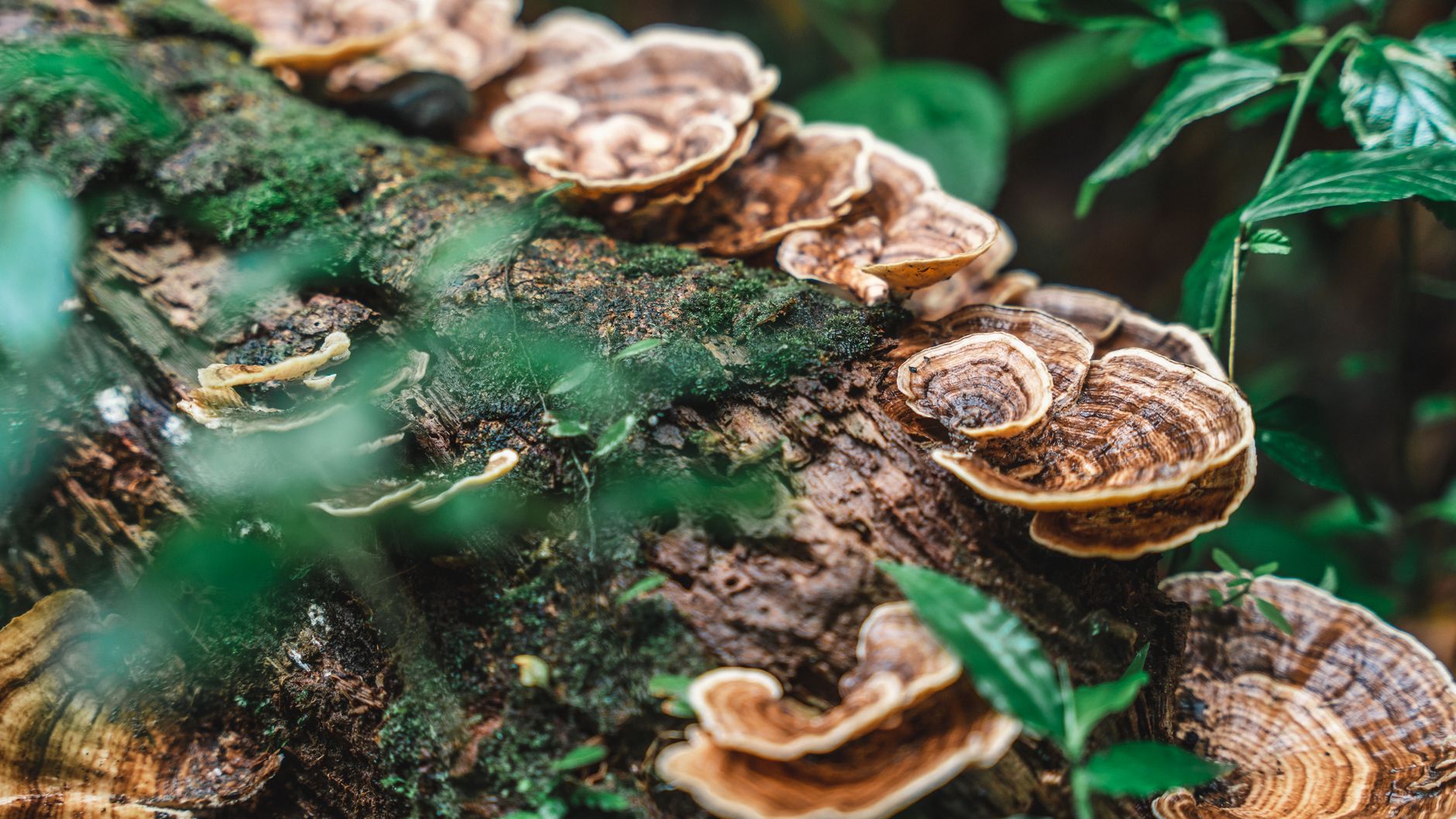
5. Turkey Tail (Trametes versicolor)
Turkey Tail is among the best-researched functional mushrooms for immune modulation, but direct brain health research is limited. Its polysaccharopeptides (PSP) and polysaccharide-K (PSK) have demonstrated immunomodulatory and anti-inflammatory effects that may be indirectly relevant to cognitive health.
Indirect Brain Health Relevance
Chronic systemic inflammation is increasingly recognized as a contributor to cognitive aging and neurodegeneration. Research suggests that Turkey Tail beta-glucans may help regulate inflammatory cytokine activity and support a balanced immune environment. A 2020 review published in International Journal of Molecular Sciences examined the neuroimmune axis and how peripheral immune activity can influence central nervous system function, providing a biological rationale for investigating anti-inflammatory mushrooms in cognitive contexts.[4] Turkey Tail’s position in this ranking reflects its strong immune research base and its indirect relevance to brain health through inflammatory pathways, not direct cognitive trial evidence.
Key Differences Across Species
Mechanism Specificity
Lion’s Mane is distinguished by a direct, well-characterized neurochemical mechanism involving NGF stimulation. The other species reviewed act through broader anti-inflammatory, antioxidant, or immunomodulatory pathways that may support brain health indirectly. This mechanistic specificity is one reason Lion’s Mane has generated more targeted cognitive research.
Human Evidence Gap
All species in this overview have a more robust preclinical than clinical evidence base for brain health. The field of functional mushroom cognitive research is still developing, and most trials to date have used small samples, short durations, or specific clinical populations. None of the species reviewed has sufficient human trial evidence to support definitive efficacy claims for cognitive function in the general population.
Practical Considerations
Individuals interested in functional mushrooms for brain health should consider product quality carefully. For Lion’s Mane specifically, dual-extract products that include both fruiting body and mycelium components may capture a broader range of the bioactive compounds studied in the literature. Beta-glucan content listed on a supplement label reflects polysaccharide concentration but does not indicate hericenone or erinacine levels, which are the compounds most associated with NGF activity.
None of the mushrooms reviewed here should be considered a replacement for established strategies supporting cognitive health, including regular physical activity, sleep quality, cardiovascular risk management, and mental engagement. Individuals managing cognitive conditions or taking medications that affect the central nervous system should consult a healthcare provider before adding functional mushroom supplements to their routine.
References
- [1] Mori K, et al. Improving effects of the mushroom Yamabushitake (Hericium erinaceus) on mild cognitive impairment: a double-blind placebo-controlled clinical trial. Phytother Res. 2009;23(3):367-72. PMID: 18844328
- [2] Docherty S, et al. The Acute and Chronic Effects of Lion’s Mane Mushroom Supplementation on Cognitive Function, Stress and Mood in Young Adults: A Double-Blind, Parallel Groups, Pilot Study. Nutrients. 2023;15(22):4842. PMID: 38246232
- [3] Cör Andrejc D, et al. Antitumor, immunomodulatory and anti-neuroinflammatory activities of Ganoderma lucidum: a review. Phytother Res. 2024;38(3):1429-1451. PMID: 38310653
- [4] Chong PS, et al. Therapeutic Potential of Hericium erinaceus for Depressive Disorder. Int J Mol Sci. 2020;21(1):163. PMID: 31881712
Disclaimer: This article is for informational purposes only and does not constitute medical advice. The statements on this page have not been evaluated by the Food and Drug Administration. Functional mushroom supplements are not intended to diagnose, treat, cure, or prevent any disease. Consult a qualified healthcare provider before starting any new supplement regimen, particularly if you have an existing health condition or are taking medications.