The relationship between the gut microbiome and overall health has become one of the more active areas in nutritional science. Researchers now recognize that the trillions of microorganisms residing in the gastrointestinal tract influence immunity, metabolism, and even cognitive function. Functional mushrooms contain structural polysaccharides, primarily beta-glucans and other complex carbohydrates, that resist digestion in the upper GI tract and reach the colon intact, where they may selectively feed beneficial bacterial populations. This article examines what current research suggests about the gut-supportive properties of specific mushroom species.
Why Mushroom Polysaccharides Matter for the Gut
Unlike simple sugars, the beta-glucans and polysaccharides found in functional mushrooms are not broken down by human digestive enzymes. Instead, they pass into the large intestine, where colonic bacteria ferment them and produce short-chain fatty acids (SCFAs) such as butyrate and propionate. SCFAs are considered important for maintaining intestinal barrier integrity, modulating local immune responses, and potentially reducing systemic inflammation. Research suggests that the specific molecular weight and glycosidic linkage structure of a given polysaccharide fraction may determine which bacterial populations it preferentially supports, as well as the ratio of SCFAs produced.
Shiitake (Lentinula edodes) and Intestinal Barrier Function
Shiitake is among the most studied edible mushrooms for its structural polysaccharides. Lentinan, the primary beta-glucan fraction isolated from shiitake, has a beta-(1-3)-glucan backbone with beta-(1-6) side chains. In simulated human gastrointestinal digestion studies, shiitake polysaccharide fractions demonstrated high resistance to gastric acid and digestive enzymes, followed by robust fermentation during in vitro fecal incubation. Compared to the common prebiotic reference fructooligosaccharides (FOS), one shiitake fraction generated substantially higher levels of butyric and propionic acid. The fecal fermentation products from this fraction also showed a potential protective effect on intestinal barrier integrity in a co-culture cell model.[1]
Additional research on molecular-weight fractions of water-soluble lentinan found that lower-molecular-weight fractions promoted the growth of Parabacteroides and helped reduce the Firmicutes/Bacteroidetes ratio in obese microbiota models, indicating possible relevance to metabolic dysbiosis, though human clinical data remain limited.[2]
Turkey Tail (Trametes versicolor) as a Prebiotic Agent
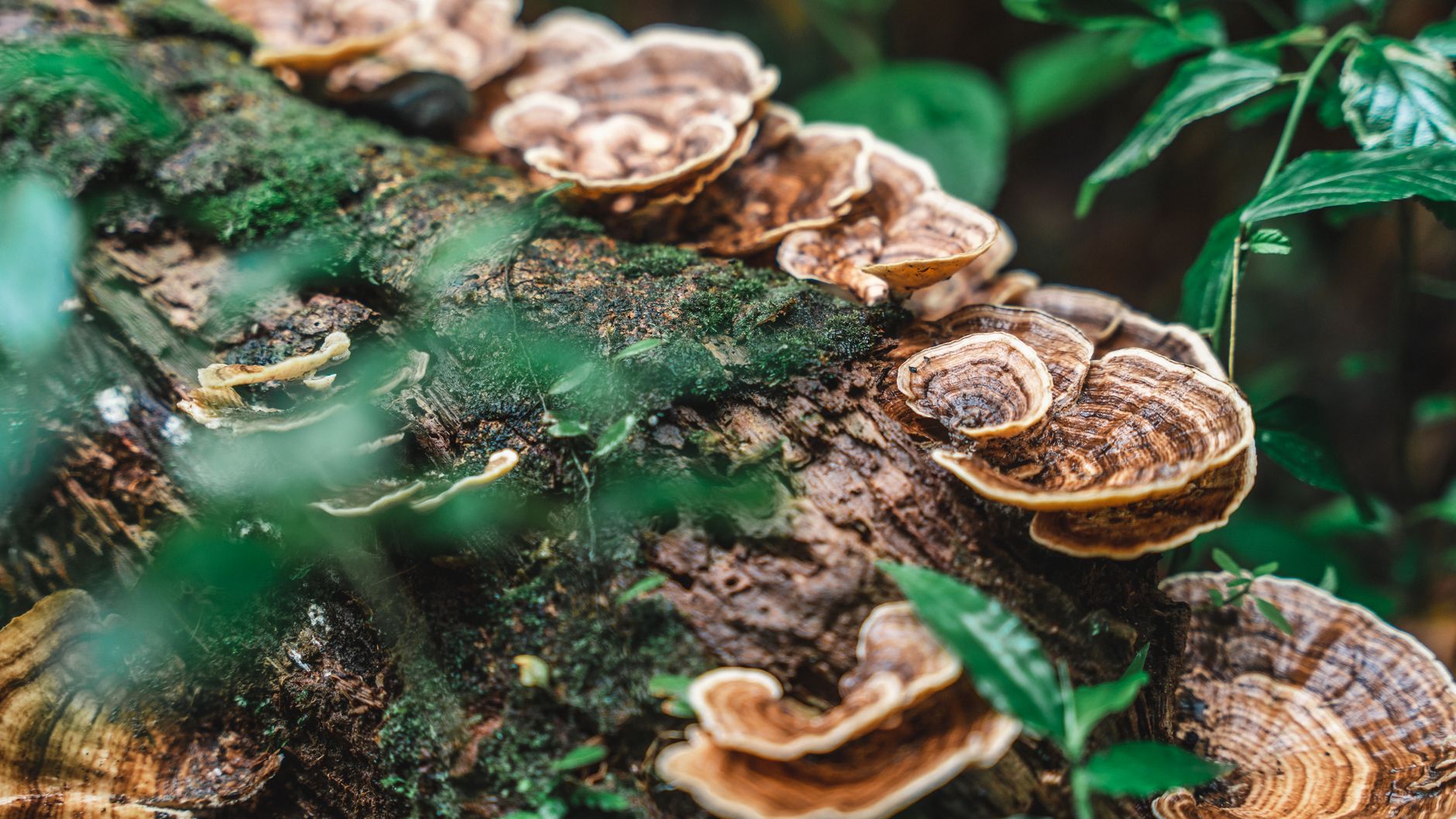
Turkey tail is most commonly discussed in the context of immune modulation via its polysaccharopeptide (PSP) and polysaccharide-K (PSK) fractions. However, a randomized clinical trial in healthy volunteers directly compared PSP from Trametes versicolor against the antibiotic amoxicillin over an eight-week period, measuring changes to the gut microbiome via stool analysis. PSP supplementation produced consistent, measurable shifts in microbiome composition consistent with prebiotic activity, including clustering of microbiome profiles across subjects. Amoxicillin, by contrast, caused substantial disruption that persisted beyond the treatment period. The authors concluded that PSP from turkey tail acts as a prebiotic, modulating human intestinal microbiome composition.[3]
This connection between turkey tail and immune-related gut effects is explored further in Chaga vs Turkey Tail: Head-to-Head Comparison for Immune Support.
Reishi (Ganoderma lucidum) and Gut-Mediated Immunity
Reishi polysaccharides have attracted research interest for their potential to support immune function through gut-mediated pathways. Laboratory studies examining a water-soluble beta-glucan fraction from G. lucidum found that its ability to enhance lymphocyte proliferation was significantly reduced when gut microbiota were depleted via antibiotic pretreatment. This finding suggests that the immunomodulatory effects may operate at least partly through microbiome-dependent mechanisms, rather than direct immune cell stimulation alone. Specific bacterial genera, including Lactobacillus and Alistipes, were identified as potentially mediating these effects.[4]
Lion’s Mane (Hericium erinaceus) and the Gut-Brain Axis
Research on Hericium erinaceus polysaccharides (HEPs) has expanded beyond their well-known neurotrophin-related properties to include potential effects on gastrointestinal health. A 2025 review synthesized current findings on HEPs and identified several lines of preclinical evidence suggesting that these fractions may support intestinal barrier integrity, modulate gut microbiota composition, and influence short-chain fatty acid production. Researchers also noted that HEPs may interact with the microbiota-gut-brain axis, a bidirectional communication network linking the GI tract and central nervous system. The review acknowledged that while findings are promising, human clinical trials specifically investigating these gut-brain mechanisms remain limited.[5]
How These Mushrooms Compare
Each of the species discussed above appears to work through somewhat different mechanisms. Shiitake polysaccharides appear particularly relevant to SCFA production and barrier protection. Turkey tail PSP has the strongest human clinical evidence for acting as a prebiotic in healthy subjects. Reishi beta-glucans may support immunity through microbiome-dependent pathways. Lion’s mane polysaccharides are emerging as potentially relevant to both intestinal barrier function and gut-brain signaling. It is worth noting that most research to date has been conducted in vitro or in animal models, and large-scale human trials are still relatively scarce across all species.
Considerations When Choosing a Product
Because the biological effects of mushroom polysaccharides appear to depend on their structural characteristics, including molecular weight and linkage patterns, the quality of extraction matters. Research generally suggests that hot-water extraction is more appropriate for polysaccharide-rich fractions, while dual-extraction methods may capture both polysaccharides and fat-soluble compounds such as triterpenoids. Third-party beta-glucan quantification on supplement labels may provide a useful reference point, though it does not capture structural diversity between species.
Summary
Functional mushrooms including shiitake, turkey tail, reishi, and lion’s mane contain polysaccharides that may support gut health through prebiotic fermentation, short-chain fatty acid production, intestinal barrier maintenance, and immune modulation. Research in this area is growing, with turkey tail having the strongest human trial evidence for prebiotic activity to date. These effects appear to be mediated by the structural characteristics of individual polysaccharide fractions, and outcomes may vary based on product quality and extraction method. As with all functional ingredients, individuals with specific health conditions should consult a qualified healthcare provider before use.
References
- [1] Li JH, et al. Simulated human digestion and fermentation of a high-molecular weight polysaccharide from Lentinula edodes mushroom and protective effects on intestinal barrier. Carbohydr Polym. 2024;343:122478. PMID: 39174101
- [2] Yan X, et al. Molecular weight-engineered lentinan fractions as prebiotic modulators: Steering gut microbiota for precision obesity intervention. Food Res Int. 2026;226:118169. PMID: 41539802
- [3] Pallav K, et al. Effects of polysaccharopeptide from Trametes versicolor and amoxicillin on the gut microbiome of healthy volunteers: a randomized clinical trial. Gut Microbes. 2014;5(4):458-67. PMID: 25006989
- [4] Wang X, et al. Water-soluble beta-glucan from G. lucidum as a potential functional food ingredient with gut microbiota-regulating and immune-enhancing activities. Int J Biol Macromol. 2025;319:145361. PMID: 40541876
- [5] Song Y, et al. Recent insights into Hericium erinaceus polysaccharides: Gastrointestinal, gut microbiota, microbial metabolites, overall health and structure-function correlation. Int J Biol Macromol. 2025;311:144013. PMID: 40339863
Disclaimer: This article is for informational purposes only and does not constitute medical advice. The statements in this article have not been evaluated by the Food and Drug Administration. Functional mushroom supplements are not intended to diagnose, treat, cure, or prevent any disease. Consult a qualified healthcare professional before starting any new supplement regimen.