Interest in functional mushrooms for cognitive support has grown alongside an expanding body of preclinical and clinical research. Several species have been studied for their potential effects on neurogenesis, neuroprotection, inflammation, and mood. This overview ranks the most research-supported options based on the current evidence, while acknowledging that the science remains preliminary in many areas.
Why Mushrooms May Affect Brain Function
Mushrooms produce bioactive compounds including polysaccharides, terpenoids, and erinacines that may cross or influence the blood-brain barrier. Research suggests that these compounds may modulate oxidative stress, reduce neuroinflammation, and in some cases stimulate nerve growth factor (NGF) synthesis. A 2024 systematic review published in Neuroscience and Biobehavioral Reviews evaluated 34 human studies across multiple species and found that dietary patterns including mushrooms of various kinds were associated with meaningful benefits to cognition and mood, though intervention study results were described as mixed.[1]
1. Lion’s Mane (Hericium erinaceus)
Lion’s Mane holds the strongest evidence base of any functional mushroom for brain-related outcomes. Its erinacines and hericenones are believed to stimulate NGF production, which plays a central role in neuronal survival and differentiation. In a randomized, double-blind, placebo-controlled pilot study, a single 1.8 g dose of Hericium erinaceus was associated with significantly faster performance on a cognitive interference task (Stroop test) in healthy adults aged 18-45, and a trend toward reduced subjective stress was observed following 28-day supplementation in the same study population.[2] A narrative review assessing multiple clinical and preclinical studies concluded that Lion’s Mane may facilitate memory enhancement, with particular relevance to models of Alzheimer’s disease, though the authors emphasized the need for larger, standardized clinical trials.[3]
For a deeper dive into this species, see our dedicated guide on Lion’s Mane and Alzheimer’s: What Science Says So Far.
2. Cordyceps (Cordyceps sinensis / C. militaris)
Cordyceps is most often associated with energy and athletic performance, but emerging research indicates potential neuroprotective effects. Studies indicate that Cordyceps bioactive compounds, including polysaccharides and the nucleoside adenosine analog cordycepin, may reduce neuroinflammatory markers such as TNF-alpha and IL-6. A preclinical study examining Cordyceps cicadae fermented with deep ocean water minerals found that treatment was associated with improved memory performance and reduced expression of aging-related proteins in a D-galactose-induced model of cognitive impairment in rats.[4] These findings are promising but have not yet been replicated in human trials.
Key Bioactive Compounds
Cordyceps contains N6-(2-hydroxyethyl)-adenosine (HEA), polysaccharides, and sterols that appear to be central to its antioxidant and anti-inflammatory effects in neural tissue. Researchers have noted that cultivation conditions can significantly influence the concentration of these compounds.
3. Reishi (Ganoderma lucidum)
Reishi has been studied primarily for immune modulation and stress reduction, but its triterpenoids and polysaccharides also show activity in neuroprotective models. Research suggests that Ganoderma spore preparations may influence neurotrophin expression in hippocampal neurons. In an in vitro model of hippocampal dysfunction, Ganoderma lucidum spores were associated with increased expression of neurotrophin-4 and improved neuronal morphology, suggesting a possible protective mechanism at the cellular level. While this research is preclinical, it points to mechanistic pathways worth further investigation in humans.
Reishi’s better-documented contribution to brain health may be indirect: its adaptogenic properties and effects on cortisol regulation may reduce the neurological burden of chronic stress, which is itself a risk factor for cognitive decline.
4. Chaga (Inonotus obliquus)
Chaga contains lanostane-type triterpenoids with demonstrated neuroprotective activity in cell-based models. Research published in Food and Function identified a novel compound, 2alpha-hydroxy-inotodiol, isolated from Inonotus obliquus that significantly reduced oxidative stress and apoptosis in SH-SY5Y neuronal cells via the Nrf2 and BDNF/TrkB/ERK/CREB signaling pathways.[5] These pathways are well-established in neurodegeneration research, making Chaga an interesting candidate for future human trials, though clinical evidence in humans remains absent at this time.
Antioxidant Context
Chaga’s overall antioxidant load is exceptionally high, driven in part by melanin pigments and polyphenols. While antioxidant capacity alone does not translate directly to cognitive outcomes, chronic oxidative stress is a recognized contributor to neurodegeneration, and reducing systemic oxidative burden may carry indirect benefits.
5. Turkey Tail (Trametes versicolor)
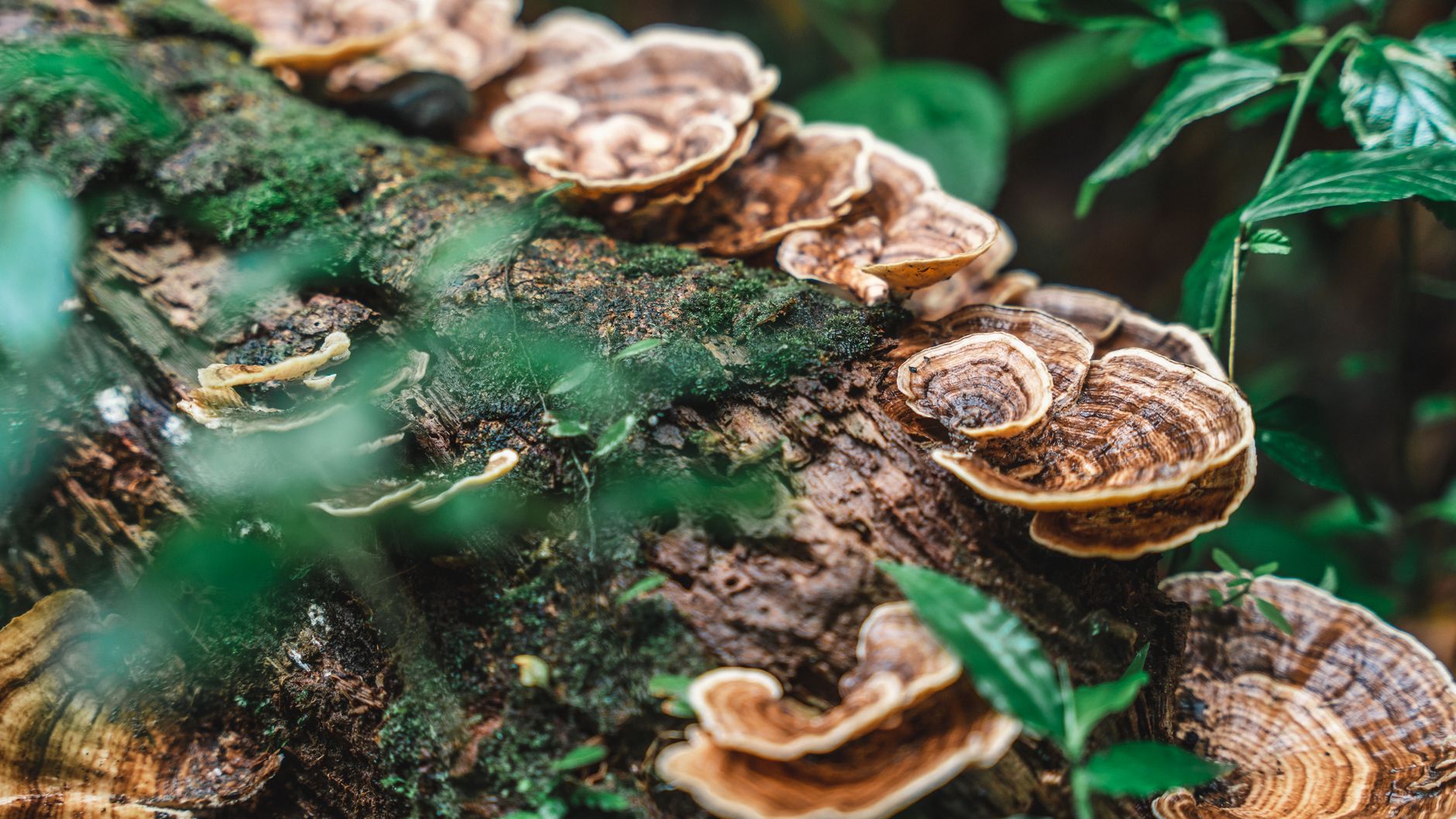
Turkey Tail’s primary research profile is immunological, particularly its polysaccharide-K (PSK) and polysaccharide peptide (PSP) fractions. However, the gut-brain axis provides a plausible mechanistic link to cognitive outcomes. Studies indicate that Turkey Tail’s prebiotic effects on gut microbiota composition may indirectly influence neurochemistry. Research on the gut-brain connection suggests that microbial diversity and short-chain fatty acid production, both of which may be supported by beta-glucan-rich mushrooms, are associated with mood regulation and cognitive function. Direct clinical evidence for Turkey Tail’s brain effects is limited, placing it lower in this ranking while still meriting attention as the science evolves.
How to Read the Evidence
Several important caveats apply when evaluating mushroom research for brain health. Many studies are preclinical, meaning they were conducted in cell cultures or animal models. Dose ranges vary significantly between studies, making it difficult to draw practical conclusions without referencing the specific study populations and methods. The 2024 systematic review cited above noted that while epidemiological data is encouraging, human intervention studies remain limited in number and methodological consistency.[1]
When evaluating any supplement for cognitive support, the form of extraction (hot water, dual extraction, whole fruiting body vs. mycelium) may also affect the concentration of bioactive compounds. The field lacks standardized protocols, which makes cross-study comparison difficult.
Summary
Among functional mushrooms studied for brain health, Lion’s Mane carries the most direct and consistent human clinical evidence. Cordyceps, Reishi, Chaga, and Turkey Tail each show mechanistic or preclinical support, with varying degrees of translation to human outcomes. Future research involving larger randomized trials will be necessary to establish definitive guidance on species selection, dosing, and duration for cognitive benefit.
References
- [1] Cha S, Bell L, Shukitt-Hale B, Williams CM. A review of the effects of mushrooms on mood and neurocognitive health across the lifespan. Neurosci Biobehav Rev. 2024;158:105548. PMID: 38246232
- [2] Docherty S, Doughty FL, Smith EF. The Acute and Chronic Effects of Lion’s Mane Mushroom Supplementation on Cognitive Function, Stress and Mood in Young Adults: A Double-Blind, Parallel Groups, Pilot Study. Nutrients. 2023;15(22):4842. PMID: 38004235
- [3] Yanshree, Yu WS, Fung ML, et al. The Monkey Head Mushroom and Memory Enhancement in Alzheimer’s Disease. Cells. 2022;11(15):2284. PMID: 35892581
- [4] Chang CY, Yang PX, Yu TL, Lee CL. Cordyceps cicadae NTTU 868 Mycelia Fermented with Deep Ocean Water Minerals Prevents D-Galactose-Induced Memory Deficits. Nutrients. 2023;15(8):1968. PMID: 37111188
- [5] Kou RW, Xia B, Han R, et al. Neuroprotective effects of a new triterpenoid from edible mushroom on oxidative stress and apoptosis through the BDNF/TrkB/ERK/CREB and Nrf2 signaling pathway in vitro and in vivo. Food Funct. 2022;13(23):12121-12134. PMID: 36321740
Disclaimer: This article is for informational purposes only and does not constitute medical advice. Functional mushroom supplements are not intended to diagnose, treat, cure, or prevent any disease. Consult a qualified healthcare provider before starting any new supplement regimen, particularly if you are pregnant, nursing, taking medications, or managing a health condition.