Sleep quality is a growing public health concern, and interest in natural approaches to supporting healthy rest has risen accordingly. Among the interventions being studied, certain functional mushrooms have attracted attention from researchers exploring their potential to influence sleep architecture, anxiety, and overall nocturnal well-being. While the evidence remains in early stages, several preliminary findings are worth examining carefully.
Why Researchers Are Interested in Mushrooms for Sleep
Sleep disorders and disturbances affect a substantial portion of the global population, with consequences ranging from impaired cognitive performance to metabolic dysregulation. Conventional pharmacological interventions, while effective, often carry side effects including dependency and residual sedation. This has prompted interest in botanical and fungal compounds that may support sleep through alternative mechanisms.
Functional mushrooms are a broad category of fungi used in traditional medicine systems, particularly across East Asia, for centuries. Several species have been associated with calming, adaptogenic, or nervine properties in historical practice. Modern researchers have begun investigating whether these traditional associations correspond to measurable biological mechanisms.
Reishi (Ganoderma lucidum): The Most Studied Mushroom for Sleep
Among functional mushrooms, Ganoderma lucidum (commonly called reishi or lingzhi) has accumulated the most research in the context of sleep. A preclinical study published in the Journal of Ethnopharmacology found that oral administration of a Ganoderma lucidum extract significantly increased total sleep time and non-rapid eye movement (NREM) sleep time in freely moving rats. The researchers noted that the hypnotic effect appeared to involve a tumor necrosis factor-alpha (TNF-alpha) mediated pathway in the hypothalamus and dorsal raphe nucleus, suggesting a potential neurochemical mechanism.[1]
It is important to note that this was an animal study, and direct extrapolation to human sleep patterns requires caution. However, the identification of a plausible biological pathway lends credibility to further investigation in human clinical trials.
Bioactive Compounds Potentially Involved
Reishi contains a complex mixture of polysaccharides, triterpenes, and other bioactive constituents. Researchers have hypothesized that triterpenes, which have demonstrated mild sedative properties in some in vitro models, may contribute to the observed sleep-related effects. A 2024 study used untargeted metabolomics to identify shared sedative-hypnotic compounds across five medicinal Polyporales mushrooms, including Ganoderma lucidum, G. sinense, and Trametes versicolor. The analysis found overlapping phytochemical profiles that may partially account for the traditional use of these fungi as calming agents.[2]
Lion’s Mane and Sleep-Related Mood Disturbances
Hericium erinaceus (lion’s mane) is generally studied for its potential neuroprotective and cognitive properties, but emerging research suggests it may also influence sleep indirectly through its effects on mood and anxiety. A clinical study published in Evidence-Based Complementary and Alternative Medicine examined 77 adults with overweight or obesity who also had self-reported mood or sleep disorders. After eight weeks of oral H. erinaceus supplementation, participants showed statistically significant improvements in depression, anxiety, and sleep disorder scores. The researchers also observed changes in circulating pro-BDNF and BDNF levels, suggesting a possible neurotrophin-mediated mechanism.[3]
This study is noteworthy because it involved human participants and used validated self-assessment instruments. However, the absence of a placebo control group limits causal interpretation. The findings are best understood as preliminary and hypothesis-generating rather than conclusive.
Potential Mechanisms: How Mushrooms May Influence Sleep Biology
Several theoretical mechanisms have been proposed to explain how functional mushrooms might support sleep:
Adaptogenic Effects on the HPA Axis
Certain mushrooms, including reishi and chaga, are classified as adaptogens: compounds that may help the body modulate its stress response. Since elevated cortisol and sympathetic nervous system activation are common contributors to sleep-onset difficulty, compounds that support the normalization of the hypothalamic-pituitary-adrenal (HPA) axis may indirectly benefit sleep initiation and maintenance. This relationship is explored in more depth in our article on reishi and sleep.
Serotonin and BDNF Pathways
The lion’s mane research referenced above highlights the potential role of brain-derived neurotrophic factor (BDNF) in the sleep-mood-anxiety connection. BDNF supports neuronal plasticity and has been implicated in the regulation of sleep architecture, particularly REM and deep sleep stages. Research suggests that compounds supporting BDNF expression may, over time, contribute to improved sleep quality, though this pathway requires further investigation in controlled human trials.
Anti-inflammatory Properties
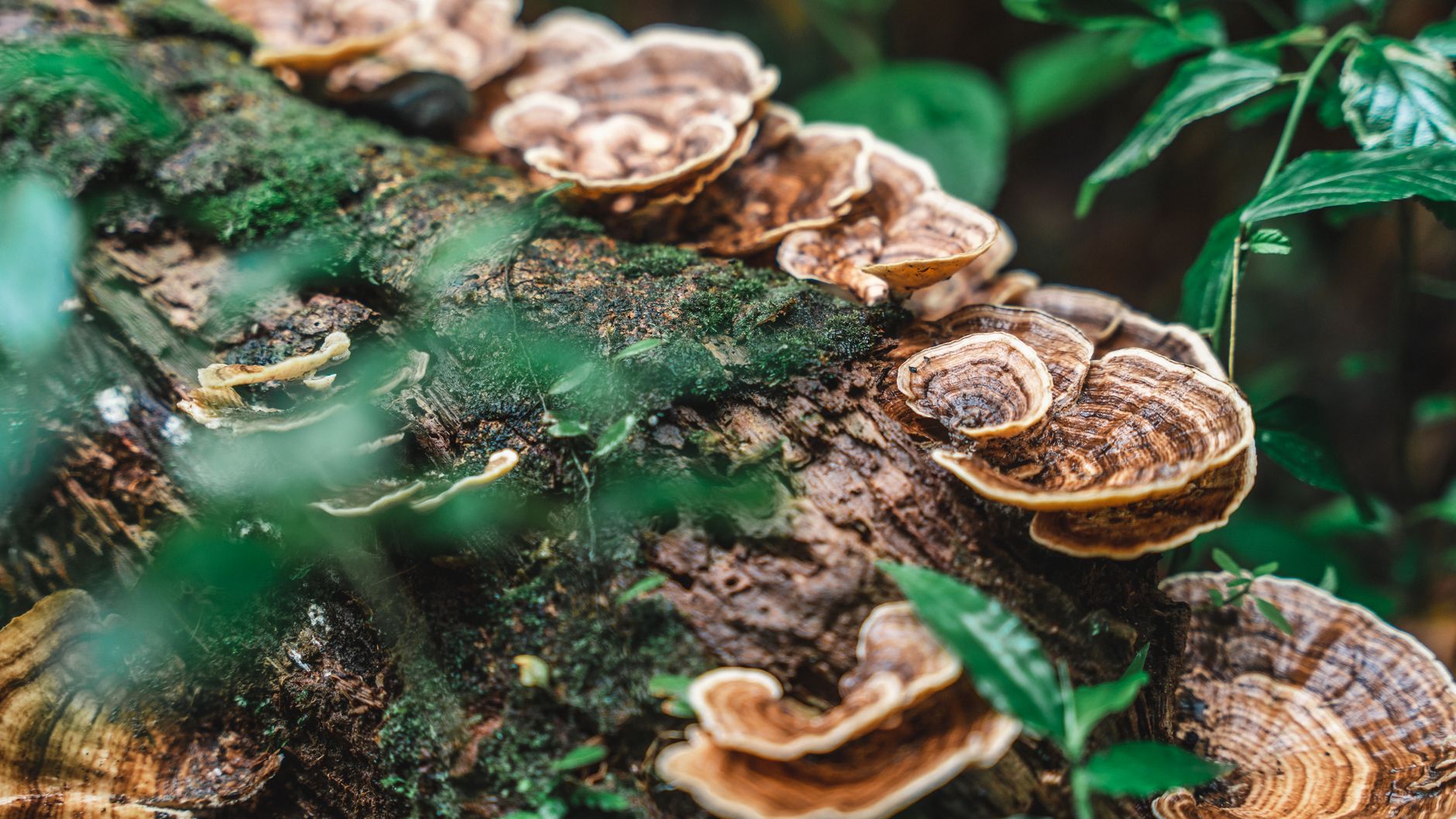
Low-grade neuroinflammation has been associated with disrupted sleep patterns. Several functional mushrooms, including turkey tail and chaga, contain polysaccharides and beta-glucans that may modulate inflammatory cytokine activity. Whether this translates to meaningful sleep benefits in clinical settings is not yet established, but the theoretical basis warrants continued study.
What the Research Does Not Yet Show
Despite promising preliminary findings, significant gaps remain in the scientific literature. Most human studies are small, lack placebo controls, or combine mushroom supplementation with dietary or lifestyle interventions, making it difficult to isolate the effect of the mushroom itself. The optimal species, form of extract, and duration of use for sleep support have not been established. Standardization of extracts across studies is also inconsistent, complicating direct comparisons.
Additionally, sleep itself is multifactorial. Conditions such as sleep apnea, circadian rhythm disorders, or medication-induced insomnia are unlikely to respond to functional mushroom supplementation alone and require medical evaluation and management.
Practical Considerations for Those Exploring Mushrooms for Sleep
For individuals interested in functional mushrooms as part of a broader sleep hygiene approach, several practical points are worth considering:
- Form matters: Research findings from whole fruiting body extracts may not directly apply to mycelium-based or low-potency products. Look for products with standardized beta-glucan content and transparent sourcing.
- Timing: Some practitioners suggest that adaptogenic mushrooms are best taken earlier in the day to support the normalization of the stress response across the waking hours, rather than immediately before sleep. There is limited clinical evidence to confirm or refute this approach.
- Individual variability: Responses to functional mushrooms vary considerably. Some individuals report improved sleep quality; others notice no change. This variability likely reflects differences in baseline health, gut microbiome composition, and the specific quality of the supplement used.
- Consult a healthcare provider: Anyone with a diagnosed sleep disorder or who is taking medications that affect the central nervous system should consult a qualified clinician before adding mushroom supplements to their regimen.
Summary
The relationship between functional mushrooms and sleep quality is an active area of early-stage research. Preclinical studies on reishi and metabolomics analyses of Polyporales fungi have identified potential sedative-hypnotic compounds and mechanisms. A small human trial on lion’s mane supplementation reported improvements in sleep-related mood disturbances over eight weeks. Taken together, these findings suggest that certain mushrooms may support aspects of sleep and related well-being, though the evidence is not yet sufficient to draw firm clinical conclusions. Further large-scale, placebo-controlled human trials are needed before definitive guidance can be offered.
References
- [1] Cui XY, et al. Extract of Ganoderma lucidum prolongs sleep time in rats. J Ethnopharmacol. 2012;139(3):796-800. PubMed 22207209
- [2] Chen W, et al. Identification of sedative-hypnotic compounds shared by five medicinal Polyporales mushrooms using UPLC-Q-TOF-MS/MS-based untargeted metabolomics. Phytomedicine. 2024;128:155355. PubMed 38555773
- [3] Vigna L, et al. Hericium erinaceus Improves Mood and Sleep Disorders in Patients Affected by Overweight or Obesity. Evid Based Complement Alternat Med. 2019;2019:7861297. PubMed 31118969
This article is for informational purposes only and does not constitute medical advice. Always consult a qualified healthcare provider before starting any supplement.