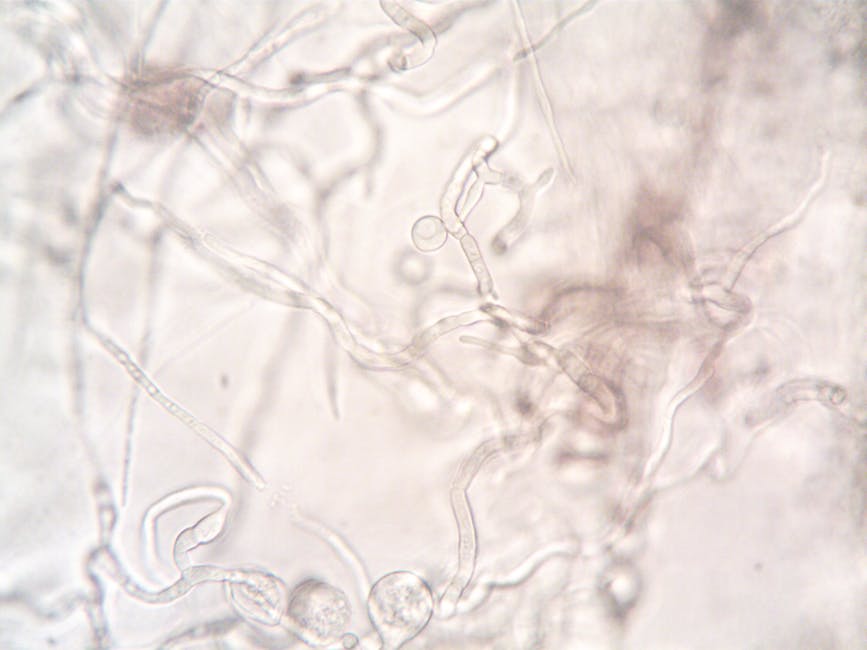
When you open a bottle of mushroom supplement capsules, the ingredient that delivers the most measurable biological activity is rarely the mushroom cap or stem you might picture. It is mycelium: the dense, thread-like root network that forms the foundational structure of every fungal organism. Understanding how mycelium grows, what it produces, and how it is processed has real implications for the quality of the supplements you take.
What Is Mycelium?
Mycelium is the vegetative body of a fungus, composed of branching filaments called hyphae. These hyphae extend outward through soil, wood, or substrate in search of nutrients, forming interconnected networks that can span vast distances in forest ecosystems. The fruiting body, the part most people recognize as a mushroom, is simply the reproductive structure that emerges when conditions are right.
In a functional context, mycelium is not merely structural: it is metabolically active, producing polysaccharides, enzymes, and secondary metabolites as part of its normal biological processes. Many of these compounds are the same bioactives that functional mushroom researchers study.
Beta-Glucans: The Bioactive Compounds Produced by Mycelium
Among the compounds associated with functional mushrooms, beta-glucans (specifically beta-1,3/1,6-glucans) have received the most scientific attention. These structural polysaccharides form part of the fungal cell wall and are thought to interact with receptors on human immune cells.
Research indicates that mycelium can serve as a productive source of these compounds. A 2025 study published in Molecules examined beta-glucan production through solid-state fermentation of germinated Riceberry rice with Pleurotus ostreatus mycelium. The researchers reported a recovery rate of 54.95% with 79.98% purity, and Fourier-transform infrared spectroscopy confirmed the presence of beta-1,3/1,6-glycosidic linkages characteristic of bioactive fungal beta-glucans. The extract also showed preliminary prebiotic activity and inhibited a colorectal cancer cell line in vitro at a concentration of 1 mg/mL.[1]
These findings suggest that mycelial fermentation may be a viable pathway for producing concentrated bioactive compounds. However, it is worth noting that in vitro results do not automatically translate to equivalent effects in humans, and further clinical research is needed.
The Mycelium vs. Fruiting Body Debate in Supplements
A persistent question in the functional mushroom industry concerns whether mycelium-based supplements differ meaningfully from fruiting-body extracts. This matters because many commercially available supplements use mycelium grown on grain substrates, while others use dried and extracted fruiting bodies.
A 2025 analytical study published in the International Journal of Molecular Sciences examined Chaga (Inonotus obliquus) dietary supplements using multiple complementary techniques including high-performance thin-layer chromatography, NMR spectroscopy, and iodine-starch assays. The researchers found stark compositional differences between wildcrafted Chaga canker, I. obliquus mycelium, and grain-fermented products. Wildcrafted chaga contained triterpenoids such as inotodiol and trametenolic acid, while fermented grain products showed starch-rich composition and lacked the melanin signature characteristic of authentic chaga canker.[2]
The practical implication: mycelium grown on grain substrates may retain significant grain content, which can dilute the concentration of fungal bioactives per serving. Some manufacturers address this through extraction processes that remove starch and concentrate polysaccharides, while others do not. Reviewing a Certificate of Analysis (COA) for beta-glucan content, rather than relying on total polysaccharide figures (which may include grain starch), is one way to assess this.
Mycelial Polysaccharides and Immune Function: What Research Suggests
Several studies have examined the immunomodulatory potential of polysaccharides extracted specifically from mycelium, rather than from fruiting bodies.
A 2024 study in the International Journal of Molecular Sciences analyzed a selenopolysaccharide mixture (SeLe30) isolated from Lentinula edodes (shiitake) mycelium and evaluated its effects on human T-cell function in vitro. The researchers observed that SeLe30 exhibited context-dependent effects: it modulated CD25, CD279, and CD366 expression on T cells and affected cytokine production in a manner that appeared to depend on the activation state of the cells. The authors concluded that the compound acts as a complex immunomodulator rather than a simple immune stimulant.[3]
A separate 2024 study published in the International Journal of Medicinal Mushrooms examined polysaccharide fractions from Hericium erinaceus (lion’s mane) mycelium cultivated on various grain substrates including barley, oats, wheat, rice, and rye. The researchers found that the substrate used during cultivation influenced the composition of the resulting polysaccharide fractions, and that the rye-grown fraction showed higher protein content and arabinose concentration, correlating with better-preserved phagocytic and antioxidant activity in stressed blood samples. This research indicates that cultivation substrate may be a meaningful variable in mycelial supplement quality, not just an inert carrier.[4]
How Cultivation Conditions Affect Supplement Quality
Mycelium does not produce bioactive compounds at a fixed rate independent of its environment. Temperature, humidity, substrate composition, duration of colonization, and harvest timing all influence the chemical profile of the resulting material.
Key variables that may affect quality include:
- Substrate type: Hardwood, grain, or agricultural byproducts each produce different polysaccharide profiles. As noted in the lion’s mane study above, even grain type within a single species can affect outcomes.
- Harvest timing: Mycelium harvested earlier in its colonization cycle may have a different compound concentration compared to fully colonized substrate. Some research suggests that beta-glucan content increases as colonization progresses.
- Extraction method: Hot water extraction targets water-soluble polysaccharides including beta-glucans; alcohol extraction targets triterpenoids. Dual-extraction products aim to capture both classes of compounds.
- Grain content at harvest: For grain-grown mycelium, the ratio of fungal tissue to residual grain affects the final bioactive concentration per gram.
For a closer look at how to evaluate these factors when reading product labels, the post on beta-glucans and what makes mushrooms bioactive provides useful context on what the numbers on a supplement panel actually measure.
What to Look for When Evaluating Mycelium-Based Supplements
Given the variability documented in the research, a few practical criteria may help when assessing mycelium-containing products:
- Beta-glucan content, not just polysaccharide content: Total polysaccharides can include starches from grain substrate. Ask for beta-glucan-specific figures, which typically require enzymatic assay methods.
- Third-party COA: A Certificate of Analysis from an independent laboratory adds credibility to label claims. Look for assay methodology, not just the reported percentage.
- Transparency about substrate: Reputable manufacturers generally disclose whether the mycelium was grown on grain and whether the grain has been removed or reduced prior to encapsulation.
- Species specificity: The bioactive profile of mycelium varies by species. A product listing “mushroom mycelium blend” without species identification offers little basis for evaluating what it contains.
The Broader Picture
Mycelium occupies an important but sometimes misrepresented position in the functional mushroom supplement market. It can produce meaningful concentrations of beta-glucans and other bioactives, and research continues to characterize its immunomodulatory properties. At the same time, not all mycelial products are equivalent: cultivation substrate, processing method, and extraction approach each introduce variability that shows up in analytical testing.
The research to date indicates that mycelium-based supplements may support immune function and provide prebiotic benefit when standardized to meaningful beta-glucan concentrations. However, the evidence base for specific health outcomes remains incomplete, and claims that go beyond general immune modulation typically exceed what the current literature supports.
For anyone incorporating functional mushrooms into a wellness routine, understanding the difference between mycelium and fruiting body, and knowing how to interpret a COA, is arguably as important as choosing which species to take.
References
- [1] Nacha J, et al. Solid-State Fermentation of Riceberry Rice with Mushroom Mycelium for Enhanced Beta-Glucan Production and Health Applications. Molecules. 2025;30(19):3879. https://pubmed.ncbi.nlm.nih.gov/41097300/
- [2] Windsor C, et al. Comparative Study of Chaga (Inonotus obliquus) Dietary Supplements Using Complementary Analytical Techniques. Int J Mol Sci. 2025;26(7):2970. https://pubmed.ncbi.nlm.nih.gov/40243601/
- [3] Kaleta B, et al. Selenopolysaccharide Isolated from Lentinula edodes Mycelium Affects Human T-Cell Function. Int J Mol Sci. 2024;25(21):11576. https://pubmed.ncbi.nlm.nih.gov/39519128/
- [4] Zaitseva O, et al. The Influence of Polysaccharide Fractions of the Lion’s Mane Medicinal Mushroom Hericium erinaceus (Agaricomycetes) on the Immunomodulatory and Antioxidant Activity of Neutrophils Exposed to Stress of Different Durations. Int J Med Mushrooms. 2024;26(11):11-25. https://pubmed.ncbi.nlm.nih.gov/39241160/
This article is for informational purposes only and does not constitute medical advice. Always consult a qualified healthcare provider before starting any supplement.