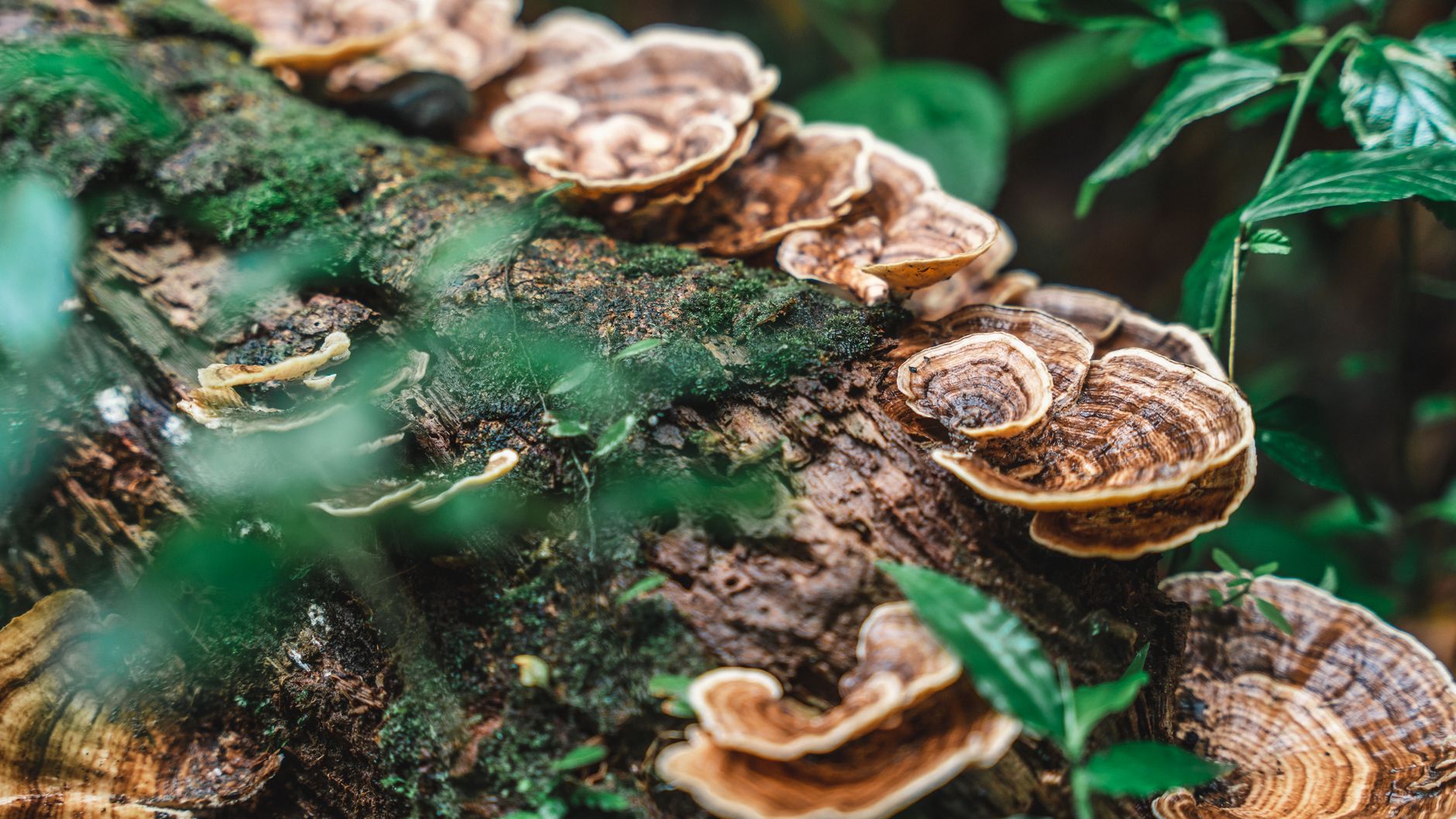
Few plants or fungi in human history carry the cultural weight of Ganoderma lucidum, the mushroom known in Chinese as Lingzhi and in Japanese as Reishi. For at least 2,000 years, this striking, shelf-like fungus has appeared in royal courts, Taoist monasteries, and apothecary records across East Asia. Today, modern science is beginning to unpack the chemistry behind the reverence. Here is what we know about where Reishi came from and why researchers are still paying close attention.
A Mushroom Fit for Emperors
The earliest written records of Reishi appear in the Shennong Bencao Jing (Divine Farmer’s Materia Medica), a foundational Chinese pharmacopeia dating to roughly the first century CE. In that text, Lingzhi is placed in the highest-tier category of medicines: those believed to promote longevity, strengthen the body, and cause no harm even with prolonged use. The text lists six color varieties, each associated with different organs and energetic qualities in traditional Chinese medicine (TCM).
Imperial physicians of the Han dynasty prescribed Lingzhi to address weakness, poor memory, and what TCM called “deficiency of vital energy.” By the Ming dynasty (1368-1644), the herbalist Li Shizhen devoted an extensive entry to it in his Bencao Gangmu (Compendium of Materia Medica), one of the most comprehensive medical texts ever produced in China. Li described Reishi as capable of supporting the heart, liver, lungs, kidneys, and spleen simultaneously — a claim that, while rooted in classical theory rather than controlled trials, hints at the systemic, adaptogenic properties researchers now investigate.
Reishi in Japanese and Korean Traditions
In Japan, Reishi entered both Shinto and Buddhist practice. Depictions of the mushroom appear in classical paintings, carved into temple architecture, and woven into fabric as a symbol of good fortune and divine protection. The word Reishi translates loosely as “supernatural mushroom” or “spirit mushroom.” It featured prominently in the art of the Edo period (1603-1868), where it became a common motif alongside cranes and pine trees — all traditional symbols of long life.
In Korea, the mushroom is called Yeongji and holds similar status in traditional medicine. Folk remedies across the Korean peninsula used Reishi decoctions for fatigue and what practitioners described as weakness of the blood and spirit. These parallel traditions in three distinct cultures, developing largely independently over centuries, reflect how consistently healers encountered this fungus and observed effects they considered worth recording.
The Chemistry Behind the Legend
Modern phytochemical analysis has identified more than 400 bioactive compounds in Ganoderma lucidum, with two classes drawing the most research attention: polysaccharides (primarily beta-glucans) and triterpenoids. Beta-glucans are well-studied immune modulators found across many functional mushrooms. The triterpenoids in Reishi, however, including the ganoderic acids, appear unique to the genus and are thought to contribute to its bitter taste as well as its anti-inflammatory and hepatoprotective properties.[1]
A 2024 comprehensive review examining Reishi’s bioactive compounds and clinical translation found that the mushroom’s immunomodulatory effects are among its most consistently documented properties, supported by both in vitro studies and animal models. The researchers highlighted that while human clinical data remain more limited than preclinical evidence, the breadth of the pharmacological profile merited continued investigation.[2]
From Decoction to Capsule
In traditional use, Reishi was almost always prepared as a tea or water decoction, simmered for hours to extract water-soluble compounds. Modern processing has introduced hot-water extracts, dual extracts (water and alcohol), and whole-fruiting-body powders. The shift matters because different extraction methods capture different compound profiles: water extraction favors polysaccharides, while alcohol extraction targets triterpenoids. Understanding this distinction is important when reading supplement labels today.
Western Science Picks Up the Thread
Western mycology formally described Ganoderma lucidum in the 19th century, but serious pharmacological interest began in the 1970s and 1980s, largely driven by Japanese researchers seeking to validate traditional claims. Early studies focused on immune modulation and anti-tumor effects, leading to Reishi preparations being approved as adjunct therapies in certain oncology protocols in Japan and China.
Research since then has expanded to cover cardiovascular effects, neuroprotection, anti-diabetic properties, and more. The sheer volume of published studies is notable: a search of PubMed returns thousands of papers on Ganoderma, making it one of the most researched functional mushrooms in the world. That said, rigorous human clinical trials remain sparse relative to the volume of in vitro and animal research, a caveat worth keeping in mind when evaluating product claims.
Why Rarity Made Reishi So Prized
Part of Reishi’s mystique in classical times stemmed from genuine scarcity. Wild Ganoderma lucidum grows on hardwood trees, particularly oak and maple, in humid temperate forests. It fruits unpredictably, matures slowly, and was historically difficult to harvest in large quantities. Finding a specimen was considered an auspicious omen: legend holds that a woodcutter who brought Reishi to the emperor would be richly rewarded.
Cultivated production, pioneered at scale in Japan and later China during the 1970s and 1980s, made the mushroom widely available for the first time. Today, China produces the vast majority of the world’s commercial Reishi supply, primarily on sawdust substrate. This shift from rare forest treasure to mass-produced supplement has democratized access but also introduced quality variation across products. If you’re evaluating a Reishi supplement, it’s worth reading our guide on how to read a mushroom supplement COA to understand what a Certificate of Analysis can tell you about potency and purity.
A 2,000-Year Track Record in Context
Longevity in traditional medicine systems does not automatically validate efficacy in the modern scientific sense. Correlation and placebo effects can sustain practices for centuries. At the same time, dismissing 2,000 years of consistent recorded use across multiple independent cultures would be intellectually careless. The documented history of Reishi represents a large body of observational data that has, in many cases, pointed researchers toward real pharmacological activity worth investigating.
The story of Reishi is in some ways the story of functional mushrooms broadly: a long tradition of empirical observation meeting rigorous modern analysis. Some traditional claims are holding up well under scrutiny; others are being refined or set aside. What is clear is that the Ganoderma lucidum fruiting body contains real, measurable compounds with real, measurable effects. The emperors may not have known why it worked. Two thousand years later, scientists are still working out the details.
References
- [1] Unlocking the Therapeutic Potential of Ganoderma lucidum: From Bioactive Compounds to Clinical Translation. PubMed 42116536
- [2] Ganoderma lucidum: From Ancient Remedies to Modern Applications: Chemistry, Benefits, and Safety. PubMed 40427395
This article is for informational purposes only and does not constitute medical advice. Always consult a qualified healthcare provider before starting any supplement.