Millions of Americans struggle with sleep. Whether it’s difficulty falling asleep, staying asleep, or waking up feeling genuinely rested, poor sleep quality is a modern epidemic with serious consequences for health, cognition, and longevity. While pharmaceutical sleep aids are available, many people are turning to functional mushroom supplements as a natural, gentler alternative. But which mushrooms actually help with sleep — and how?
Why Mushrooms for Sleep?
Functional mushrooms don’t knock you out the way a sedative would. Instead, they address the root causes of poor sleep: chronic stress, an overactive nervous system, elevated cortisol at night, and dysregulated circadian rhythms. By modulating the body’s stress response and supporting the nervous system, certain mushrooms create the physiological conditions necessary for deep, restorative sleep.
The Best Mushroom Supplements for Sleep
1. Reishi — The Queen of Sleep Mushrooms
Reishi (Ganoderma lucidum) is the undisputed champion for sleep among functional mushrooms. Known in traditional Chinese medicine as the “mushroom of immortality,” reishi has been used to calm the mind and promote restorative rest for over 2,000 years. Modern science is now providing mechanisms for why it works.
The key sleep-relevant compounds in reishi are:
- Triterpenes (ganoderic acids): These bitter compounds have demonstrated anxiolytic (anti-anxiety) properties and have been shown in animal studies to increase non-REM sleep time — the deep, physically restorative stage of sleep.
- Beta-glucans: Support immune regulation, which is closely linked to sleep quality (your immune system does much of its repair work during deep sleep).
- Adenosine: Reishi contains compounds that influence adenosine receptors — the same receptors that caffeine blocks. This supports natural sleep pressure buildup.
A study published in Pharmacology, Biochemistry and Behavior found that rats given reishi extract spent significantly more time in non-REM sleep compared to controls, without reducing total sleep time. The researchers identified the triterpene fraction as the primary sleep-active component.
For humans, reishi typically produces a calming, mildly sedative effect over time — not a sudden knockout, but a gradual shift toward better sleep quality with consistent use. See our deep-dive on Reishi for Stress Relief for more on how it calms the nervous system.
Reishi for sleep: Best taken 1-2 hours before bed. The study published in Pharmacology, Biochemistry and Behavior used a standardized reishi extract — consult the product label or a healthcare provider for guidance on amounts appropriate for your situation.
2. Lion’s Mane — For Sleep Disrupted by Anxiety and Poor Mood
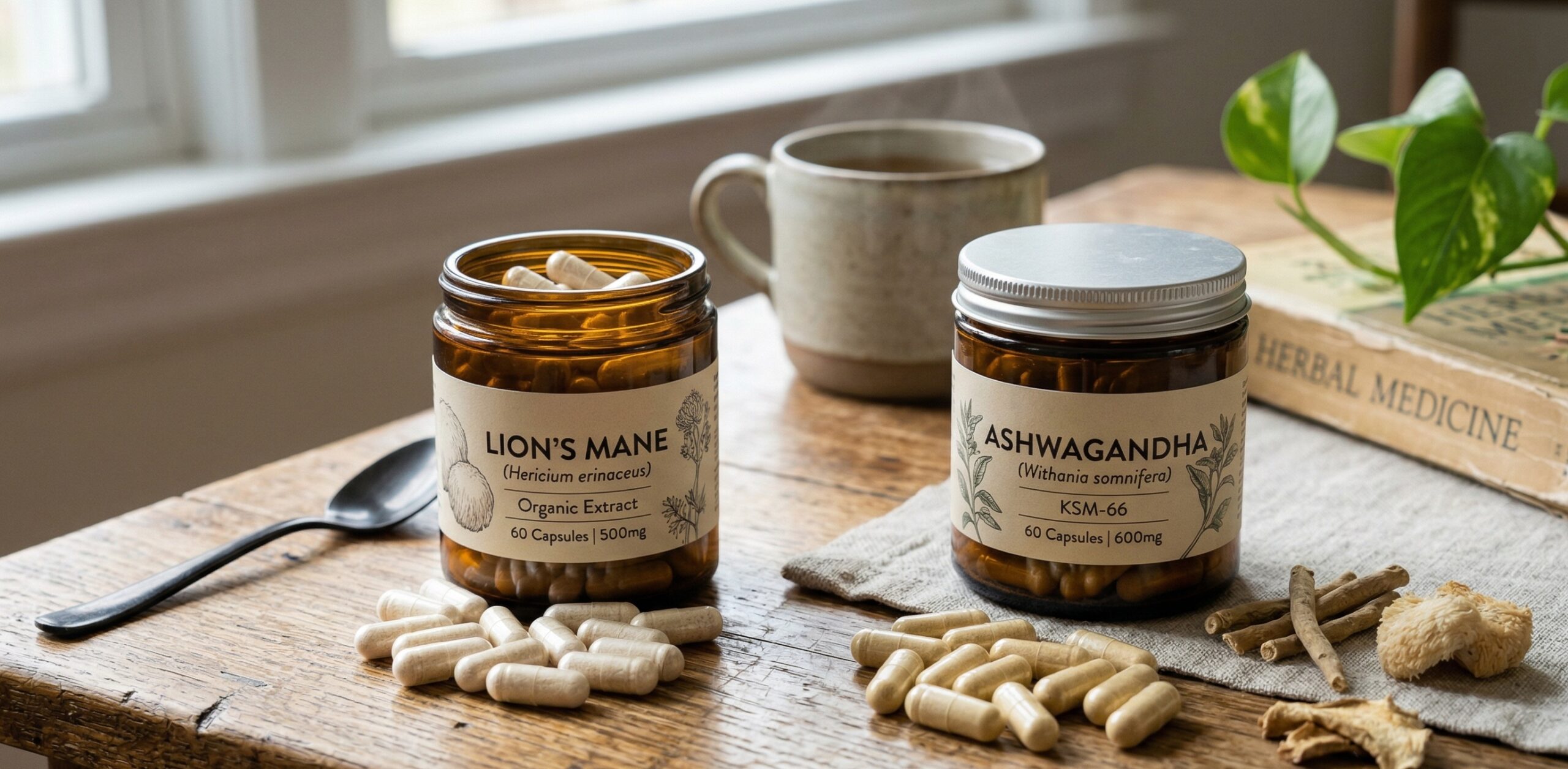
Lion’s Mane (Hericium erinaceus) doesn’t directly induce sleep, but it addresses two major sleep disruptors: anxiety and depression. By stimulating Nerve Growth Factor (NGF) and BDNF, Lion’s Mane supports healthy emotional regulation and nervous system function.
A Japanese study found that women who consumed Lion’s Mane for four weeks reported reduced anxiety and irritability. [source] Anxiety is one of the leading causes of insomnia, so addressing it at a neurological level can have profound downstream effects on sleep quality.
Additionally, Lion’s Mane supports the gut-brain axis. An unhealthy gut microbiome is increasingly linked to poor sleep, anxiety, and mood disorders. Lion’s Mane’s prebiotic effects may contribute to sleep improvement through this pathway as well.
Lion’s Mane for sleep: Best taken in the morning or early afternoon to allow NGF stimulation to proceed through the day, setting the stage for better sleep at night.
Explore more about Lion’s Mane for cognitive support on our site.
3. Chaga — For Sleep Disrupted by Inflammation and Oxidative Stress
Chaga (Inonotus obliquus) is best known as an antioxidant powerhouse — one of the highest ORAC (oxygen radical absorbance capacity) values of any natural substance. While not a primary sleep supplement, chaga addresses inflammation and oxidative stress, both of which significantly impair sleep quality.
Chronic low-grade inflammation disrupts sleep architecture (the cycling between REM and non-REM stages) and increases nighttime cortisol. Chaga’s exceptional antioxidant profile — rich in superoxide dismutase (SOD), melanin, and betulinic acid — helps neutralize inflammatory signals that might otherwise keep you awake or cause you to wake during the night.
See our post on Chaga’s antioxidant properties for a more detailed look at its mechanisms.
Chaga for sleep: Works best as a foundational supplement taken consistently throughout the day. Chaga tea in the evening (naturally caffeine-free) is a traditional sleep-supportive ritual.
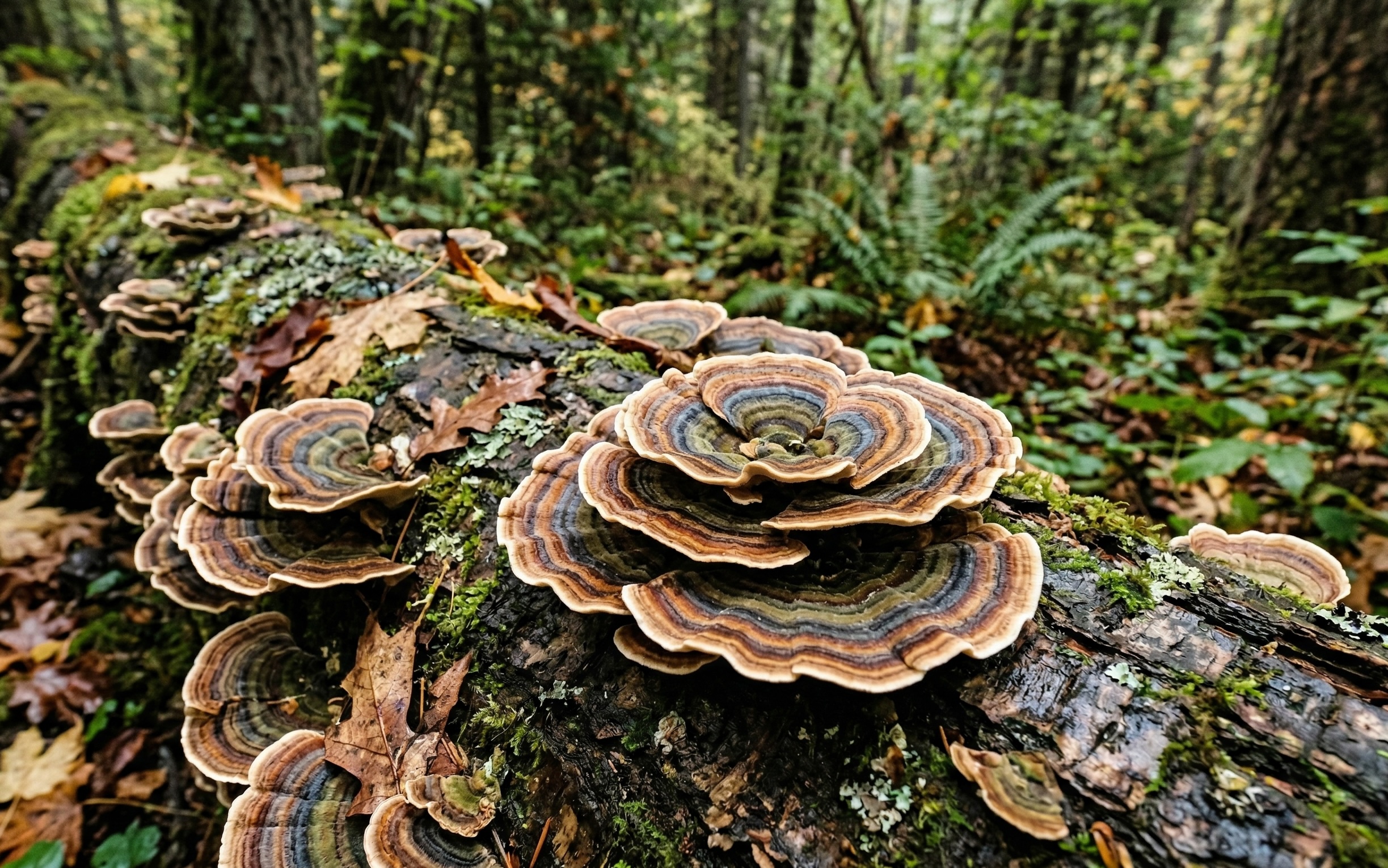
4. Turkey Tail — For Sleep and Gut-Brain Balance
Turkey Tail’s beta-glucans, specifically PSP (Polysaccharide-P), function as prebiotics that dramatically alter gut microbiome composition. The gut produces roughly 90% of the body’s serotonin — the precursor to melatonin, your primary sleep hormone. A healthy gut microbiome supported by turkey tail may therefore support healthier melatonin production and more regular sleep-wake cycles.
This is a more indirect pathway, but gut health’s connection to sleep is now well-established in the scientific literature. For people whose sleep problems accompany digestive issues, turkey tail may be a strategic addition to the sleep stack.
The Best Mushroom Stack for Sleep
For most people dealing with sleep issues, the optimal approach is a combination:
- Morning: Lion’s Mane + Chaga — support nervous system health, reduce inflammation, improve daytime mood and focus. Clinical studies have used standardized hot-water-extracted forms; check trial protocols via PubMed for reference ranges used by researchers.
- Evening (1-2 hours before bed): Reishi — promotes calm, activates sleep-associated pathways. The Pharmacology, Biochemistry and Behavior researchers used a triterpene-rich extract; product labels and your healthcare provider can guide appropriate use.
- Optional daily foundation: Turkey Tail — supports gut-brain-serotonin-melatonin pathway. As with all functional mushrooms, amounts used in research vary; consult a qualified practitioner for personalized guidance.
This stack addresses sleep from multiple angles: neurological (Lion’s Mane), inflammatory (Chaga), direct sleep pathway activation (Reishi), and gut-brain (Turkey Tail).
What to Look for in a Mushroom Sleep Supplement
Extraction Method Matters
The active compounds in mushrooms are locked inside chitin cell walls. Without proper extraction, you’re essentially eating indigestible fungal fiber. Look for:
- Dual extraction (hot water + alcohol): Captures both water-soluble beta-glucans and alcohol-soluble triterpenes — both important for sleep in reishi’s case
- Hot water extraction only: Acceptable for mushrooms like turkey tail where beta-glucans are the primary active compounds
- Avoid: Raw mushroom powder or mycelium-on-grain products with no stated extraction process
Fruiting Body vs. Mycelium
Always choose fruiting body extracts when possible. Research consistently shows that fruiting bodies contain significantly higher concentrations of active compounds (beta-glucans, triterpenes) compared to mycelium, especially mycelium grown on grain substrates.
Third-Party Testing
Look for products with independent lab verification of beta-glucan content and absence of heavy metals, pesticides, and microbial contaminants. Reputable brands publish certificates of analysis (COAs) on their websites.
Mushroom Sleep Supplements vs. Melatonin
Melatonin is the most popular OTC sleep aid, but it has a fundamental difference from mushroom supplements: melatonin directly replaces your body’s own melatonin production, which can actually suppress your natural production over time with regular use. Mushroom supplements don’t replace anything — they create the conditions for your body to regulate sleep naturally, without dependence or tolerance.
That said, for acute sleep problems (jet lag, shift work), melatonin’s direct action makes it immediately useful. Functional mushrooms are better suited for long-term, foundational sleep improvement.
Other Sleep Hygiene Tips That Pair Well with Mushroom Supplements
Even the best supplements work better in combination with good sleep habits:
- Consistent sleep and wake times (even on weekends)
- Cool, dark sleeping environment
- No screens 60-90 minutes before bed
- Limiting caffeine after 2pm
- A calming pre-sleep ritual (which can include reishi tea!)
Final Thoughts
If you’re struggling with sleep and looking for a natural approach, functional mushrooms — particularly reishi — offer genuine, science-backed support. They won’t work overnight, but with consistent use over 4-8 weeks, many people experience meaningful improvements in sleep quality, stress resilience, and daytime energy.
Explore our full range of functional mushroom supplements at SafeShrooms, or contact us to get personalized guidance on building your mushroom stack. You can also check out our guide on Mushroom Routines for Mental Clarity to see how to integrate these supplements into your daily life holistically.