As functional mushroom supplements become more widely available, product labels have grown increasingly complex. Terms like “beta-glucans,” “polysaccharides,” “hot water extract,” and “fruiting body” appear across packaging, yet consumers rarely receive a clear explanation of what these phrases mean or how they relate to product quality. Understanding the basics of mushroom supplement labeling allows for more informed purchasing decisions.
What Are Polysaccharides?
Polysaccharides are long-chain carbohydrate molecules made up of repeating sugar units. In the context of mushrooms, they represent a broad category of compounds that includes beta-glucans, alpha-glucans, and other complex sugars. Not all polysaccharides have the same biological activity, and this distinction is important when evaluating supplement labels.
A high total polysaccharide percentage does not necessarily indicate a high-quality product. Starch, for example, is an alpha-glucan polysaccharide with no meaningful immunological activity. Products derived from mycelium grown on grain substrates often contain residual grain starch that inflates the total polysaccharide count on a label without contributing to the putative health benefits associated with functional mushrooms.
Beta-Glucans: The Active Fraction
Beta-glucans are a specific subset of polysaccharides characterized by beta-1,3 and beta-1,6 glycosidic linkages. These structural features are not found in starch and are thought to be responsible for much of the immune-modulating activity attributed to medicinal mushrooms. Research suggests that beta-glucans may interact with pattern recognition receptors on immune cells, including macrophages, dendritic cells, and natural killer cells, potentially influencing cytokine production and overall immune tone.[1]
When reading a supplement label, a dedicated beta-glucan percentage is more informative than a total polysaccharide figure. An independently verified beta-glucan content of 20% or higher in a fruiting body extract is generally considered meaningful, though reference ranges vary by species.
Extraction Methods and What They Capture
The extraction method used to produce a mushroom supplement directly determines which compounds end up in the final product.
Hot Water Extraction
Hot water extraction is the traditional method, reflecting centuries of mushroom preparation in Asian herbal medicine. Water-soluble compounds, including beta-glucans and other polysaccharides, are efficiently captured through this process. Most of the immunomodulatory compounds studied in clinical and laboratory settings are water-soluble, making hot water extraction the standard method for products targeting immune function.
Alcohol (Ethanol) Extraction
Some bioactive compounds in mushrooms are not soluble in water. Triterpenoids, such as the ganoderic acids found in reishi, and some phenolic compounds require an alcohol solvent for effective extraction. Research comparing hot water and ethanol extracts from Ganoderma species found that ethanol extracts contained significantly higher levels of ganoderic acids and showed distinct activity profiles compared to water extracts, while hot water extracts yielded higher polysaccharide content.[2]
Dual Extraction
A dual-extracted product uses both water and alcohol solvents sequentially, capturing the full spectrum of both water-soluble polysaccharides and alcohol-soluble compounds like triterpenoids. For species such as reishi and chaga where both compound classes are of interest, dual extraction may offer a more complete profile. However, dual extraction increases production complexity, and not all products labeled as such are produced with equivalent rigor. Third-party testing data is the most reliable way to confirm actual compound content.
Fruiting Body vs. Mycelium
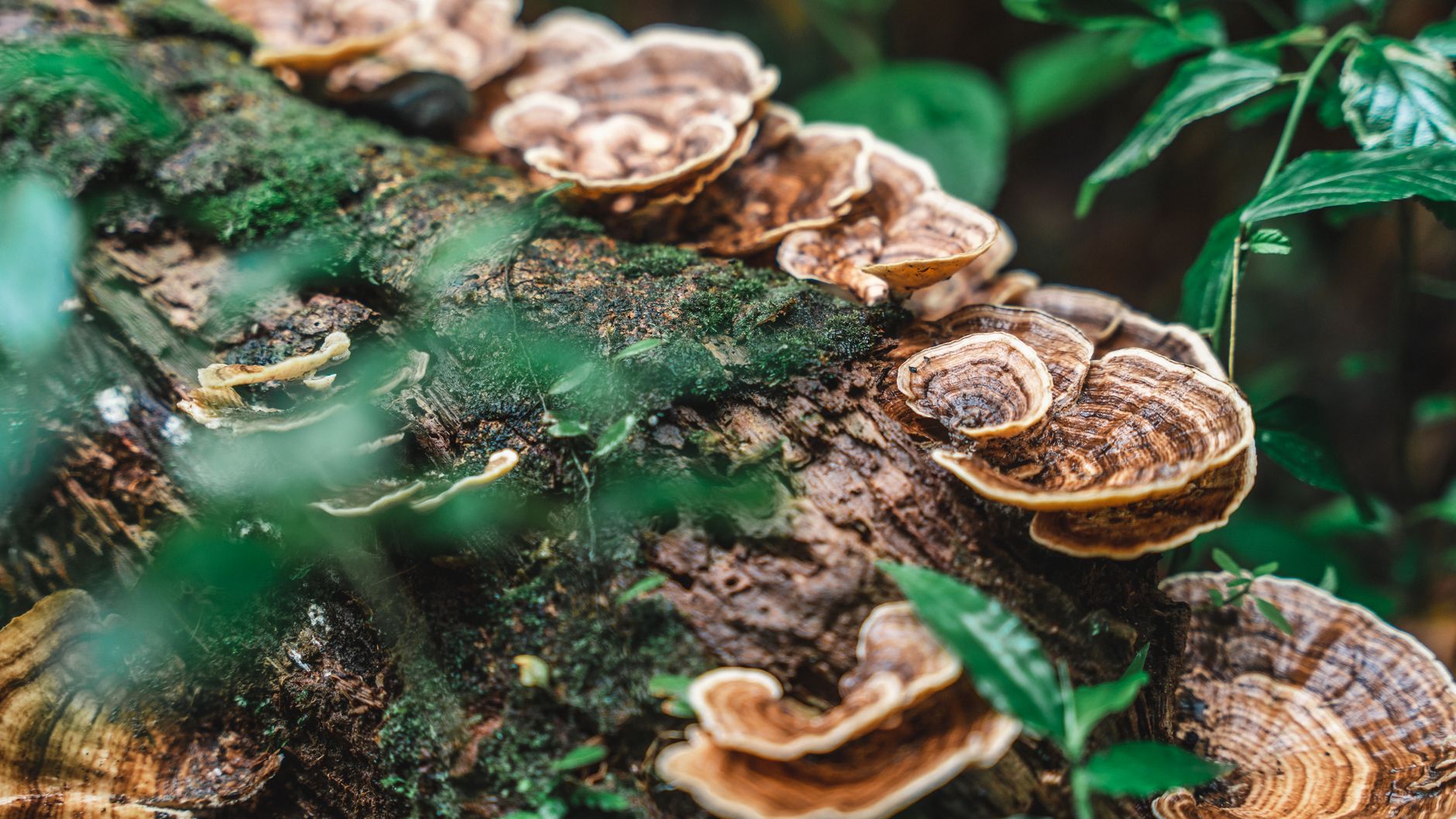
Labels will often specify whether a product was derived from the fruiting body (the above-ground mushroom structure), the mycelium (the root-like network), or both. This distinction has practical implications for beta-glucan content.
Mycelium-based products, particularly those grown on grain substrates, have come under scrutiny for inconsistent quality. Analytical studies of mushroom dietary supplements have demonstrated that products derived from mycelium grown on grain can contain substantial quantities of residual starch, which elevates total polysaccharide readings without contributing functional beta-glucans. Beta-glucan quantification and iodine-starch assays have been used to distinguish authentic fruiting body material from myceliated grain products.[3]
Fruiting body extracts tend to yield higher and more consistent beta-glucan content, though this is not universally true. Some mycelium-based products are produced under controlled liquid fermentation conditions that minimize grain residue, resulting in a cleaner extract. The key indicator remains third-party verified beta-glucan content, not the source designation alone.
Other Label Terms Worth Understanding
Extract Ratio (e.g., 10:1)
An extract ratio indicates how many parts of raw material were concentrated into one part of the final extract. A 10:1 ratio suggests that 10 grams of mushroom material yielded 1 gram of extract. While this implies concentration, it does not specify which compounds were concentrated or whether the process was selective. A high extract ratio does not automatically translate to high beta-glucan content. Verified compound data remains a more useful quality indicator.
Standardized Extracts
Some products are standardized to a specific percentage of an active compound, such as “30% polysaccharides” or “15% beta-glucans.” Standardization implies that the manufacturing process has been designed and tested to consistently deliver that compound level. This is a positive quality signal when the standardization is verified by a third-party laboratory and reflects beta-glucans specifically rather than total polysaccharides.
Whole Mushroom Powder
Products labeled as “whole mushroom powder” or “raw powder” are simply ground, dried mushroom material without any extraction step. Without hot water extraction, the cellular walls of the mushroom remain intact, and many of the bioactive polysaccharides may be less accessible. Whole powder products are generally lower cost but may offer reduced bioavailability of key compounds compared to extracts.
Third-Party Testing and Transparency
Because the supplement industry is not subject to the same regulatory scrutiny as pharmaceuticals, voluntary third-party testing serves as a primary quality signal. Reputable brands publish certificates of analysis (COAs) from independent laboratories confirming beta-glucan content, heavy metal screening, and microbial safety. When evaluating a product, requesting or looking up the COA is one of the most practical steps a consumer can take.
For more on how individual functional mushrooms are studied and compared, see our overview of Chaga vs Turkey Tail: Head-to-Head Comparison for Immune Support.
Summary
Mushroom supplement labels carry significant variation in quality and transparency. Beta-glucan percentage, as verified by third-party testing, is a more reliable indicator of a product’s active compound content than total polysaccharide figures, extract ratios, or source designations alone. Understanding the difference between extraction methods and the potential issue of residual starch in myceliated grain products helps consumers evaluate what they are actually purchasing.
References
- [1] Motta F, Gershwin ME, Selmi C. Mushrooms and immunity. J Autoimmun. 2021;117:102576. doi:10.1016/j.jaut.2020.102576. PMID: 33276307
- [2] Tang X, Cai W, Xu B. Comparison of the Chemical Profiles and Antioxidant and Antidiabetic Activities of Extracts from Two Ganoderma Species. Int J Med Mushrooms. 2016;18(7):609-620. doi:10.1615/intjmedmushrooms.v18.i7.60. PMID: 27649729
- [3] Windsor C, Kreynes AE, Chilton JS, et al. Comparative Study of Chaga (Inonotus obliquus) Dietary Supplements Using Complementary Analytical Techniques. Int J Mol Sci. 2025;26(7):2970. doi:10.3390/ijms26072970. PMID: 40243601
Disclaimer: The information on this page is intended for educational purposes only and does not constitute medical advice. Mushroom supplements are not intended to diagnose, treat, cure, or prevent any disease. Consult a qualified healthcare provider before starting any new supplement, especially if you are pregnant, nursing, taking medications, or managing a health condition.