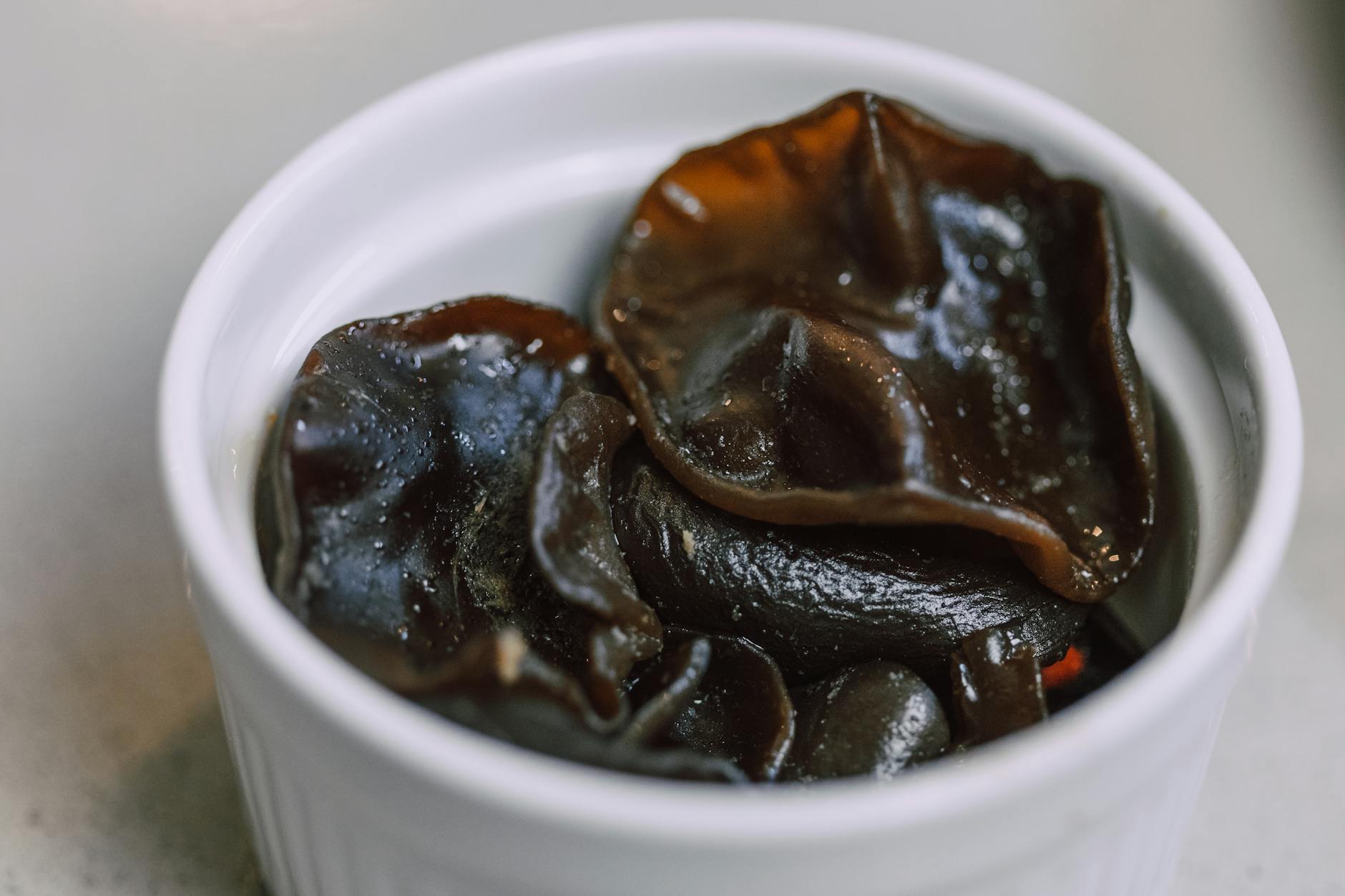
Black fungus, known scientifically as Auricularia auricula-judae (also called wood ear or cloud ear mushroom), has been a staple of traditional Chinese medicine and East Asian cuisine for more than a thousand years. Consumed across China, Japan, Korea, and Southeast Asia, it is recognizable by its distinctive dark, ear-shaped fruiting body and its gelatinous, chewy texture when rehydrated. Today, a growing body of laboratory and preclinical research is beginning to examine the biological mechanisms behind some of its traditionally attributed health properties, suggesting this common culinary mushroom may warrant greater attention from nutrition scientists.
A Brief History of Black Fungus in Traditional Medicine
In classical Chinese medicine texts, Auricularia auricula-judae was used to support circulatory health, tonify the blood, and address digestive complaints. It was frequently prepared as a broth or tea and considered safe for regular consumption as a food-grade remedy. The mushroom’s long history of dietary use across broad populations has contributed to its general reputation for tolerability, though clinical studies on safety in supplement form remain limited.
Its traditional uses reflect the holistic approach of TCM: rather than targeting a single condition, wood ear was integrated into diets as a general tonic. Modern researchers are now applying more rigorous methods to investigate which of these traditional claims have biochemical plausibility and where the evidence base currently stands.
Key Bioactive Compounds
The primary bioactive constituents identified in black fungus are polysaccharides, particularly heteropolysaccharides and glucuronic acid-containing compounds. These complex carbohydrates are thought to be responsible for many of the biological activities observed in preclinical studies. The mushroom also contains glycoproteins, dietary fiber, melanin pigments, flavonoids, and several trace minerals including iron and zinc.
Among the polysaccharides, those with high molecular weights and specific structural configurations appear to exhibit the most notable bioactivity in laboratory models. The extraction method, including whether heat, ultrasonic, or enzymatic processing is used, significantly affects the molecular weight and resulting activity of these compounds.
Gut Health and Anti-Inflammatory Research
One of the most active areas of current research concerns the effect of Auricularia polysaccharides on gut inflammation and microbiota composition. A 2025 study published in Ultrasonics Sonochemistry investigated ultrasonic-degraded polysaccharides from A. auricula-judae in a DSS-induced colitis mouse model. The authors found that these modified polysaccharides demonstrated anti-inflammatory effects and appeared to regulate gut microbiota composition in affected animals.[1]
Separately, a 2023 study in the International Journal of Biological Macromolecules examined the effect of polysaccharides from Auricularia auricula on non-alcoholic fatty liver disease (NAFLD) in a preclinical model. The research suggested that these polysaccharides may modulate gut microbiota composition and influence bile acid metabolism pathways in ways that could support liver health.[2] Importantly, these are animal-based findings and should not be extrapolated directly to human outcomes without further clinical research.
Antioxidant Activity
Black fungus polysaccharides have shown antioxidant capacity in both in vitro and in vivo models. A 2025 study in the International Journal of Medicinal Mushrooms evaluated polysaccharides prepared via free radical-mediated extraction methods and reported both in vitro and in vivo antioxidant activity in experimental systems.[3] Oxidative stress is increasingly implicated in a wide range of chronic conditions, and while these laboratory findings are preliminary, they help build the mechanistic rationale for continued investigation.
The antioxidant properties of the mushroom may in part be connected to its melanin content, as melanin-rich fungi have been studied for their free radical-scavenging capabilities, though this specific pathway in Auricularia requires further characterization in human studies.
Blood Sugar Research
Emerging preclinical evidence also suggests that certain compounds in black fungus may influence glucose metabolism. A 2024 study in Foods isolated and characterized a glycoprotein from Auricularia auricula designated AAG-3 and evaluated its hypoglycemic activity during in vitro simulated digestion. The glycoprotein demonstrated inhibitory effects on alpha-amylase and alpha-glucosidase activity, two enzymes involved in carbohydrate digestion, and showed effects on insulin-resistant cell models in laboratory conditions.[4]
These findings are consistent with other functional mushrooms that have been studied for glycemic support, such as those discussed in our article on Maitake Mushroom and Blood Sugar: What Research Says. It is worth noting that enzyme inhibition in isolated cell or in vitro systems does not necessarily predict clinical outcomes in humans, and no clinical trials have yet confirmed blood sugar benefits from Auricularia supplementation in human populations.
Nutritional Profile
Beyond its bioactive compounds, black fungus offers a meaningful nutritional contribution as a food. It is low in calories and fat while providing a modest amount of protein, iron, and dietary fiber. Its high water-soluble fiber content, particularly from polysaccharides, may contribute to its observed effects on gut microbiota composition. Some research has also noted its relatively high iron content compared to other fungi, which is relevant for populations at risk of iron deficiency.
Dried black fungus, when rehydrated, expands significantly in volume, making it a practical and economical culinary ingredient. It is commonly used in soups, stir-fries, and braised dishes throughout East Asian cuisines.
Modern Supplement Forms and Considerations
While black fungus is most commonly consumed as a food, it is increasingly available in dried powder, capsule, and extract form marketed as a supplement. As with other functional mushroom supplements, the quality and bioactivity of these products depend heavily on the part of the mushroom used (fruiting body versus mycelium), the extraction method, and the concentration of polysaccharides.
Consumers should look for products that specify beta-glucan or polysaccharide content and ideally provide a certificate of analysis. The supplement market for wood ear remains considerably less developed than for mushrooms like lion’s mane, reishi, or turkey tail, meaning fewer standardized products are currently available.
Black fungus has a well-established safety profile as a food. However, very high-dose supplementation has not been rigorously evaluated in clinical trials, and interactions with anticoagulant medications have been theorized based on its traditional description as a blood-thinning food. Those taking blood-thinning medications should exercise caution and consult a healthcare provider before using concentrated supplements.
Where the Evidence Currently Stands
The research on Auricularia auricula-judae remains primarily at the preclinical stage, with most evidence coming from animal models and in vitro studies. Human clinical trials are sparse. The most consistent signals in the literature point toward effects on gut microbiota modulation, antioxidant activity, and glucose metabolism-related pathways, but these findings have not yet been validated in robust human studies.
What makes black fungus scientifically interesting is the combination of its centuries-long traditional use, its well-characterized polysaccharide chemistry, and the growing mechanistic research beginning to examine how these compounds interact with biological systems. It represents a category of functional mushroom where traditional wisdom and emerging science are beginning to converge, though cautious interpretation remains warranted until clinical evidence matures.
References
- [1] Islam T, Xu B, Bian Z. Anti-inflammatory and gut microbiota regulatory effects of ultrasonic degraded polysaccharides from Auricularia auricula-judae in DSS-induced colitis mice. Ultrason Sonochem. 2025;117:107339. https://pubmed.ncbi.nlm.nih.gov/40215791/
- [2] Shu Y, et al. The polysaccharides from Auricularia auricula alleviate non-alcoholic fatty liver disease via modulating gut microbiota and bile acids metabolism. Int J Biol Macromol. 2023;246:125662. https://pubmed.ncbi.nlm.nih.gov/37399869/
- [3] Ge H, et al. The In Vitro and In Vivo Antioxidant Capacities of Auricularia auricula-judae (Agaricomycetes) Polysaccharides Prepared via Free Radical-Mediated Methods. Int J Med Mushrooms. 2025;27(8):65-80. https://pubmed.ncbi.nlm.nih.gov/40460404/
- [4] Zhan Q, et al. Structural Characterization and Hypoglycemic Activity of a Glycoprotein Extracted from Auricularia Auricula. Foods. 2024;13(23):3859. https://pubmed.ncbi.nlm.nih.gov/39682931/
This article is for informational purposes only and does not constitute medical advice. Always consult a qualified healthcare provider before starting any supplement.