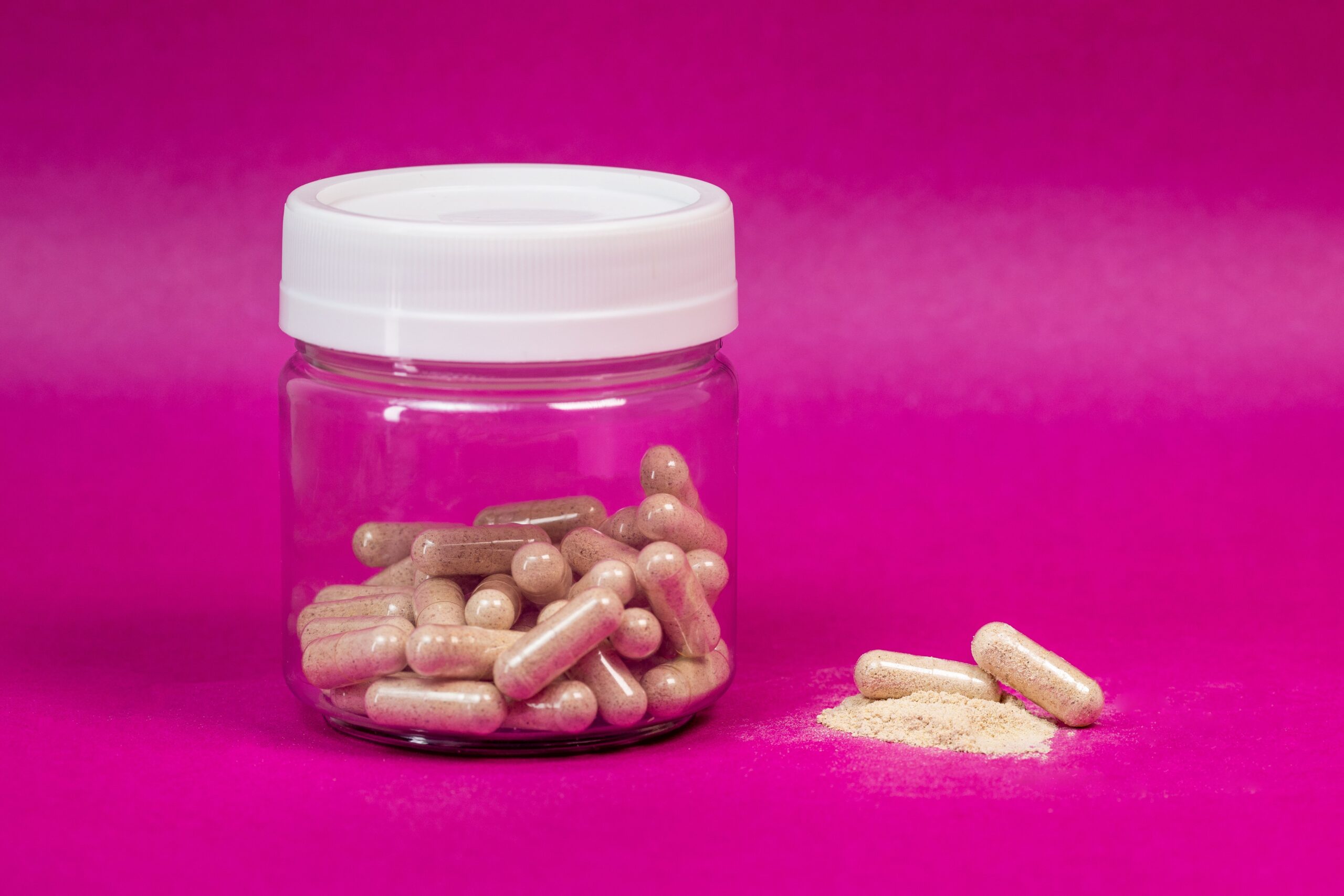
The functional mushroom supplement market has grown considerably, and labels on these products often include terms like “beta-glucans,” “polysaccharides,” and “hot water extract.” Understanding what these terms mean, what to look for, and what they may indicate about a product’s quality can help consumers make more informed choices.
This guide breaks down the key terms commonly found on mushroom supplement labels, drawing on available research to explain what each may or may not indicate about the product inside.
Beta-Glucans: Why They Matter on a Label
Beta-glucans are a class of polysaccharides found in the cell walls of fungi. They are widely considered among the most biologically significant compounds in functional mushrooms, with research suggesting they may support immune function through interactions with receptors on immune cells such as macrophages and natural killer cells.
A key distinction relevant to supplement quality is the difference between beta-glucans and alpha-glucans. Alpha-glucans, such as glycogen and starch, are storage molecules found in grain fillers sometimes used in mycelium-on-grain production methods. Unlike beta-glucans, alpha-glucans are not associated with the same immunomodulatory properties. Research analyzing commercially available preparations from species including Reishi, Shiitake, and Maitake found that products rich in beta-glucans and low in alpha-glucans were more likely to elicit meaningful immunomodulatory activity in human macrophages.[1]
When reading a label, a stated beta-glucan percentage is more informative than a total polysaccharide figure. Some products list “polysaccharides” without specifying how much of that figure is beta-glucan versus alpha-glucan. This distinction is worth understanding before purchasing.
Polysaccharides: Broad Term, Variable Meaning
Polysaccharides are long-chain carbohydrate molecules. In mushroom supplements, the term is used broadly and may encompass beta-glucans, alpha-glucans, and other complex sugars depending on the species and extraction method. Products standardized to a total polysaccharide content do not necessarily guarantee a specific beta-glucan level.
Research examining the physicochemical and structural properties of polysaccharides from five edible mushroom species, including Cordyceps militaris and Tremella fuciformis, noted that the lack of unified quality standards has resulted in inconsistent product quality across the commercial market.[2] This is directly relevant to label interpretation: a high total polysaccharide percentage does not automatically indicate high bioactivity.
Labels that provide both total polysaccharide content and a separate beta-glucan figure offer more transparency.
Extract Ratios: What “10:1” Actually Means
Many labels display a ratio such as “10:1 extract,” which indicates that ten parts of raw mushroom material were used to produce one part of the final extract powder. While this does suggest concentration, extract ratios alone do not confirm the actual beta-glucan content, bioavailability, or biological activity of the product.
A 10:1 extract made from a low-quality starting material may yield a concentrated but weak product, while a properly standardized extract at a lower ratio could contain more biologically relevant compounds. Extract ratios are best interpreted alongside beta-glucan or other active compound percentages rather than as standalone indicators of quality.
Hot Water Extract vs. Dual Extract
Extraction method significantly influences which compounds end up in the final product. The two most common approaches are hot water extraction and dual (alcohol plus water) extraction.
Hot water extraction is generally considered the appropriate method for isolating beta-glucan polysaccharides, which are water-soluble. Alcohol extraction is used to isolate compounds that are not soluble in water, such as triterpenoids found in species like Reishi (Ganoderma lucidum). A dual extract combines both methods and may be appropriate for species where both compound classes are considered important.
For species where polysaccharides are the primary focus, such as Turkey Tail or Chaga, a hot water extract may be sufficient. For Reishi, where both beta-glucans and triterpenoids are studied, a dual extract may offer broader coverage.
Research on Ganoderma polysaccharides has highlighted that extraction method, fermentation conditions, and structural characterization all influence the reproducibility and functional performance of the resulting product, and that standardization to defined molecular attributes is preferable to standardization based on yield alone.[3]
Fruiting Body vs. Mycelium on Grain
Labels may specify whether the product is derived from the fruiting body (the visible mushroom structure) or from mycelium grown on grain substrates. This distinction has implications for compound content. Mycelium-on-grain products may retain residual grain starch, which contributes to alpha-glucan content rather than beta-glucan content.
Analysis comparing glucan profiles across Lion’s Mane and Shiitake strains found substantial variation in both alpha- and beta-glucan content depending on cultivation method and strain, underscoring that beta-glucan content is not uniform across commercial products even within the same species.[4]
Products clearly labeled as derived from the fruiting body and tested for beta-glucan content provide the most transparent indication of what is actually in the supplement.
Triterpenes and Other Active Compounds
Some species-specific labels include additional active compound markers. Reishi products, for example, may list triterpenoid content. These compounds have been studied for potential antioxidant and anti-inflammatory effects and are distinct from polysaccharides in both structure and proposed mechanism of action. They require alcohol-based extraction and are not present in water-only extracts.
Species such as Cordyceps may also list cordycepin content, while Lion’s Mane products sometimes reference hericenone or erinacine content, though standardization for these compounds is less common in commercial products. Their presence on a label may indicate a higher degree of analytical transparency.
Third-Party Testing and Certificate of Analysis
Beyond label claims, the most reliable quality indicator is whether the manufacturer provides a Certificate of Analysis (COA) from an independent laboratory. A COA should verify beta-glucan content, confirm the absence of heavy metals, pesticides, and microbial contaminants, and confirm that the stated species is accurate.
Without third-party verification, label claims remain unconfirmed. This is particularly relevant given the documented variability in commercial mushroom supplement quality.
For a broader perspective on how different mushroom species and their active compounds may work in combination, see our overview of Mushroom Stacks: Which Functional Mushrooms Work Better Together.
Summary
Reading a mushroom supplement label is more nuanced than checking a percentage figure. The most informative labels distinguish between beta-glucan and total polysaccharide content, specify the extraction method, identify the source material as fruiting body or mycelium, and are backed by third-party testing. Understanding these distinctions may help identify products more likely to reflect the compound profiles studied in functional mushroom research.
References
- [1] Mallard B, et al. Synergistic immuno-modulatory activity in human macrophages of a medicinal mushroom formulation consisting of Reishi, Shiitake and Maitake. PLoS One. 2019;14(11):e0224740. PMID: 31697749
- [2] Xu C, et al. Physicochemical, structural, digestive stability, and microbiota effects of five edible mushroom polysaccharides (EMPs). Int J Biol Macromol. 2026;362:152108. PMID: 42019840
- [3] Alias AHD, et al. Fermentation-derived Ganoderma polysaccharides: Bioprocessing strategies, structure-activity relationships, and functional applications. Carbohydr Res. 2026;565:109940. PMID: 42034040
- [4] Keerthana CS, et al. Unveiling the glucan profile: a comparative study of Lion’s Mane and Shiitake mushrooms. Nat Prod Res. 2026;40(9):2627-2630. PMID: 40407020
Disclaimer: This article is for informational purposes only and does not constitute medical advice. Mushroom supplements are not intended to diagnose, treat, cure, or prevent any disease. Consult a qualified healthcare provider before starting any new supplement, especially if you have an existing medical condition or take medications.